Fact Snapshot
- Paper: Molecular imprinted Bi4O5Br2 nanosheets for visual ultrasensitive chlorophenols detection by developing a dye-photosensitization sensing system
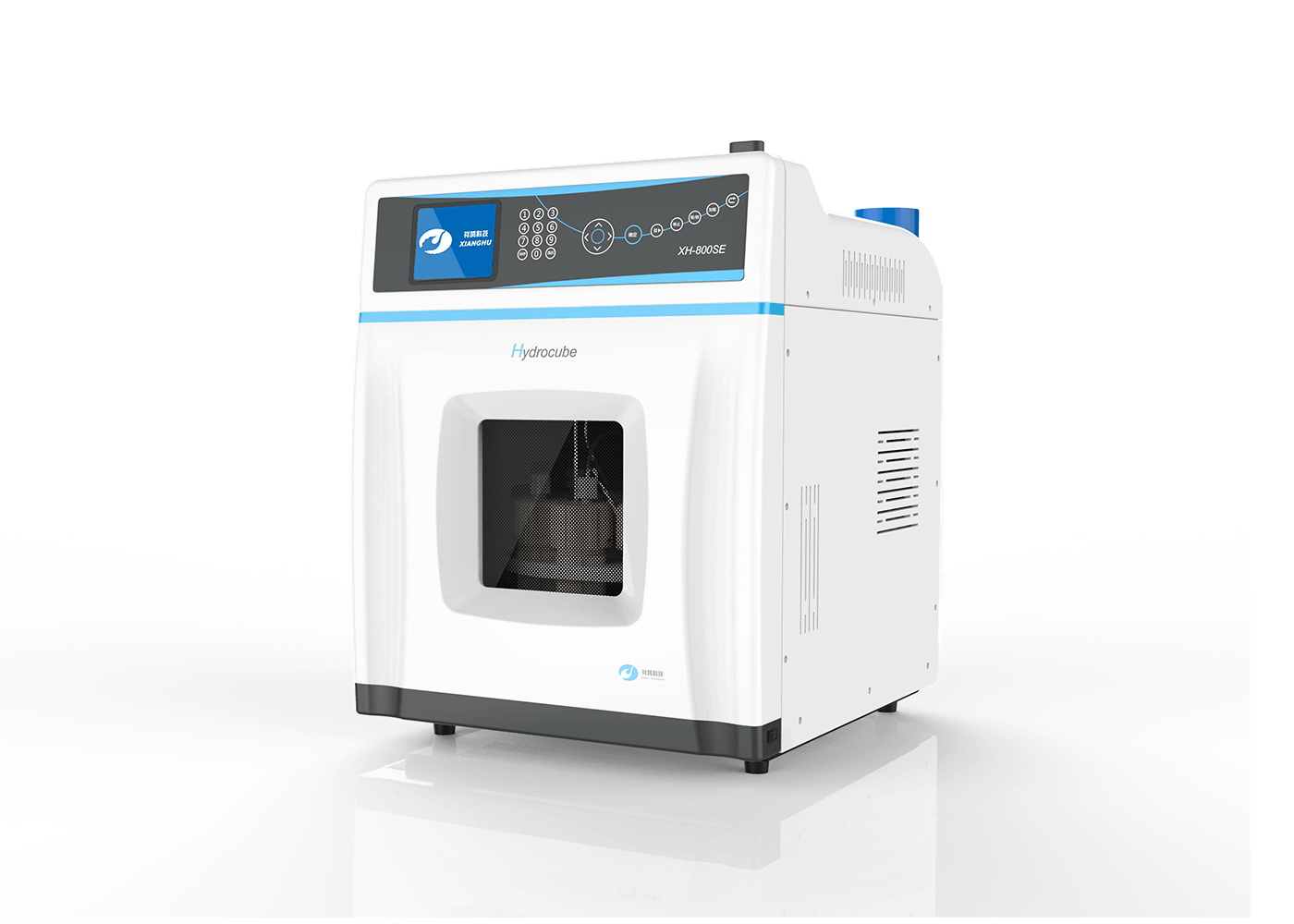
- Equipment: XH-800S
- Source: Water Research, 2025
- Research direction: microwave hydrothermal
- Core conditions: Time 30 min / 1 h
- Key results: Recovery 113.33%
Research Abstract
Molecular imprinted Bi4O5Br2 nanosheets for visual ultrasensitive chlorophenols detection by developing a dye-photosensitization sensing system was published in Water Research (2025) and is indexed as a Xianghu Q1 application case for XH-800S. The structured source links this paper to microwave hydrothermal. Core operating conditions include Time 30 min / 1 h. Key reported results include Recovery 113.33%. The DOI recorded for this paper is 10.1016/j.watres.2025.124141.
Research Background and Problem
Equipment Use and Experimental Conditions
| Item | Parameter |
|---|---|
| Time | 30 min / 1 h |
Key Result
| Metric | Result |
|---|---|
| Recovery | 113.33% |
Evidence Details
Release-kinetics evidence: source values include R2 = 2, R2 = 4, R2 = 6. Entities: XH-800S.
Release-kinetics evidence: source values include 4 nm, R2 = 4.
Release-kinetics evidence: source values include 30 min. Entities: XH-800S.
Release-kinetics evidence: source values include 100 mL.
Release-kinetics evidence: source values include 1 mg.
The sensing system exhibited excellent performance in detecting TCP across various actual water matrices, achieving acceptable recovery ranging from 93.33 % to 113.33 % with the relative standard deviations between 0.80 % and 11.31 %.
It displays an ultrasensitive detection of CPs, especially for the typical 2,4,6-trichlorophenol (TCP) across from 10 ng⋅L−1 to 1 mg⋅L−1, achieving a limit of detection of 7 ng⋅L−1 with remarkable selectivity.
Additional source evidence: source values include 93.33–113.33%, 0.80–11.31%.
Time: 30 min / 1 h
Additional source evidence: source values include 1 – 1 mg.
Mechanism / Method Highlights
- Method context: Time 30 min / 1 h.
- Release-kinetics evidence: source values include R2 = 2, R2 = 4, R2 = 6. Entities: XH-800S
- Release-kinetics evidence: source values include 4 nm, R2 = 4
- Release-kinetics evidence: source values include 30 min. Entities: XH-800S
- Reported outcome: Recovery 113.33%.
Application Value
- Positions XH-800S in a peer-reviewed Q1 research application.
- Highlights quantitative evidence: Recovery 113.33%.
- Records source affiliations: Heilongjiang University.
Related Equipment
FAQ
Which Xianghu instrument is covered by this page?
What is the main application direction?
Which publication does this case come from?
Molecular imprinted Bi4O5Br2 nanosheets for visual ultrasensitive chlorophenols detection by developing a dye-photosensitization sensing system
Water Research, 2025
DOI: 10.1016/j.watres.2025.124141