Fact Snapshot
- Paper: Microwave-Activated Peroxyl Radicals Accelerate Hydroxymethyl Oxidation on the AuPd/C Catalyst for Mild Synthesis of FDCA
- Equipment: XH-200A+ and XH-200A / XH-200C
- Source: ACS Sustainable Chemistry & Engineering, 2025
- Research direction: biomass platform-molecule conversion, HMF FDCA, and from
- Core conditions: Temperature 65 °C and Microwave power 400 W
- Key results: Oxidant utilization 90%
Research Abstract
Microwave-Activated Peroxyl Radicals Accelerate Hydroxymethyl Oxidation on the AuPd/C Catalyst for Mild Synthesis of FDCA was published in ACS Sustainable Chemistry & Engineering (2025) and is indexed as a Xianghu Q1 application case for XH-200A+ and XH-200A / XH-200C. The source record connects it with biomass platform-molecule conversion, HMF FDCA, and from. Core operating conditions include Temperature 65 °C and Microwave power 400 W. Key reported results include Oxidant utilization 90%.
Research Background and Problem
Equipment Use and Experimental Conditions
| Item | Parameter |
|---|---|
| Temperature | 65 °C |
| Microwave power | 400 W |
Key Result
| Metric | Result |
|---|---|
| Oxidant utilization | 90% |
Evidence Details
Energy-comparison evidence: source values include 4–12 h.
Experimental and electric-field DFT studies revealed that microwaves increased the rate constant of H2O2 decomposition by 1.6-fold compared to conventional heating methods, with an ultrahigh H2O2 utilization rate of 90%.
The microwave-boosted reaction synergy on the bimetallic Au−Pd dual active centers enabled the reaction to occur at near-room temperature (45 °C) and reached the highest FDCA yield of 88 mol % at 65 °C.
MW power = 400 W, and the MW reactor temperature was set to 65 °C, as measured by the Pt100 temperature sensor. Magnetic stirring speed was 1000 rpm.
Additional source evidence: source values include 0.52 mL, 10 min, 0.2 mL.
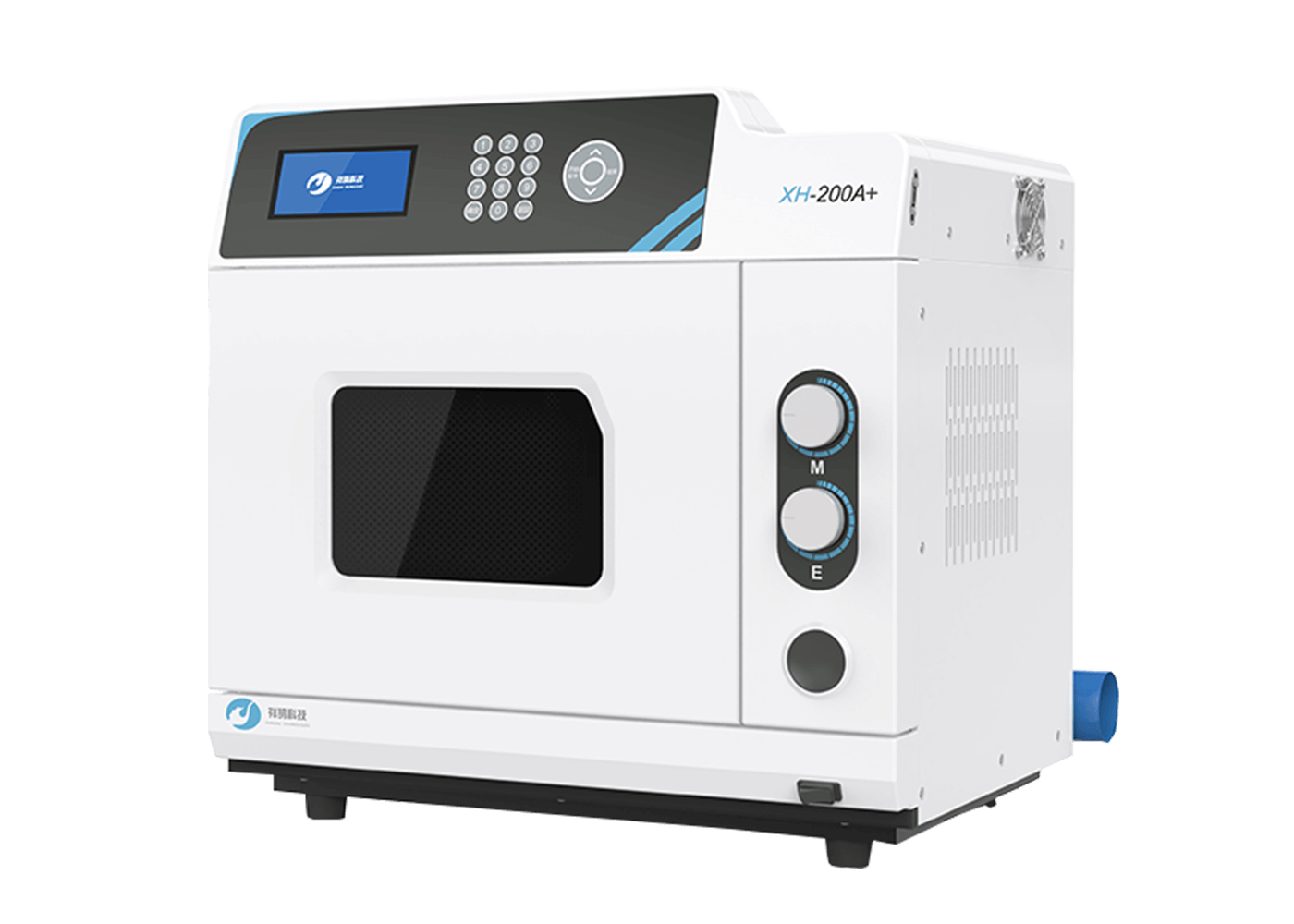
HMF oxidation to FDCA was carried out in a microwave reactor (multimode MW reactor, XH-200A+, Beijing, Xianghu).
Additional source evidence: source values include 0.4 g, 26 mL.
Mechanism / Method Highlights
- Method context: Temperature 65 °C and Microwave power 400 W.
- Energy-comparison evidence: source values include 4–12 h
- Source evidence: Experimental and electric-field DFT studies revealed that microwaves increased the rate constant of H2O2 decomposition by 1.6-fold compared to conventional heating methods, with an ultrahigh H2O2 utilization rate of 90%
- Abstract evidence: The microwave-boosted reaction synergy on the bimetallic Au−Pd dual active centers enabled the reaction to occur at near-room temperature (45 °C) and reached the highest FDCA yield of 88 mol % at 65 °C
- Reported outcome: Oxidant utilization 90%.
Application Value
- Provides a peer-reviewed SoarNova / Xianghu Q1 application case for XH-200A+ and XH-200A / XH-200C.
- Supports English discovery around Biomass platform-molecule conversion, HMF FDCA, and from.
- Preserves quantitative result evidence: Oxidant utilization 90%.
- Maintains source-level evidence details: Energy-comparison evidence: source values include 4–12 h, Source evidence: Experimental and electric-field DFT studies revealed that microwaves increased the rate constant of H2O2 decomposition by 1.6-fold compared to conventional heating methods, with an ultrahigh H2O2 utilization rate of 90%, Abstract evidence: The microwave-boosted reaction synergy on the bimetallic Au−Pd dual active centers enabled the reaction to occur at near-room temperature (45 °C) and reached the highest FDCA yield of 88 mol % at 65 °C, and Source evidence: MW power = 400 W, and the MW reactor temperature was set to 65 °C, as measured by the Pt100 temperature sensor. Magnetic stirring speed was 1000 rpm.
Related Equipment
FAQ
Which Xianghu instrument is covered by this page?
What is the main application direction?
Which publication does this case come from?
Microwave-Activated Peroxyl Radicals Accelerate Hydroxymethyl Oxidation on the AuPd/C Catalyst for Mild Synthesis of FDCA
ACS Sustainable Chemistry & Engineering, 2025
DOI: 10.1021/acssuschemeng.4c07309