Fact Snapshot
- Paper: General Synthesis of Doped Quasi-Single-Crystalline TiO2 Nanowires With Ultra-High Length-to-Diameter Ratios for Building Gas Sensor Arrays
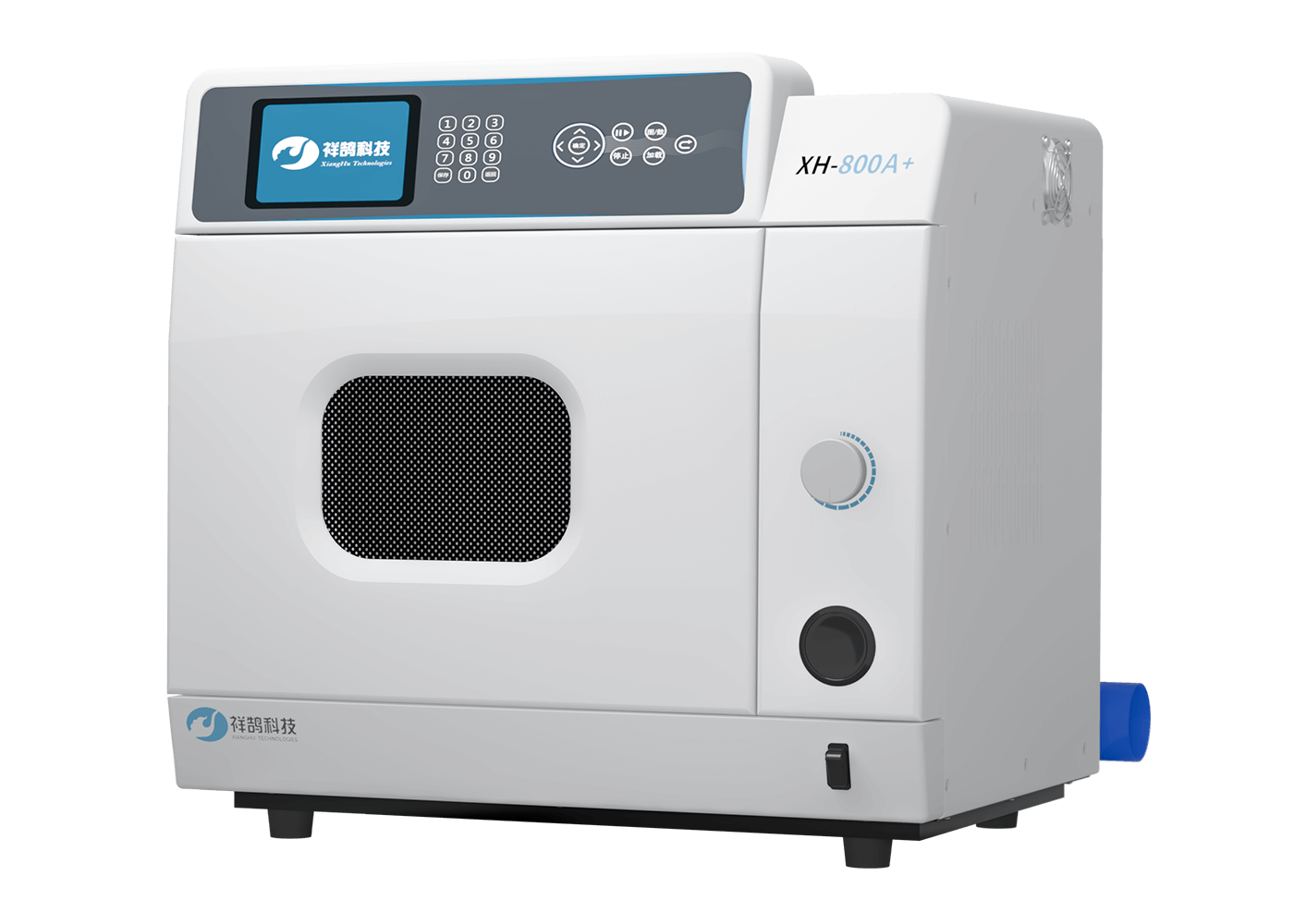
- Equipment: XH-800A
- Source: Rare Metals, 2026
- Research direction: TiO2
- Core conditions: Temperature 600 °C / 180 °C / 650 °C and Time 72 h / 48 h / 20 h
Research Abstract
General Synthesis of Doped Quasi-Single-Crystalline TiO2 Nanowires With Ultra-High Length-to-Diameter Ratios for Building Gas Sensor Arrays was published in Rare Metals (2026) and is indexed as a Xianghu Q1 application case for XH-800A. The structured source links this paper to TiO2. Core operating conditions include Temperature 600 °C / 180 °C / 650 °C and Time 72 h / 48 h / 20 h. The DOI recorded for this paper is 10.1002/rar2.70241.
Research Background and Problem
Equipment Use and Experimental Conditions
| Item | Parameter |
|---|---|
| Temperature | 600 °C / 180 °C / 650 °C |
| Time | 72 h / 48 h / 20 h |
Evidence Details
Equipment-detail evidence: source mentions SF-MAHR.
Equipment-detail evidence: magnetic stirring.
The microwave heating causes rapid temperature ramping to speed up the reaction, which shortens the reaction time from 48 h (hydrothermal reaction) to 20 h.
The autoclave was sealed and placed in a microwave synthesizer, where the reaction was carried out at 180°C under magnetic stirring for 20 h.
Additional source evidence: source values include 650 °C, 55 nm, 38 μm.
Temperature: 600 °C / 180 °C / 650 °C
Time: 72 h / 48 h / 20 h
QSDTO NWs were synthesized through a shear-force-driven, microwave-assisted hydrothermal reaction (XH-800A, XiangHu Technologies, China).
In this study, a general and versatile method was developed for synthesizing quasi-single-crystalline doped TiO2 (QSDTO) NWs with ultra-high length-to-diameter ratios (ca. 200–730), small diameters (ca. 55–210 nm), and, critically, arbitrary elemental doping.
Additional source evidence: source values include 600 °C, 3 h.
Mechanism / Method Highlights
- Method context: Temperature 600 °C / 180 °C / 650 °C and Time 72 h / 48 h / 20 h.
- Equipment-detail evidence: source mentions SF-MAHR
- Equipment-detail evidence: magnetic stirring
- Source evidence: The microwave heating causes rapid temperature ramping to speed up the reaction, which shortens the reaction time from 48 h (hydrothermal reaction) to 20 h
Application Value
- Positions XH-800A in a peer-reviewed Q1 research application.
- Records source affiliations: Department of Solar Energy and Environmental Physics, Swiss Institute for Dryland Environmental and Energy Research, Ben-Gurion University of the Negev and School of Materials Science and Engineering, Anhui University.
Related Equipment
FAQ
Which Xianghu instrument is covered by this page?
What is the main application direction?
Which publication does this case come from?
General Synthesis of Doped Quasi-Single-Crystalline TiO2 Nanowires With Ultra-High Length-to-Diameter Ratios for Building Gas Sensor Arrays
Rare Metals, 2026
DOI: 10.1002/rar2.70241