Fact Snapshot
- Paper: Ultrasound-excited hydrogen radical from NiFe layered double hydroxide for preparation of ultrafine supported Ru nanocatalysts in hydrogen storage of N-ethylcarbazole.
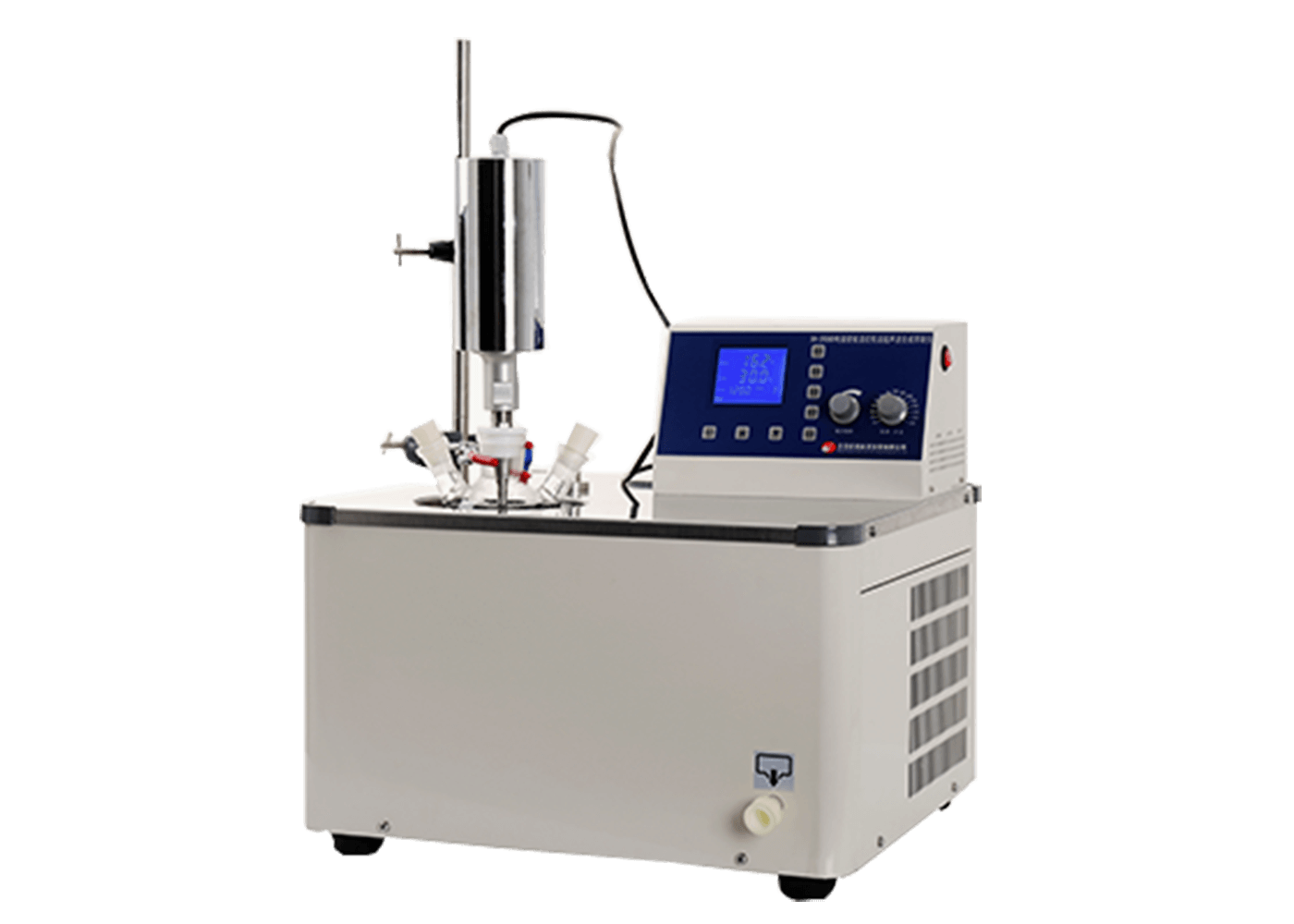
- Equipment: XH-2008D
- Source: Ultrasonics Sonochemistry, 2021
- Research direction: NiFe-LDH Ru
- Core conditions: Temperature 110 ℃, Power 300 W, and Pressure 4 MPa / 6 MPa / 7 MPa
- Key results: Conversion 100%, Yield 98.88%, and Yield 28.11%
Research Abstract
Ultrasound-excited hydrogen radical from NiFe layered double hydroxide for preparation of ultrafine supported Ru nanocatalysts in hydrogen storage of N-ethylcarbazole. was published in Ultrasonics Sonochemistry (2021) and is indexed as a Xianghu Q1 application case for XH-2008D. The structured source links this paper to NiFe-LDH Ru. Core operating conditions include Temperature 110 ℃, Power 300 W, and Pressure 4 MPa / 6 MPa / 7 MPa. Key reported results include Conversion 100%, Yield 98.88%, and Yield 28.11%. The DOI recorded for this paper is 10.1016/j.ultsonch.2021.105840.
Research Background and Problem
Equipment Use and Experimental Conditions
| Item | Parameter |
|---|---|
| Temperature | 110 ℃ |
| Power | 300 W |
| Pressure | 4 MPa / 6 MPa / 7 MPa |
| Time | 30 min / 80 min / 4 h |
Key Result
| Metric | Result |
|---|---|
| Conversion | 100% |
| Yield | 98.88% |
| Yield | 28.11% |
| Average particle size | 1.26 nm |
| Average particle size | 1.90 nm |
| Average particle size | 2.34 nm |
Evidence Details
Activation-energy evidence: source values include 55.90 kJ/mol, 58.00-99.50 kJ/mol, 65.17-115.00 kJ/mol. Entities: Raney-Ni.
Activation-energy evidence: source values include 90%, 25.15 kJ/mol.
Activation-energy evidence: source values include 25.15 kJ/mol.
Equipment-detail evidence: source values include 25 kHz.
The experimental results show that 5Ru/NiFe-LDH-300–60 exhibits the best catalytic performance with 100% conversion of NEC, 98.88% yield of dodecahydro-N-ethylcarbazole (12H-NEC) and 5.77 wt% mass hydrogen storage capacity under the reaction conditions of 110 ℃, 6 MPa and mRu:mNEC = 0.15 wt% for 80 min.
A certain amount of 0.01 mol/L RuCl3 solution was added according to the theoretical Ru loading amount, then the suspension was sonicated under different ultrasonic power (100, 300, 500 or 700 W) and time (30, 60, 90 or 120 min).
The XH-2008D ultrasonic reactor (Beijing Xianghu Science and Technology Development Co., Ltd) was used in the preparation process with 18 mm diameter titanium alloy probe and 25 kHz ultrasonic frequency.
Ultrasonic-method evidence: source values include 4 h, 307 nm, 300 W. Entities: NiFe-LDH.
Time: 30 min / 80 min / 4 h
Yield evidence: source values include 12H, 99.30%.
Yield evidence: source values include 97.64%, 12H.
In the ultrasonic process, the temperature of the liquid storage tank was controlled at 25 ~ 30 ℃.
Particle-size evidence: source values include 1.26 nm, 2.46 nm. Entities: NiFe-LDH-300-60.
Additional source evidence: source values include 130 °C, 30 min.
Mechanism / Method Highlights
- Method context: Temperature 110 ℃, Power 300 W, Pressure 4 MPa / 6 MPa / 7 MPa, and Time 30 min / 80 min / 4 h.
- Activation-energy evidence: source values include 55.90 kJ/mol, 58.00-99.50 kJ/mol, 65.17-115.00 kJ/mol. Entities: Raney-Ni
- Activation-energy evidence: source values include 90%, 25.15 kJ/mol
- Activation-energy evidence: source values include 25.15 kJ/mol
- Reported outcome: Conversion 100%, Yield 98.88%, Yield 28.11%, and Average particle size 1.26 nm.
Application Value
- Positions XH-2008D in a peer-reviewed Q1 research application.
- Highlights quantitative evidence: Conversion 100%, Yield 98.88%, and Yield 28.11%.
- Records source affiliations: Heilongjiang University and School of Chemistry and Material Science, Heilongjiang University, Harbin 150080, China.
Related Equipment
FAQ
Which Xianghu instrument is covered by this page?
What is the main application direction?
Which publication does this case come from?
Ultrasound-excited hydrogen radical from NiFe layered double hydroxide for preparation of ultrafine supported Ru nanocatalysts in hydrogen storage of N-ethylcarbazole.
Ultrasonics Sonochemistry, 2021
DOI: 10.1016/j.ultsonch.2021.105840