Fact Snapshot
- Paper: Polysaccharides from waste Zingiber mioga leaves: Ultrasonic-microwave-assisted extraction, characterization, antioxidant and anticoagulant potentials.
- Equipment: XH-300 series
- Source: Ultrasonics Sonochemistry, 2023
- Research direction: Research application
- Core conditions: Ultrasonic power 495 W / 490 W and Time 10 min / 5 min
- Key results: Yield 6.22 ± 0.14%
Research Abstract
Polysaccharides from waste Zingiber mioga leaves: Ultrasonic-microwave-assisted extraction, characterization, antioxidant and anticoagulant potentials. was published in Ultrasonics Sonochemistry (2023) and is indexed as a Xianghu Q1 application case for XH-300 series. The source record connects it with Research application. Core operating conditions include Ultrasonic power 495 W / 490 W and Time 10 min / 5 min. Key reported results include Yield 6.22 ± 0.14%.
Research Background and Problem
Equipment Use and Experimental Conditions
| Item | Parameter |
|---|---|
| Ultrasonic power | 495 W / 490 W |
| Time | 10 min / 5 min |
Key Result
| Metric | Result |
|---|---|
| Yield | 6.22 ± 0.14% |
Evidence Details
Under the liquid–solid ratio of 26: 1 mL/g, after ultrasonication at 495 W for 10 min, followed by microwaving at 490 W for 5 min, the yield of PWZMLs achieved to 6.22 ± 0.14 %, notably higher (P < 0.01) than other methods, and ultrasound contributed more to the yield than microwave.
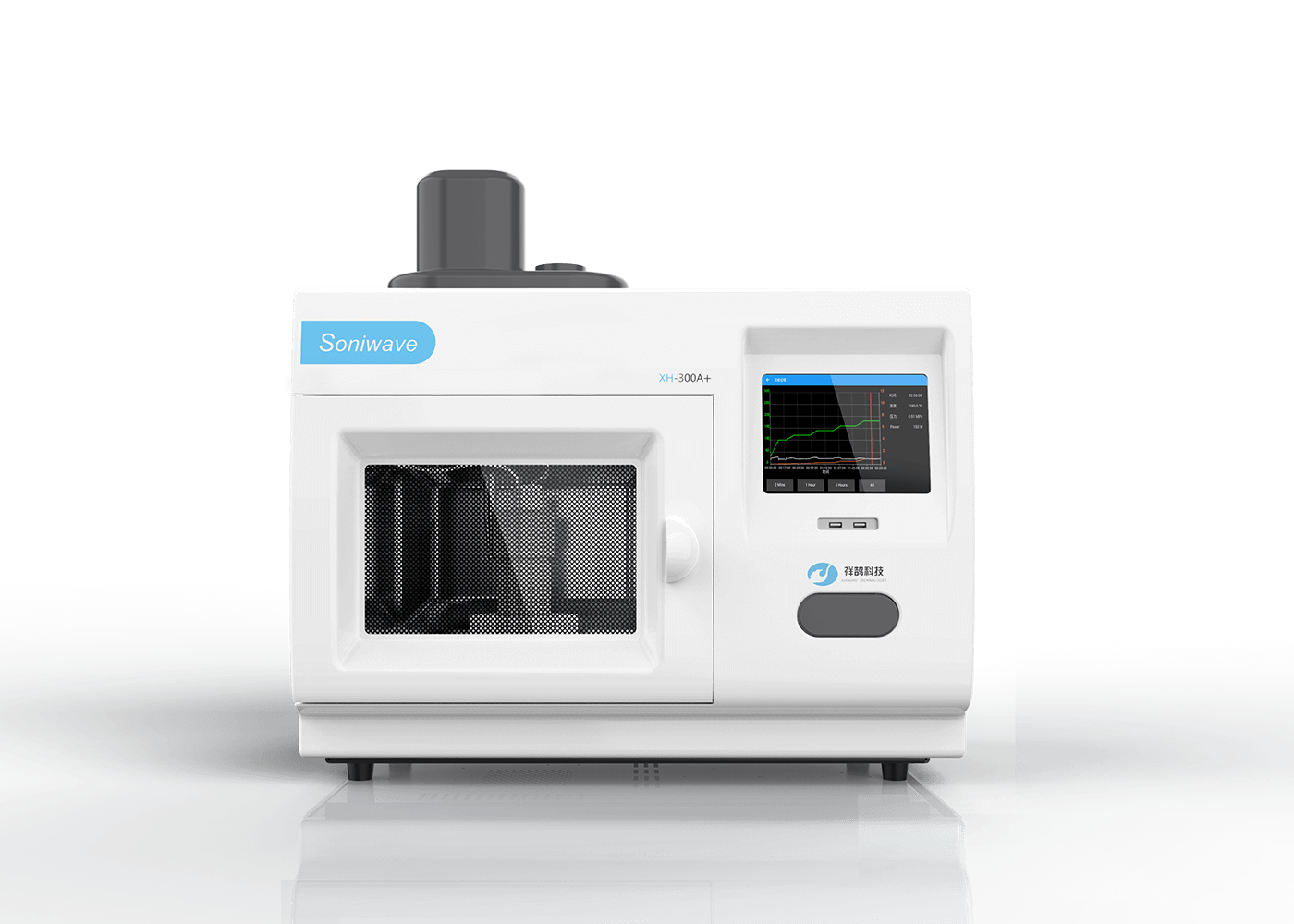
Waste Z. mioga leaves were ... transferred into a XH-300UL ultrasonic-microwave synergistic extractor (Xianghu Technology, Beijing, China) equipped with condensing tube.
At 5 mg/mL, the APTT-prolonging and FIB-lowering activities of PWZMLs were almost equivalent to heparin at the same concentration.
Mechanism / Method Highlights
- Method context: Ultrasonic power 495 W / 490 W and Time 10 min / 5 min.
- Abstract evidence: Under the liquid–solid ratio of 26: 1 mL/g, after ultrasonication at 495 W for 10 min, followed by microwaving at 490 W for 5 min, the yield of PWZMLs achieved to 6.22 ± 0.14 %, notably higher (P < 0.01) than other methods, and ultrasound contributed more to the yield than microwave
- Equipment evidence: Waste Z. mioga leaves were ... transferred into a XH-300UL ultrasonic-microwave synergistic extractor (Xianghu Technology, Beijing, China) equipped with condensing tube
- Source evidence: At 5 mg/mL, the APTT-prolonging and FIB-lowering activities of PWZMLs were almost equivalent to heparin at the same concentration
- Reported outcome: Yield 6.22 ± 0.14%.
Application Value
- Provides a peer-reviewed SoarNova / Xianghu Q1 application case for XH-300 series.
- Supports English discovery around Research application.
- Preserves quantitative result evidence: Yield 6.22 ± 0.14%.
- Maintains source-level evidence details: Abstract evidence: Under the liquid–solid ratio of 26: 1 mL/g, after ultrasonication at 495 W for 10 min, followed by microwaving at 490 W for 5 min, the yield of PWZMLs achieved to 6.22 ± 0.14 %, notably higher (P < 0.01) than other methods, and ultrasound contributed more to the yield than microwave, Equipment evidence: Waste Z. mioga leaves were ... transferred into a XH-300UL ultrasonic-microwave synergistic extractor (Xianghu Technology, Beijing, China) equipped with condensing tube, and Source evidence: At 5 mg/mL, the APTT-prolonging and FIB-lowering activities of PWZMLs were almost equivalent to heparin at the same concentration.
Related Equipment
FAQ
Which Xianghu instrument is covered by this page?
What research direction does this page support?
Which publication does this case come from?
Polysaccharides from waste Zingiber mioga leaves: Ultrasonic-microwave-assisted extraction, characterization, antioxidant and anticoagulant potentials.
Ultrasonics Sonochemistry, 2023
DOI: 10.1016/j.ultsonch.2023.106718