Fact Snapshot
- Paper: Review on recent biodiesel intensification through cavitation and microwave reactors
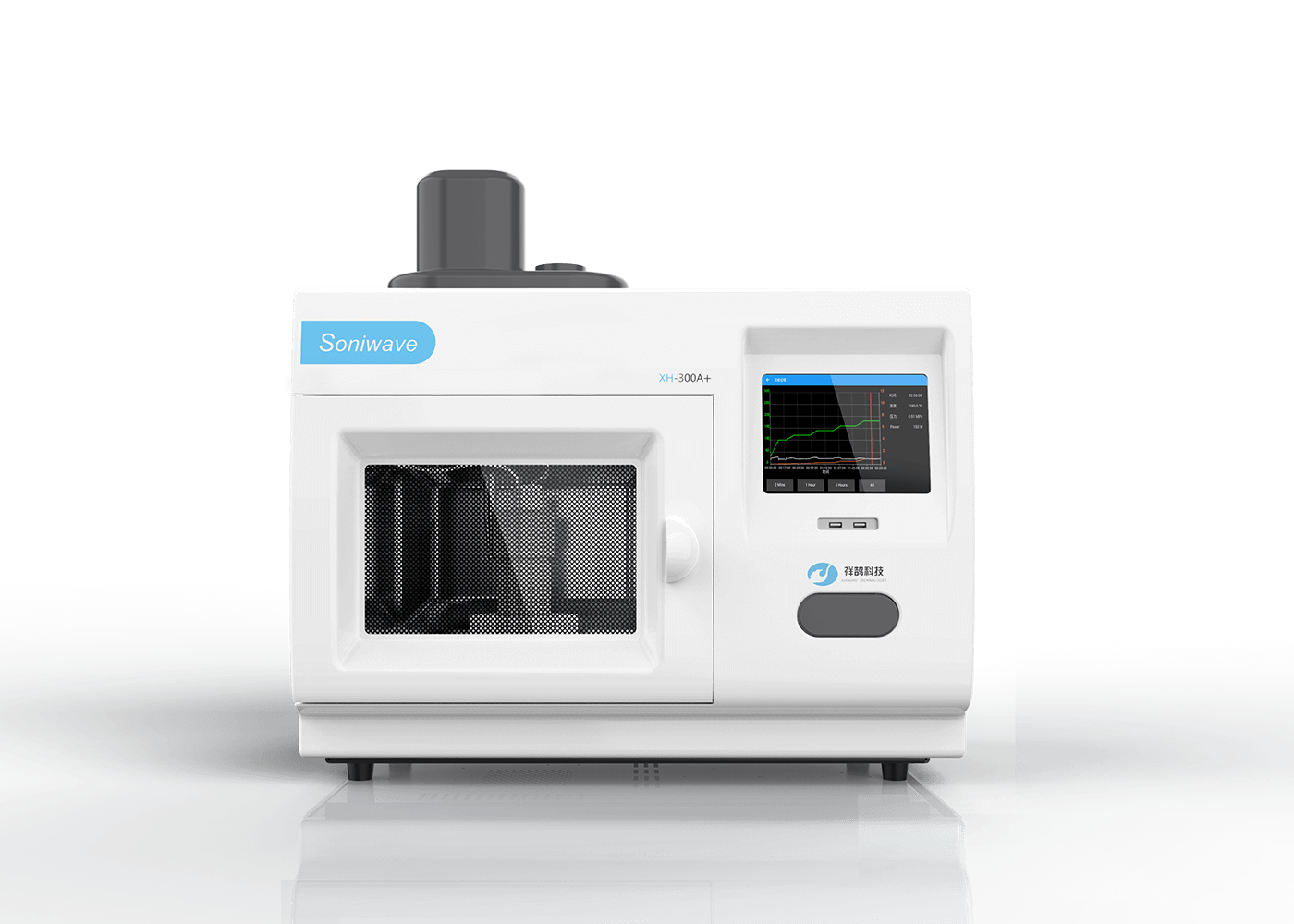
- Equipment context: XH-300A appears through a cited microwave-ultrasonic case in the review literature
- Journal and year: Heliyon, 2024
- Focus: yield, energy, activation energy, cost, and commercial feasibility
- Use boundary: route-level review, not a new experiment by the review authors
Research Abstract
This review summarizes recent biodiesel process intensification using microwave reactors, cavitation reactors, and combined microwave-cavitation systems. It compares yield, energy use, activation energy, economic feasibility, and scale-up considerations across transesterification and esterification studies. The paper is best used as a route-level reference for selecting intensification strategies, and the XH-300A-related content should be framed as a cited case within the review rather than as an experiment conducted directly by the review authors.
Research Background and Problem
Evidence Details
Review benchmark evidence: source values include 7 min, 338 K, 710 W, 98.40 %. Entities: FAME.
Review benchmark evidence: source values include 2.1 min, 331 K, 96.8 %, 0.46 MJ/L.
Review benchmark evidence: source values include 3 min, 300 W, 9:1, 97.6 %.
Equipment-detail evidence: source values include 1:0, 1:2, 2:1.
Review benchmark evidence: source values include 2 min, 96 %, 98 %. Entities: Martinez-Guerra.
Activation-energy evidence: source values include 26.5 kcal/mol, 42.9 kcal/mol.
Activation-energy evidence: source values include 13-28 kJ/mol, 34-50 kJ/mol.
Energy-comparison evidence: source values include 58.2 %.
Energy-comparison evidence: source values include 30.4 %.
Equipment-detail evidence: source values include 25 kHz.
Equipment-detail evidence: magnetic stirring unit, pulsed ultrasound operation.
Energy evidence: source values include 99.1 %, 76 %, 30.2 %, 58.2 %, 30.4 %.
Palm oil: 2.1 min, ratio of methyl alcohol to oil of 7:3.1 (v/v), 331 K, 96.8 % biodiesel yield, 0.46 (MJ/L).
Abstract evidence: source mentions XH-300A, mXH-300A.
Mechanism / Method Highlights
- Microwave heating addresses heat-transfer and rapid-temperature-rise limitations.
- Ultrasonic or hydrodynamic cavitation improves interfacial area and mass transfer.
- Combined systems can be valuable when both heating and phase-interface limitations are important.
- Energy, catalyst loading, excess alcohol, and scale-up complexity must be evaluated together.
Application Value
- Supports engineering comparison across microwave, cavitation, and combined routes.
- Keeps the XH-300A claim bounded to a cited case within the review.
- Highlights why energy, activation energy, and production cost matter alongside biodiesel yield.
Related Equipment
FAQ
Did the review authors directly use an XH-300A instrument?
Why include this paper in the application library?
Why are key result cards empty here?
A review on recent biodiesel intensification process through cavitation and microwave reactors: Yield, energy, and economic analysis.
Heliyon, 2024
DOI: 10.1016/j.heliyon.2024.e24643