Fact Snapshot
- Paper: Mining iron from stainless steel pickling wastewater to produce quasi-MIL-100(Fe) for boosted photocatalytic peroxymonosulfate activation
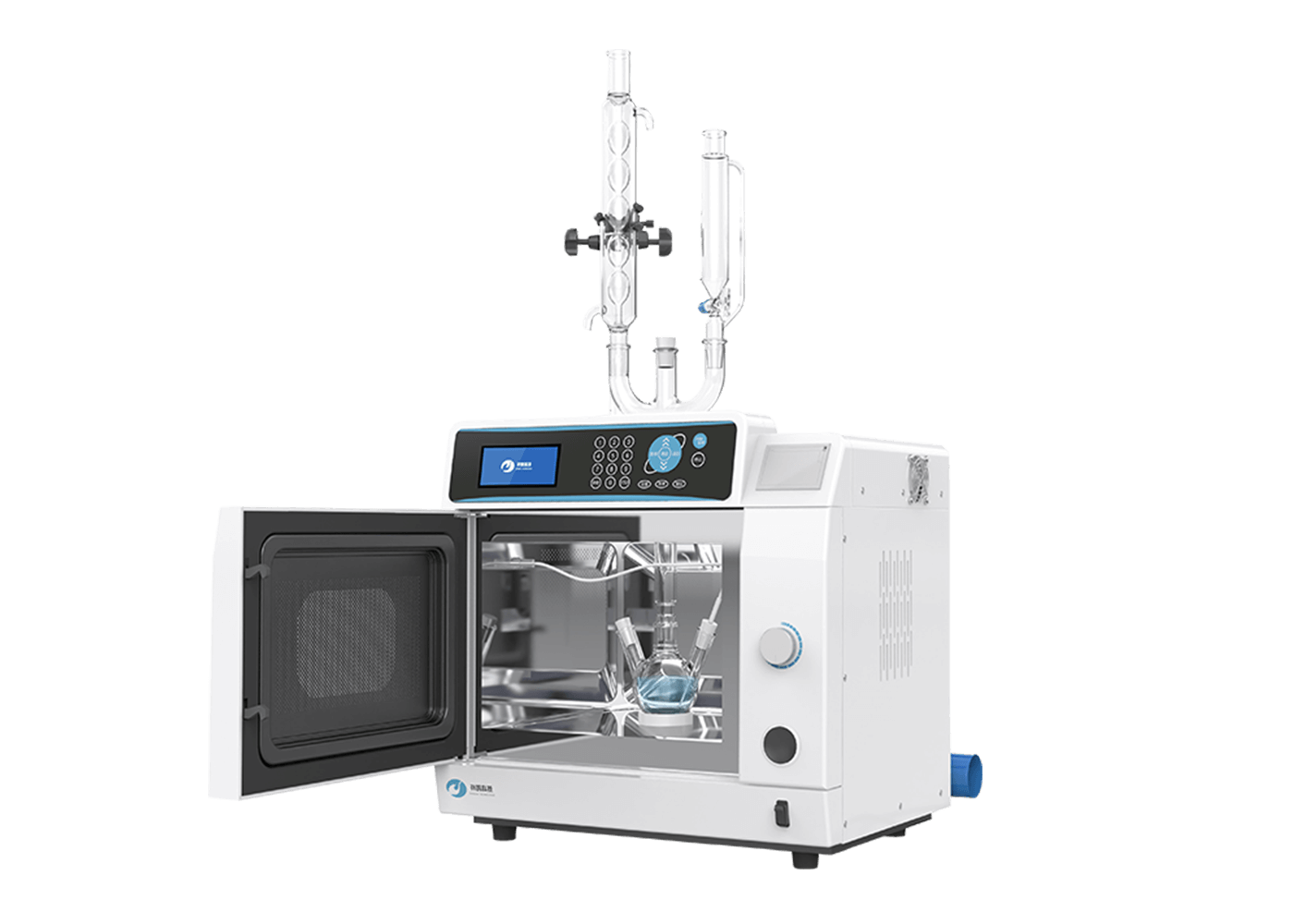
- Equipment: XH-100A
- Source: Nano Research, 2025
- Research direction: wastewater valorization, microwave-assisted MOF synthesis, photocatalytic PMS activation, and atrazine removal
- Core conditions: Power 750.0 W and Time 2.5 min / 90.0 min
- Key results: Degradation efficiency 100.0%
Research Abstract
Mining iron from stainless steel pickling wastewater to produce quasi-MIL-100(Fe) for boosted photocatalytic peroxymonosulfate activation was published in Nano Research (2025) and is indexed as a Xianghu Q1 application case for XH-100A. The source record connects it with wastewater valorization, microwave-assisted MOF synthesis, photocatalytic PMS activation, and atrazine removal. Core operating conditions include Power 750.0 W and Time 2.5 min / 90.0 min. Key reported results include Degradation efficiency 100.0%.
Research Background and Problem
Equipment Use and Experimental Conditions
| Item | Parameter |
|---|---|
| Power | 750.0 W |
| Time | 2.5 min / 90.0 min |
Key Result
| Metric | Result |
|---|---|
| Degradation efficiency | 100.0% |
Evidence Details
Energy-comparison evidence: source values include 24 h, 1.5 h, 19.2 kW·h, 1.125 kWh, 94.14%. Entities: XH-100B.
Energy-comparison evidence: source values include 19.2 kW·h, 1.125 kWh, 94.14%.
Energy-comparison evidence: source values include 24 h, 1.5 h, 94.14%.
Energy-comparison evidence: source values include 1.125 kWh, 94.14%.
1.5 g H3BTC, 60.0 mL pickling wastewater, 750.0 W, 107.0 degrees C, 2.5 min heating and 90.0 min holding
energy consumption 19.2 kW.h vs 1.125 kWh, reduction 94.14%
Additional source evidence: source values include 0.0124 min, 41.56 fold, 0.5153 min. Entities: Q350-MIL-100.
96.0 h continuous ATZ removal
Additional source evidence: source values include 96.0 h, 100.0%. Entities: Q350-MIL-100.
Additional source evidence: source values include 2.5 min, 107.0 °C.
Mechanism / Method Highlights
- The microwave-assisted route converts iron from stainless-steel pickling wastewater into the MIL-100(Fe) precursor, linking wastewater valorization with MOF synthesis.
- The higher activity of Q350-MIL-100(Fe) is associated with defects formed by partial ligand loss, so the performance gain is tied to material-structure evolution.
- Here the microwave role is rapid precursor crystallization and energy control, rather than direct attribution of downstream application performance to the instrument.
Application Value
- Turns iron from pickling wastewater directly into a higher-value Fe-MOF precursor.
- The microwave route shortens crystallization from 24 h to 1.5 h and reduces energy consumption by 94.14%.
- Records XH-100B, Xianghu Co., Beijing, and complete microwave conditions as direct equipment evidence.
- Q350-MIL-100(Fe) shows a higher kinetic rate in ATZ degradation and includes 96.0 h continuous removal evidence.
- Preserves quantitative result evidence: Degradation efficiency 100.0%.
Related Equipment
FAQ
Which Xianghu instrument is covered by this page?
What is the main application direction?
Which publication does this case come from?
Mining iron from stainless steel pickling wastewater to produce quasi-MIL-100(Fe) for boosted photocatalytic peroxymonosulfate activation
Nano Research, 2025
DOI: 10.26599/NR.2025.94907382