Fact Snapshot
- Paper: Reticular copper dual sites embedded with semiconductor particles for selective CO2-to-C2H4 photoreduction
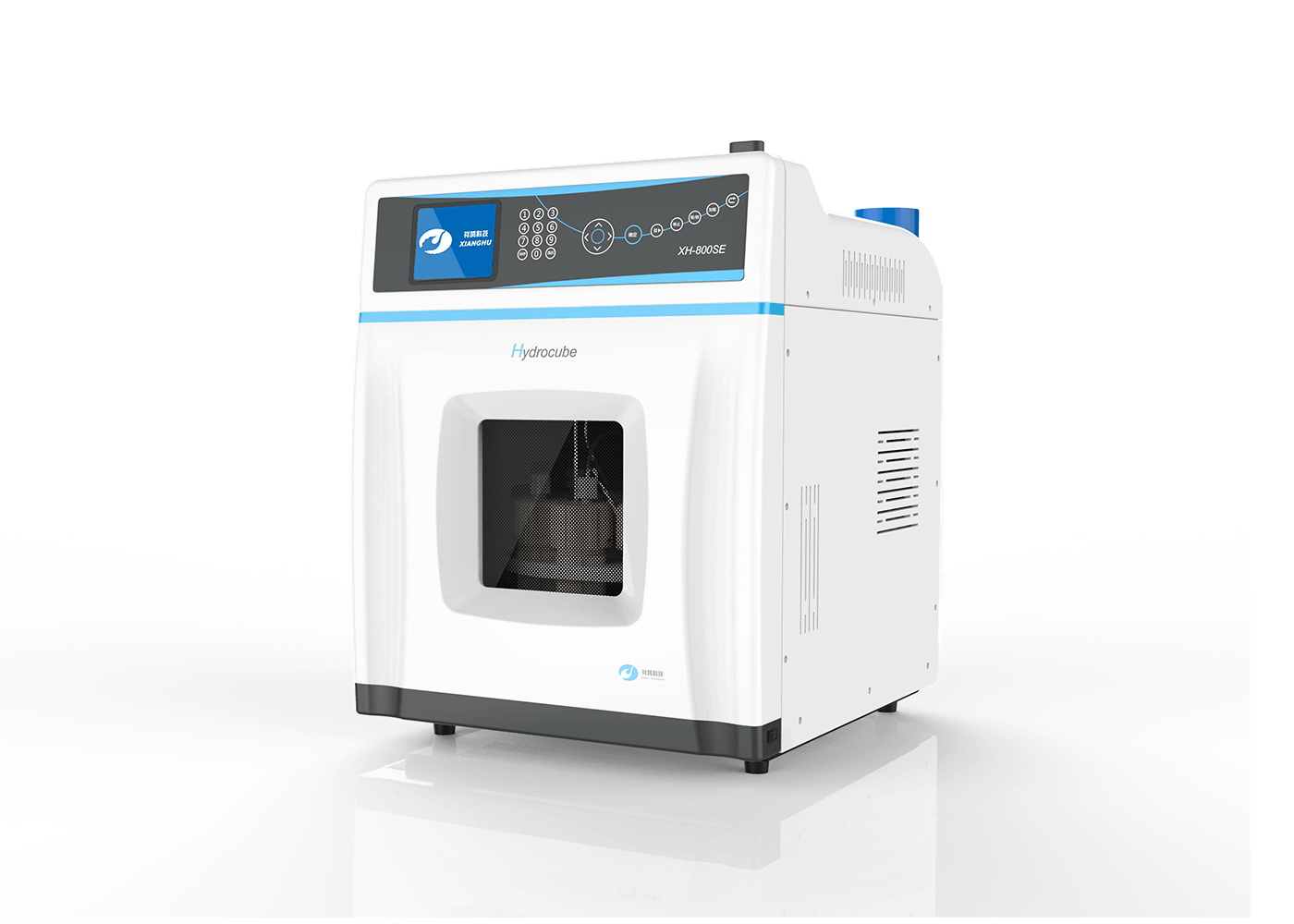
- Equipment: XH-800S
- Source: Nature Catalysis, 2025
- Research direction: CO2, MOF, /MOF, and C2
- Core conditions: Time 1 h
- Key results: Ethylene selectivity 75.5% and Ethylene selectivity 70%
Research Abstract
Reticular copper dual sites embedded with semiconductor particles for selective CO2-to-C2H4 photoreduction was published in Nature Catalysis (2025) and is indexed as a Xianghu Q1 application case for XH-800S. The source record connects it with CO2, MOF, /MOF, and C2. Core operating conditions include Time 1 h. Key reported results include Ethylene selectivity 75.5% and Ethylene selectivity 70%.
Research Background and Problem
Equipment Use and Experimental Conditions
| Item | Parameter |
|---|---|
| Time | 1 h |
Key Result
| Metric | Result |
|---|---|
| Ethylene selectivity | 75.5% |
| Ethylene selectivity | 70% |
Evidence Details
The autoclave was heated to 150 °C for 1 h in a hydrothermal synthesizer (XH-800SE ...)
Here we demonstrate a reticular dual-site photocatalyst design by embedding semiconductor units (TiO2, polymeric carbon nitride or WO3·H2O) within ligand-defective copper-based metal–organic frameworks (CuBTC-D/PC). This system demonstrates a 75.5% selectivity in converting CO2 to C2H4 with H2O as the electron donor.
Notably, CuBTC-D/TiO2 demonstrated a reduced threshold for C2 production under light intensities, achieving ~70% ethylene selectivity at 0.4 Sun irradiation.
Mechanism / Method Highlights
- Method context: Time 1 h.
- Instrument-role evidence: The autoclave was heated to 150 °C for 1 h in a hydrothermal synthesizer (XH-800SE ...)
- Abstract evidence: Here we demonstrate a reticular dual-site photocatalyst design by embedding semiconductor units (TiO2, polymeric carbon nitride or WO3·H2O) within ligand-defective copper-based metal–organic frameworks (CuBTC-D/PC). This system demonstrates a 75.5% selectivity in converting CO2 to C2H4 with H2O as the electron donor
- Performance evidence: Notably, CuBTC-D/TiO2 demonstrated a reduced threshold for C2 production under light intensities, achieving ~70% ethylene selectivity at 0.4 Sun irradiation
- Reported outcome: Ethylene selectivity 75.5% and Ethylene selectivity 70%.
Application Value
- Provides a peer-reviewed SoarNova / Xianghu Q1 application case for XH-800S.
- Supports English discovery around CO2, MOF, /MOF, and C2.
- Preserves quantitative result evidence: Ethylene selectivity 75.5% and Ethylene selectivity 70%.
- Maintains source-level evidence details: Instrument-role evidence: The autoclave was heated to 150 °C for 1 h in a hydrothermal synthesizer (XH-800SE ...), Abstract evidence: Here we demonstrate a reticular dual-site photocatalyst design by embedding semiconductor units (TiO2, polymeric carbon nitride or WO3·H2O) within ligand-defective copper-based metal–organic frameworks (CuBTC-D/PC). This system demonstrates a 75.5% selectivity in converting CO2 to C2H4 with H2O as the electron donor, and Performance evidence: Notably, CuBTC-D/TiO2 demonstrated a reduced threshold for C2 production under light intensities, achieving ~70% ethylene selectivity at 0.4 Sun irradiation.
Related Equipment
FAQ
Which Xianghu instrument is covered by this page?
What is the main application direction?
Which publication does this case come from?
Reticular copper dual sites embedded with semiconductor particles for selective CO2-to-C2H4 photoreduction
Nature Catalysis, 2025
DOI: 10.1038/s41929-025-01369-8