Fact Snapshot
- Paper: Enhancing the gel properties of soy protein isolate: the role of oxidized konjac glucomannan in acid-induced gelation
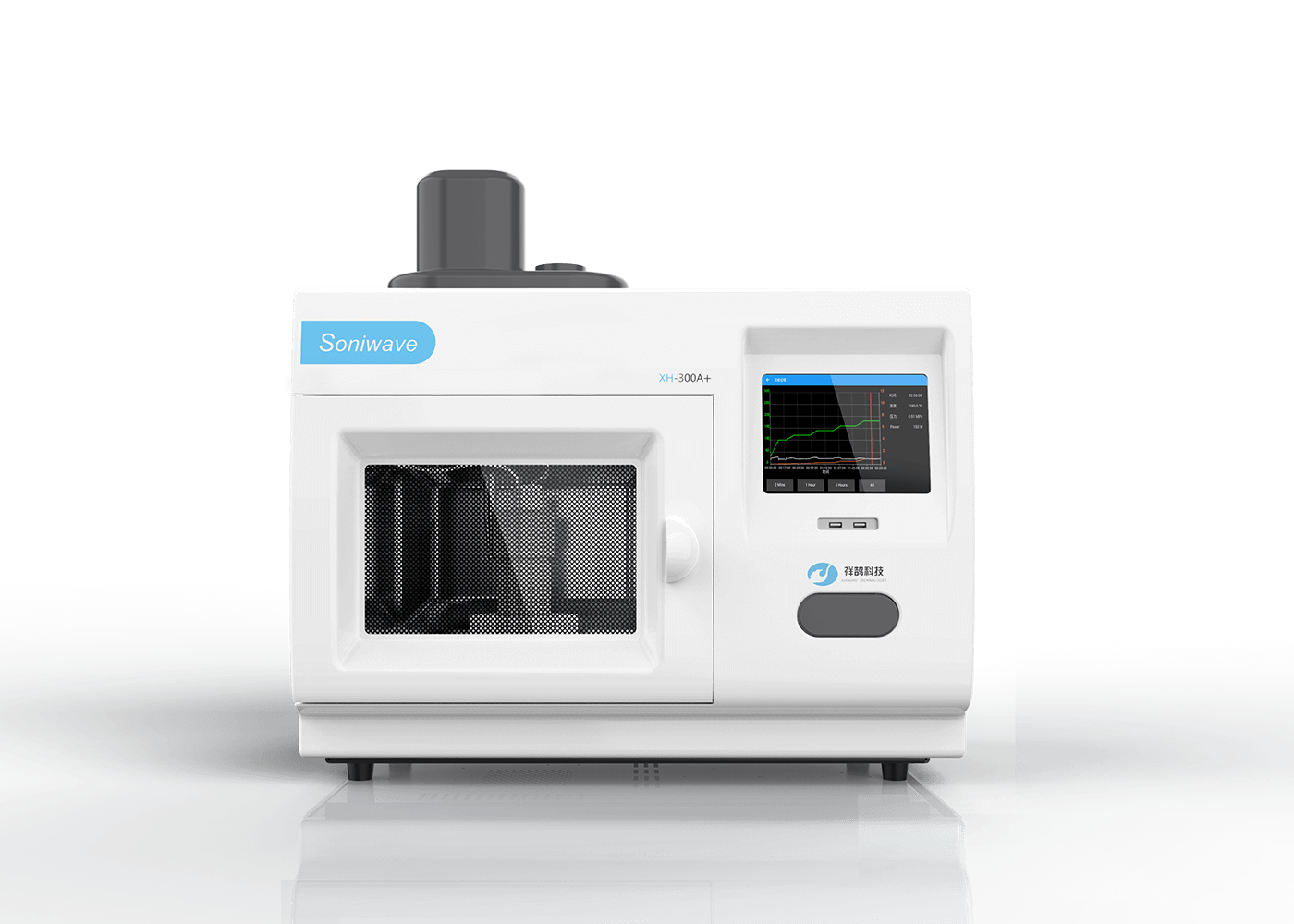
- Equipment: XH-300 series
- Source: Journal of theScience of Food and Agriculture, 2024
- Research direction: Research application
- Core conditions: Temperature 50 °C / 65 °C / 85 °C, Microwave power 600 W, and Time 1 h / 120 min / 15 min
Research Abstract
Enhancing the gel properties of soy protein isolate: the role of oxidized konjac glucomannan in acid-induced gelation was published in Journal of theScience of Food and Agriculture (2024) and is indexed as a Xianghu Q1 application case for XH-300 series. The source record connects it with Research application. Core operating conditions include Temperature 50 °C / 65 °C / 85 °C, Microwave power 600 W, and Time 1 h / 120 min / 15 min.
Research Background and Problem
Equipment Use and Experimental Conditions
| Item | Parameter |
|---|---|
| Temperature | 50 °C / 65 °C / 85 °C |
| Microwave power | 600 W |
| Time | 1 h / 120 min / 15 min |
Evidence Details
Storage-stability evidence: source values include 4.0 g, 0.5 g, 100 mL, 25 °C, 30 min, 95 °C, 10 min, 4 °C, 1 mL, 3 g, 85 °C, 15 min. Entities: SPI-OKGM, kg-1, SPOK-1, SPOK-4.
A XH-300B microwave synthesizer (Xianghu, Beijing, China) was operated at 600 W and 65 °C. Ozone gas was obtained from an ozone generator (815Y, Feili, Shenzhen, China) at a rate of 15 g h-1. The suspensions were treated for 30, 60, 90, and 120 min.
Microwave-method evidence: source values include 4 g, 400 mL, 50 °C, 1 h.
Results: In this study, the composite gels demonstrated a significant increase in whiteness (69.02% to 70.59%) compared with the SPI gel (67.41%). Key physicochemical properties, such as water-holding capacity (WHC), textural characteristics, viscoelasticity, and thermal stability, were notably improved.
SEM revealed a reduction in the average pore diameter of the composite gels from 70.57 ± 4.13 μm to 37.19 ± 0.24 μm when the oxidation degree of OKGM was kept at or below 60 min, contributing to a more compact and orderly microstructure.
Enhanced hydrophobic and electrostatic interactions within the composite gels also accelerated the gelation process, shortening the gelation time from 15.77 ± 0.37 min to 12.45 ± 0.18 min.
Additional source evidence: source values include 38.02 ± 0.73 μm, 37.19 ± 0.24 μm, 60 min. Entities: SPOK-1, SPOK-2.
Stability evidence: source values include 309 °C, 320 °C. Entities: SPOK-1, SPOK-2.
Additional source evidence: source values include 15.77 ± 0.37 min, 12.64 ± 0.16 min. Entities: SPOK-1, SPOK-2, SPOK-3, SPOK-4.
Additional source evidence: source values include 15.41 ± 1.30 g, 36.25 g. Entities: SPOK-4, SPOK-2.
Additional source evidence: source values include 60 min, 30-60 min. Entities: SPOK-4.
Additional source evidence: source values include 15.77 min, 12.45 min.
Additional source evidence: source values include 70.57 μm, 37.19 μm.
Mechanism / Method Highlights
- Method context: Temperature 50 °C / 65 °C / 85 °C, Microwave power 600 W, and Time 1 h / 120 min / 15 min.
- Storage-stability evidence: source values include 4.0 g, 0.5 g, 100 mL, 25 °C, 30 min, 95 °C, 10 min, 4 °C, 1 mL, 3 g, 85 °C, 15 min. Entities: SPI-OKGM, kg-1, SPOK-1, SPOK-4
- Equipment and method evidence: A XH-300B microwave synthesizer (Xianghu, Beijing, China) was operated at 600 W and 65 °C. Ozone gas was obtained from an ozone generator (815Y, Feili, Shenzhen, China) at a rate of 15 g h-1. The suspensions were treated for 30, 60, 90, and 120 min
- Microwave-method evidence: source values include 4 g, 400 mL, 50 °C, 1 h
Application Value
- Provides a peer-reviewed SoarNova / Xianghu Q1 application case for XH-300 series.
- Supports English discovery around Research application.
- Maintains source-level evidence details: Storage-stability evidence: source values include 4.0 g, 0.5 g, 100 mL, 25 °C, 30 min, 95 °C, 10 min, 4 °C, 1 mL, 3 g, 85 °C, 15 min. Entities: SPI-OKGM, kg-1, SPOK-1, SPOK-4, Equipment and method evidence: A XH-300B microwave synthesizer (Xianghu, Beijing, China) was operated at 600 W and 65 °C. Ozone gas was obtained from an ozone generator (815Y, Feili, Shenzhen, China) at a rate of 15 g h-1. The suspensions were treated for 30, 60, 90, and 120 min, Microwave-method evidence: source values include 4 g, 400 mL, 50 °C, 1 h, and Abstract evidence: Results: In this study, the composite gels demonstrated a significant increase in whiteness (69.02% to 70.59%) compared with the SPI gel (67.41%). Key physicochemical properties, such as water-holding capacity (WHC), textural characteristics, viscoelasticity, and thermal stability, were notably improved.
Related Equipment
FAQ
Which Xianghu instrument is covered by this page?
What research direction does this page support?
Which publication does this case come from?
Enhancing the gel properties of soy protein isolate: the role of oxidized konjac glucomannan in acid-induced gelation
Journal of theScience of Food and Agriculture, 2024
DOI: 10.1002/jsfa.13991