Fact Snapshot
- Paper: Simultaneous ultrasound and microwave application in myosin-chlorogenicacid conjugation: Unlocking enhanced emulsion stability
- Equipment: XH-300 series
- Source: Food Chemistry: X, 2024
- Research direction: Research application
- Core conditions: Temperature 50 °C, Ultrasonic power 100 W, Microwave power 100 W, and Time 48 h / 30 min / 12 h
- Key results: Solubility 73.16%
Research Abstract
Simultaneous ultrasound and microwave application in myosin-chlorogenicacid conjugation: Unlocking enhanced emulsion stability was published in Food Chemistry: X (2024) and is indexed as a Xianghu Q1 application case for XH-300 series. The source record connects it with Research application. Core operating conditions include Temperature 50 °C, Ultrasonic power 100 W, Microwave power 100 W, and Time 48 h / 30 min / 12 h. Key reported results include Solubility 73.16%.
Research Background and Problem
Equipment Use and Experimental Conditions
| Item | Parameter |
|---|---|
| Temperature | 50 °C |
| Ultrasonic power | 100 W |
| Microwave power | 100 W |
| Time | 48 h / 30 min / 12 h |
Key Result
| Metric | Result |
|---|---|
| Solubility | 73.16% |
Evidence Details
Ultrasonic treatment was carried out at 28 kHz at 100 W until the temperature was 50 ◦C, and was maintained at 50 ◦C for 30 min in the ultrasound field.
Also, a much shorter time (30 min) was needed for the grafting process compared to that of 12 h for conventional method.
Time: 48 h / 30 min / 12 h
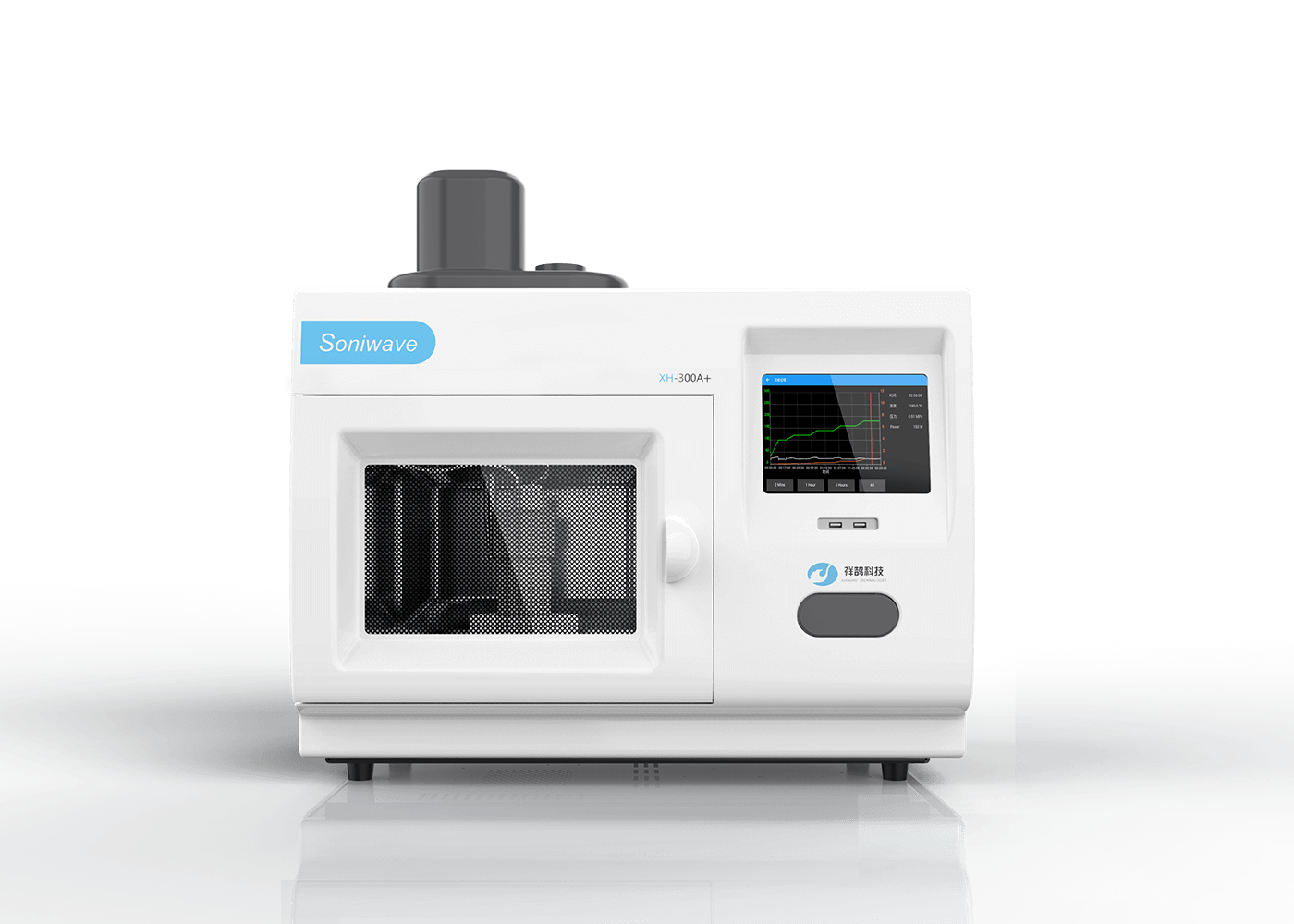
An XH-300B ultrasound-microwave (UM) reactor (Beijing Xianghu Science and Technology Development Co. Ltd., China) equipped with a cooling-water-circulating device was used to induce an ultrasound-assisted conjugation...
UM-myosin-CA conjugate exhibited the highest creaming stability, as the corresponding emulsion was not extensively separated after 270 min centrifugation.
... with UM-myosin-CA presenting the smallest droplet size at 13.14 µm. This trend persisted over storage durations of 6 and 12 days...
The solubility escalated to 73.16 % upon CA grafting facilitated by the UM technique...
... UM-myosin-CA at 42.86 nm.
Additional source evidence: source values include 10 mg/mL, 1 mg/mL.
Additional source evidence: source values include 50 °C, 30 min.
Mechanism / Method Highlights
- Method context: Temperature 50 °C, Ultrasonic power 100 W, Microwave power 100 W, and Time 48 h / 30 min / 12 h.
- Source evidence: Ultrasonic treatment was carried out at 28 kHz at 100 W until the temperature was 50 ◦C, and was maintained at 50 ◦C for 30 min in the ultrasound field
- Source evidence: Also, a much shorter time (30 min) was needed for the grafting process compared to that of 12 h for conventional method
- Condition evidence: Time: 48 h / 30 min / 12 h
- Reported outcome: Solubility 73.16%.
Application Value
- Provides a peer-reviewed SoarNova / Xianghu Q1 application case for XH-300 series.
- Supports English discovery around Research application.
- Preserves quantitative result evidence: Solubility 73.16%.
- Maintains source-level evidence details: Source evidence: Ultrasonic treatment was carried out at 28 kHz at 100 W until the temperature was 50 ◦C, and was maintained at 50 ◦C for 30 min in the ultrasound field, Source evidence: Also, a much shorter time (30 min) was needed for the grafting process compared to that of 12 h for conventional method, Condition evidence: Time: 48 h / 30 min / 12 h, and Equipment evidence: An XH-300B ultrasound-microwave (UM) reactor (Beijing Xianghu Science and Technology Development Co. Ltd., China) equipped with a cooling-water-circulating device was used to induce an ultrasound-assisted conjugation.
Related Equipment
FAQ
Which Xianghu instrument is covered by this page?
What research direction does this page support?
Which publication does this case come from?
Simultaneous ultrasound and microwave application in myosin-chlorogenicacid conjugation: Unlocking enhanced emulsion stability
Food Chemistry: X, 2024
DOI: 10.1016/j.fochx.2024.101149