Fact Snapshot
- Paper: Pulsed microwave induced super-heating in graphitic carbon domains drives high-efficiency 5-hydroxymethylfurfural synthesis
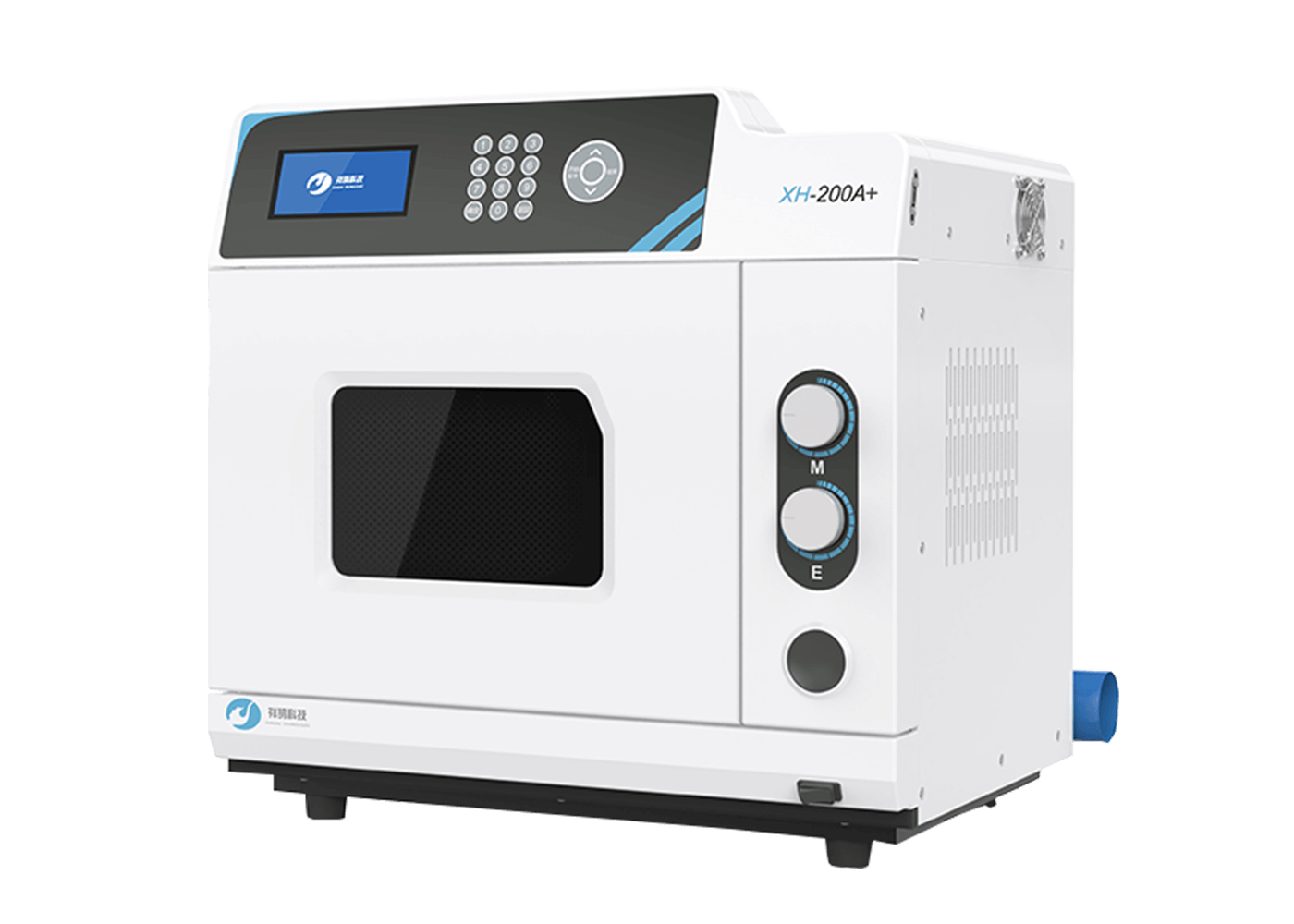
- Equipment: XH-200A+ and XH-200A / XH-200C
- Source: Chemical Engineering Journal, 2025
- Research direction: microwave catalysis, microwave-responsive catalyst design, carbon-material structure control, and biomass platform-molecule conversion
- Core conditions: Power 400 W
- Key results: Yield 80% and Yield 91%
Research Abstract
Pulsed microwave induced super-heating in graphitic carbon domains drives high-efficiency 5-hydroxymethylfurfural synthesis was published in Chemical Engineering Journal (2025) and is indexed as a Xianghu Q1 application case for XH-200A+ and XH-200A / XH-200C. The source record connects it with microwave catalysis, microwave-responsive catalyst design, carbon-material structure control, and biomass platform-molecule conversion. Core operating conditions include Power 400 W. Key reported results include Yield 80% and Yield 91%.
Research Background and Problem
Equipment Use and Experimental Conditions
| Item | Parameter |
|---|---|
| Power | 400 W |
Key Result
| Metric | Result |
|---|---|
| Yield | 80% |
| Yield | 91% |
Evidence Details
Equipment-detail evidence: magnetic stirring.
HMF synthesis from fructose was carried out in a microwave reactor (multimode MW reactor, XH-200A+, Beijing, Xianghu). In a typical procedure, 0.14 M fructose and 0.2 g catalyst were charged into 20 mL DMSO. The MW reactor used pulsed microwave inputs and the temperature is set to 160 oC. Magnetic stirring was applied throughout the reaction process.
It was found that the HMF yield reached approximately 80% under continuous mode for 15 min or pulse mode for 4 cycles. respectively. However, the energy efficiency of the pulse mode input was approximately 4 times higher than that of the continuous mode (pulse mode: 11.43 mmol/KJ·L·g; continuous mode: 3.46 mmol/KJ·L·g).
Upon 100 W microwave irradiation, the solid phase experienced preferential heating, with the center region reaching a temperature of 76 oC within 60 s. Subsequently, the heat slowly dissipated from the carbon powders to the surrounding liquid phase, causing bulk DMSO phase to reach a temperature of approximately 50 oC.
It can be also observed that the energy efficiency under 600 W&2 cycles condition was 13.9 mmol/KJ·L·g, surpassing the 11.4 mmol/KJ·L·g observed under 400 W&4 cycles conditions.
Microwave-method evidence: source values include 100 W, 42 °C.
Microwave-method evidence: source values include 30 s, 300 s.
Yield evidence: source values include 80%, 4 fold.
However, with an increase to 4 input cycles, the Fe-SC PSV catalyst achieved a maximum yield of 91%, albeit with a decrease in energy efficiency to 8.7 mmol/KJ·L·g.
Under a catalyst dosage of 0.1 g, the reaction achieved a 64 mol% HMF yield while maintaining a high energy efficiency of 18.5 mmol/KJ·L·g.
Additional source evidence: source values include 80-200 nm. Entities: Fe-SC.
Mechanism / Method Highlights
- Fe-catalyzed graphitic carbon domains are the key structural basis. Fe-SC PSV shows the highest graphitization degree, loose curled graphitic nanosheets of about 80-200 nm, and sulfonic groups grafted at graphitic edges.
- The higher graphitization degree strengthens dielectric response; Fe-SC PSV shows higher epsilon-prime at 2.45 GHz, making it more efficient at absorbing and converting microwave energy.
- Microwave energy preferentially dissipates in the solid phase and solid-liquid interface, producing localized overheating near catalytic active sites.
- Pulsed microwave input better matches rapid reaction with slower mass transfer: the on-cycle creates local high temperature, while the off-cycle allows mass and heat redistribution.
- Localized heating promotes rapid HMF formation from fructose and suppresses undesired side reactions, so the advantage comes from heat placement near reactive sites rather than simply raising the bulk temperature.
Application Value
- The optimized Fe-SC PSV catalyst reaches 80 mol% HMF yield and 18.5 mmol/KJ·L·g energy efficiency over four pulsed cycles.
- Both pulsed and continuous modes can reach about 80% HMF yield, but pulsed operation gives about four times the energy efficiency of continuous operation.
- Preserves quantitative result evidence: Yield 80% and Yield 91%.
- Maintains source-level evidence details: Equipment-detail evidence: magnetic stirring, Equipment and method evidence: HMF synthesis from fructose was carried out in a microwave reactor (multimode MW reactor, XH-200A+, Beijing, Xianghu). In a typical procedure, 0.14 M fructose and 0.2 g catalyst were charged into 20 mL DMSO. The MW reactor used pulsed microwave inputs and the temperature is set to 160 oC. Magnetic stirring was applied throughout the reaction process, Source evidence: It was found that the HMF yield reached approximately 80% under continuous mode for 15 min or pulse mode for 4 cycles. respectively. However, the energy efficiency of the pulse mode input was approximately 4 times higher than that of the continuous mode (pulse mode: 11.43 mmol/KJ·L·g; continuous mode: 3.46 mmol/KJ·L·g), and Source evidence: Upon 100 W microwave irradiation, the solid phase experienced preferential heating, with the center region reaching a temperature of 76 oC within 60 s. Subsequently, the heat slowly dissipated from the carbon powders to the surrounding liquid phase, causing bulk DMSO phase to reach a temperature of approximately 50 oC.
Related Equipment
FAQ
Which Xianghu instrument is covered by this page?
What is the main application direction?
Which publication does this case come from?
Pulsed microwave induced super-heating in graphitic carbon domains drives high-efficiency 5-hydroxymethylfurfural synthesis
Chemical Engineering Journal, 2025
DOI: 10.1016/j.cej.2024.157402