Fact Snapshot
- Paper: Microwave-assisted hydrothermal synthesis of highly dispersed cerium–zirconium solid solution on Ti3C2Tx nanosheets as an efficient decontamination towards sulfur mustard simulants
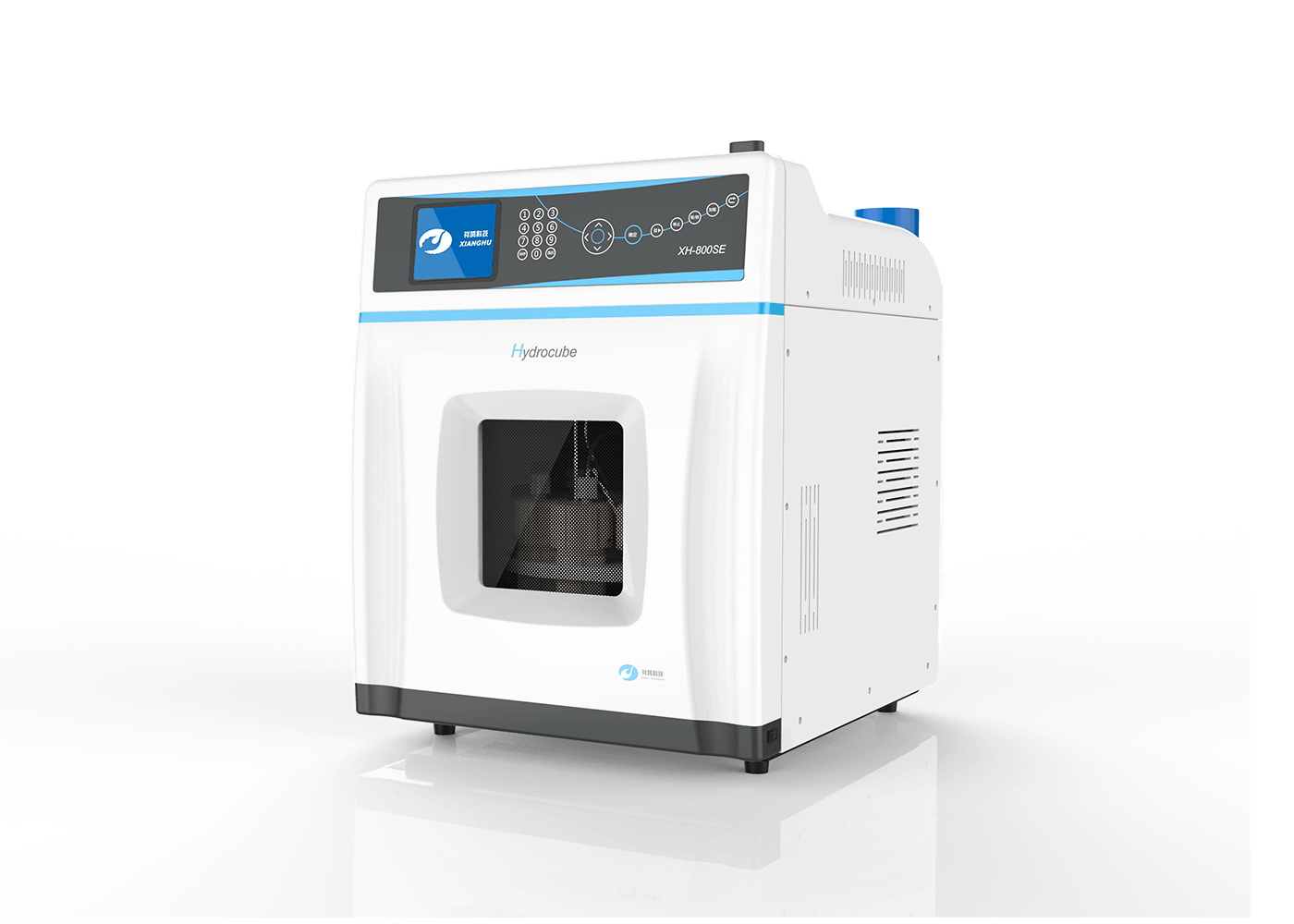
- Equipment: XH-800S
- Source: Journal of Hazardous Materials, 2024
- Research direction: MXene
- Core conditions: Time 10 min / 30 min
- Key results: Specific surface area 250.6 m2/g, Total surface adsorbed oxygen species 47.4%, Average particle size 5.01 nm, and Decomposition rate 89.1%
Research Abstract
Microwave-assisted hydrothermal synthesis of highly dispersed cerium–zirconium solid solution on Ti3C2Tx nanosheets as an efficient decontamination towards sulfur mustard simulants was published in Journal of Hazardous Materials (2024) and is indexed as a Xianghu Q1 application case for XH-800S. The source record connects it with MXene. Core operating conditions include Time 10 min / 30 min. Key reported results include Specific surface area 250.6 m2/g, Total surface adsorbed oxygen species 47.4%, Average particle size 5.01 nm, and Decomposition rate 89.1%.
Research Background and Problem
Equipment Use and Experimental Conditions
| Item | Parameter |
|---|---|
| Time | 10 min / 30 min |
Key Result
| Metric | Result |
|---|---|
| Specific surface area | 250.6 m2/g |
| Average particle size | 5.01 nm |
| Total pore volume | 0.20 cm3/g |
| Total surface adsorbed oxygen species | 47.4% |
| Decomposition rate | 89.1% |
Evidence Details
Equipment-detail evidence: source values include 1:2, 15 mL, 30 min, 89.1%.
Equipment-detail evidence: source values include 1:2, 10 min, 15 mL. Entities: Ti-15.
Activation-energy evidence: source values include 47.4%, 62.2%. Entities: CO2-TPD, NH3-TPD.
Optimal degradation of 2-CEES was achieved using PEG1000 as the dispersant, a cerium-to-zirconium ratio of 1:2, along with 15 mL of MXene, resulting in a 30-minute decomposition rate of 89.1 % and a remarkably short half-life of only 6.5 min.
The microwave-assisted hydrolysis method was adopted to synthesize CexZr1-xO2/Ti3C2Tx hybrids ... the microwave synthesis instrument (XH-800SE, Beijing Xianghu Technology Development Co., LTD.) at 200 °C for 10 min.
Notably, the CeZr/Ti-15 composites exhibites the optimal performance, with degradation rate constants (k1 and k2) of 7.81 h-1 and 0.69 h-1, respectively, and a remarkably short reaction half-life of only 6.5 min.
Average particle size: 5.01 nm
Mechanism / Method Highlights
- Method context: Time 10 min / 30 min.
- Equipment-detail evidence: source values include 1:2, 15 mL, 30 min, 89.1%
- Equipment-detail evidence: source values include 1:2, 10 min, 15 mL. Entities: Ti-15
- Activation-energy evidence: source values include 47.4%, 62.2%. Entities: CO2-TPD, NH3-TPD
- Reported outcome: Specific surface area 250.6 m2/g, Total surface adsorbed oxygen species 47.4%, Average particle size 5.01 nm, and Decomposition rate 89.1%.
Application Value
- Provides a peer-reviewed SoarNova / Xianghu Q1 application case for XH-800S.
- Supports English discovery around MXene.
- Preserves quantitative result evidence: Specific surface area 250.6 m2/g, Total surface adsorbed oxygen species 47.4%, Average particle size 5.01 nm, and Decomposition rate 89.1%.
- Maintains source-level evidence details: Equipment-detail evidence: source values include 1:2, 15 mL, 30 min, 89.1%, Equipment-detail evidence: source values include 1:2, 10 min, 15 mL. Entities: Ti-15, Activation-energy evidence: source values include 47.4%, 62.2%. Entities: CO2-TPD, NH3-TPD, and Source evidence: Optimal degradation of 2-CEES was achieved using PEG1000 as the dispersant, a cerium-to-zirconium ratio of 1:2, along with 15 mL of MXene, resulting in a 30-minute decomposition rate of 89.1 % and a remarkably short half-life of only 6.5 min.
Related Equipment
FAQ
Which Xianghu instrument is covered by this page?
What is the main application direction?
Which publication does this case come from?
Microwave-assisted hydrothermal synthesis of highly dispersed cerium–zirconium solid solution on Ti3C2Tx nanosheets as an efficient decontamination towards sulfur mustard simulants
Journal of Hazardous Materials, 2024
DOI: 10.1016/j.jhazmat.2024.136203