Fact Snapshot
- Paper: Graphene oxide modulated dual S-scheme ultrathin heterojunctions with iron phthalocyanine and phase-mixed bismuth molybdate as wide visible-light catalysts
- Equipment: XH-800S
- Source: Environmental Science-Nano, 2023
- Research direction: S-scheme and microwave hydrothermal synthesis
- Core conditions: Time 20 min
- Key results: Activity 8.5-fold
Research Abstract
Graphene oxide modulated dual S-scheme ultrathin heterojunctions with iron phthalocyanine and phase-mixed bismuth molybdate as wide visible-light catalysts was published in Environmental Science-Nano (2023) and is indexed as a Xianghu Q1 application case for XH-800S. The source record connects it with S-scheme and microwave hydrothermal synthesis. Core operating conditions include Time 20 min. Key reported results include Activity 8.5-fold.
Research Background and Problem
Equipment Use and Experimental Conditions
| Item | Parameter |
|---|---|
| Time | 20 min |
Key Result
| Metric | Result |
|---|---|
| Activity | 8.5-fold |
Evidence Details
Activation-energy evidence: source values include 4 nm, 1 nm. Entities: S-scheme.
Activation-energy evidence: source values include 8.5 fold, 4.3 fold.
The activities of the samples were evaluated by photodegradation of TC using a 150 W white-light LED light (28.3 mW/cm2). Firstly, 0.03 g catalysts and TC solution (100 mL, 10 mg L-1) were mixed in a 250 ml beaker under stirring for 30 min in dark to reach the adsorption-desorption equilibrium.
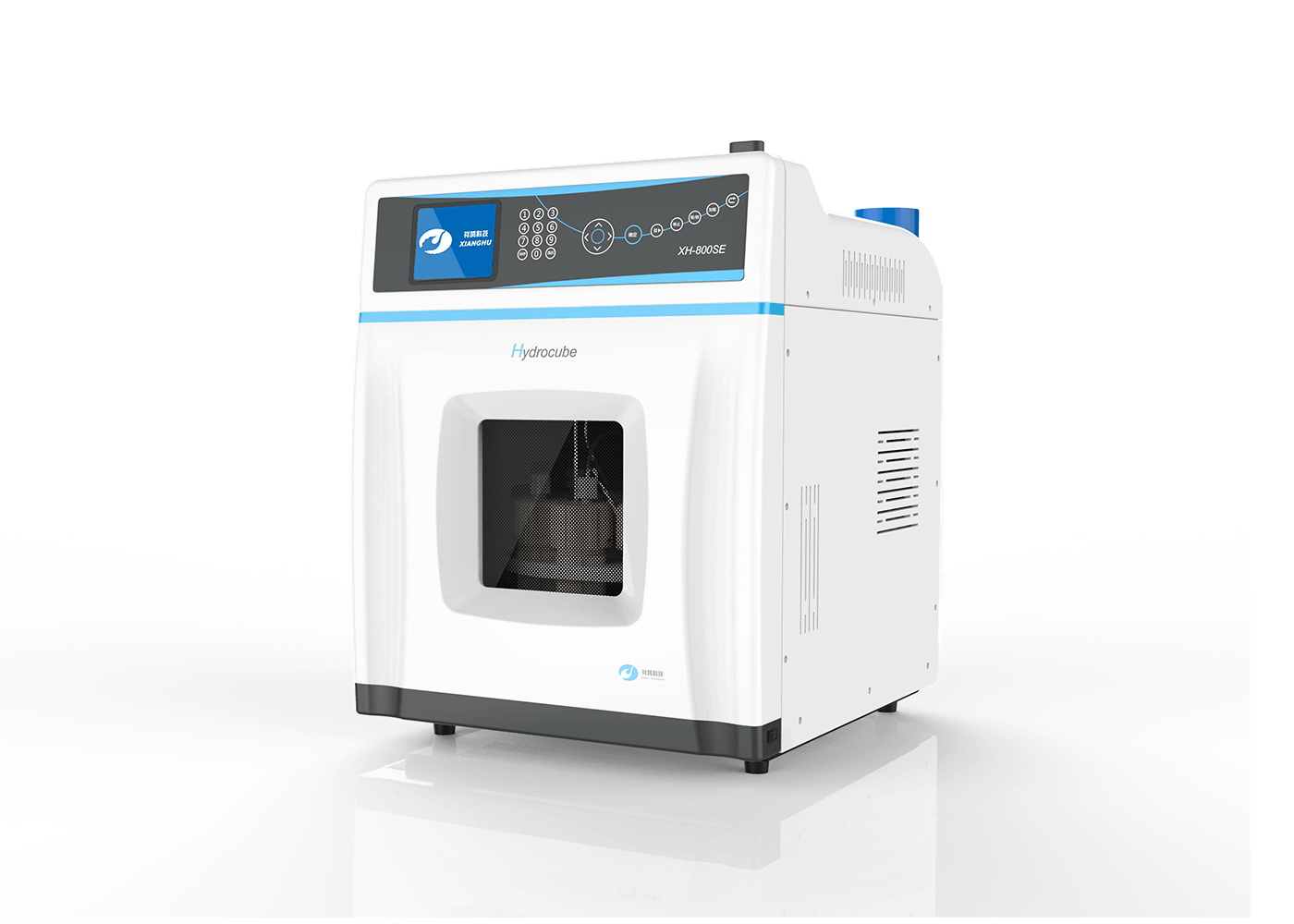
The mixture was then transferred to a 100 mL Teflon-lined autoclave and heated at 180 °C for 20 min in a microwave-assisted hydrothermal parallel synthesizer (XH-800S, power of 1000 W, Beijing Xianghu Science and Technology Development Co.).
Additional source evidence: source values include 0.3G, 8.5 fold, 4.3 fold.
Mechanism / Method Highlights
- Method context: Time 20 min.
- Activation-energy evidence: source values include 4 nm, 1 nm. Entities: S-scheme
- Activation-energy evidence: source values include 8.5 fold, 4.3 fold
- Source evidence: The activities of the samples were evaluated by photodegradation of TC using a 150 W white-light LED light (28.3 mW/cm2). Firstly, 0.03 g catalysts and TC solution (100 mL, 10 mg L-1) were mixed in a 250 ml beaker under stirring for 30 min in dark to reach the adsorption-desorption equilibrium
- Reported outcome: Activity 8.5-fold.
Application Value
- Provides a peer-reviewed SoarNova / Xianghu Q1 application case for XH-800S.
- Supports English discovery around S-scheme and Microwave hydrothermal synthesis.
- Preserves quantitative result evidence: Activity 8.5-fold.
- Maintains source-level evidence details: Activation-energy evidence: source values include 4 nm, 1 nm. Entities: S-scheme, Activation-energy evidence: source values include 8.5 fold, 4.3 fold, Source evidence: The activities of the samples were evaluated by photodegradation of TC using a 150 W white-light LED light (28.3 mW/cm2). Firstly, 0.03 g catalysts and TC solution (100 mL, 10 mg L-1) were mixed in a 250 ml beaker under stirring for 30 min in dark to reach the adsorption-desorption equilibrium, and Equipment evidence: The mixture was then transferred to a 100 mL Teflon-lined autoclave and heated at 180 °C for 20 min in a microwave-assisted hydrothermal parallel synthesizer (XH-800S, power of 1000 W, Beijing Xianghu Science and Technology Development Co.).
Related Equipment
FAQ
Which Xianghu instrument is covered by this page?
What is the main application direction?
Which publication does this case come from?
Graphene oxide modulated dual S-scheme ultrathin heterojunctions with iron phthalocyanine and phase-mixed bismuth molybdate as wide visible-light catalysts
Environmental Science-Nano, 2023
DOI: 10.1039/D2EN01148D