Fact Snapshot
- Paper: Bimetallic MoNi/WNi nanoalloys for ultra-sensitive wearable temperature sensors
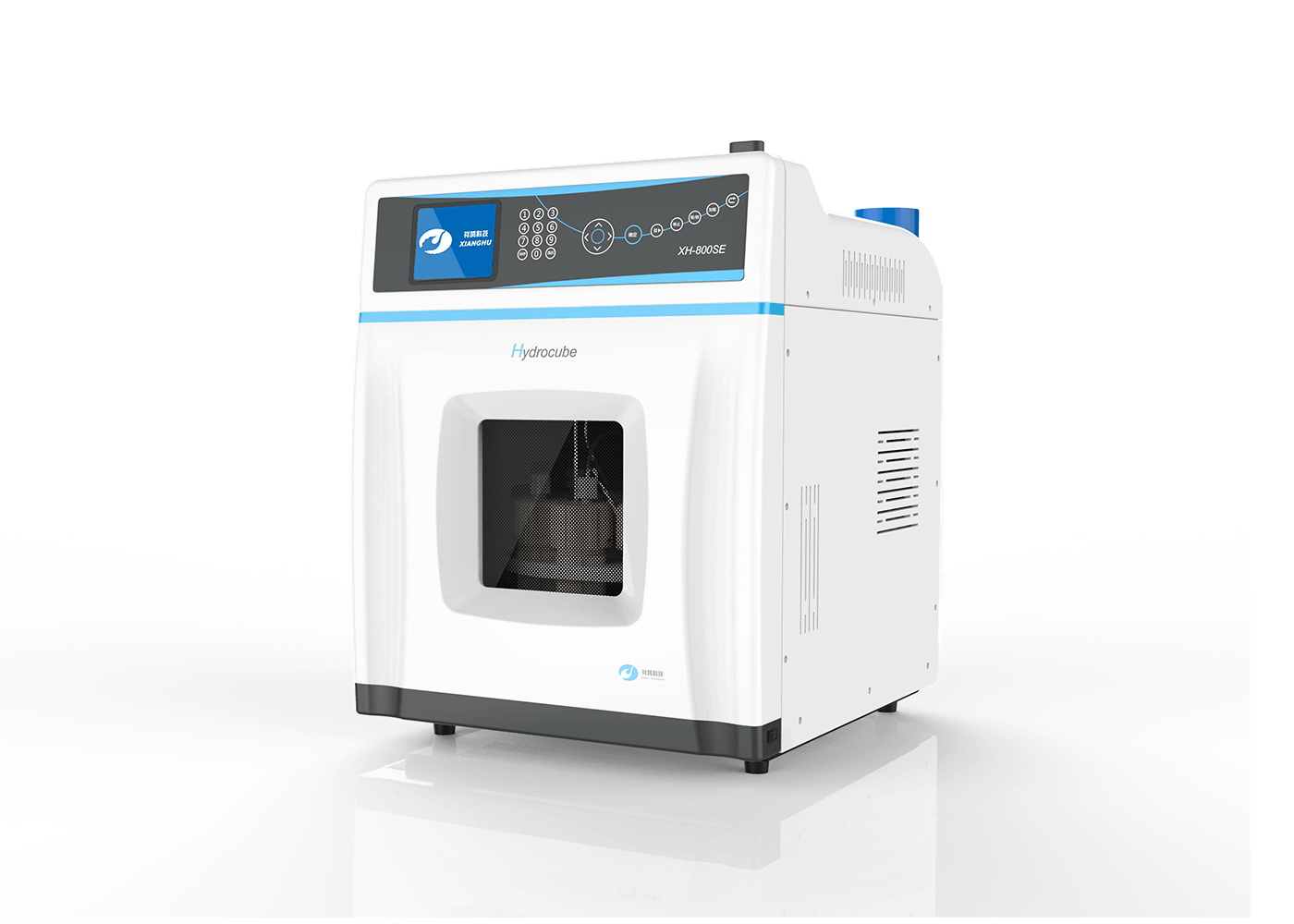
- Equipment: XH-800S
- Source: Journal of Materials Chemistry A, 2022
- Research direction: Research application
- Core conditions: Temperature 200 ℃, Microwave power 600 W, and Time 10 min
Research Abstract
Bimetallic MoNi/WNi nanoalloys for ultra-sensitive wearable temperature sensors was published in Journal of Materials Chemistry A (2022) and is indexed as a Xianghu Q1 application case for XH-800S. The source record connects it with Research application. Core operating conditions include Temperature 200 ℃, Microwave power 600 W, and Time 10 min.
Research Background and Problem
Equipment Use and Experimental Conditions
| Item | Parameter |
|---|---|
| Temperature | 200 ℃ |
| Microwave power | 600 W |
| Time | 10 min |
Evidence Details
The B-value decreases from 10 890 K for 25–40 °C, 6228 K for 25–100 °C, 5645 K for 25–230 °C, to 5378 K for 25–330 °C.
The response time is 5.1 s for 100 °C, 2.9 s for 230 °C, and 2.3 s for 330 °C, respectively.
the mixture was transferred in a 40 mL Teflon microwave vessel and treated at 200 °C for 10 min in a microwave reactor (XH-800G, Beijing Xianghu Ltd.) in which the power was set at 600 W.
The nanoalloys possess exceptional sensing performance, with nearly four orders of resistance variation from 25 to 330 °C, constant of thermistor B = 10 890 K (25–40 °C), and rapid response, endowing temperature sensors with promising application respiratory monitoring.
The sensor shows superior sensibility and repeatability, which can precisely monitor every breath from the tester in an outdoor environment (38 °C, 65 RH%). Besides, the sensor can clearly distinguish deep breath (D-B) and normal breath (N-B).
Additional source evidence: source values include 25-40 °C, 10890 K.
Mechanism / Method Highlights
- Method context: Temperature 200 ℃, Microwave power 600 W, and Time 10 min.
- Source evidence: The B-value decreases from 10 890 K for 25–40 °C, 6228 K for 25–100 °C, 5645 K for 25–230 °C, to 5378 K for 25–330 °C
- Source evidence: The response time is 5.1 s for 100 °C, 2.9 s for 230 °C, and 2.3 s for 330 °C, respectively
- Equipment evidence: the mixture was transferred in a 40 mL Teflon microwave vessel and treated at 200 °C for 10 min in a microwave reactor (XH-800G, Beijing Xianghu Ltd.) in which the power was set at 600 W
Application Value
- Provides a peer-reviewed SoarNova / Xianghu Q1 application case for XH-800S.
- Supports English discovery around Research application.
- Maintains source-level evidence details: Source evidence: The B-value decreases from 10 890 K for 25–40 °C, 6228 K for 25–100 °C, 5645 K for 25–230 °C, to 5378 K for 25–330 °C, Source evidence: The response time is 5.1 s for 100 °C, 2.9 s for 230 °C, and 2.3 s for 330 °C, respectively, Equipment evidence: the mixture was transferred in a 40 mL Teflon microwave vessel and treated at 200 °C for 10 min in a microwave reactor (XH-800G, Beijing Xianghu Ltd.) in which the power was set at 600 W, and Abstract evidence: The nanoalloys possess exceptional sensing performance, with nearly four orders of resistance variation from 25 to 330 °C, constant of thermistor B = 10 890 K (25–40 °C), and rapid response, endowing temperature sensors with promising application respiratory monitoring.
Related Equipment
FAQ
Which Xianghu instrument is covered by this page?
What research direction does this page support?
Which publication does this case come from?
Bimetallic MoNi/WNi nanoalloys for ultra-sensitive wearable temperature sensors
Journal of Materials Chemistry A, 2022
DOI: 10.1039/D1TA10499C