Fact Snapshot
- Paper: Adsorption Behaviors of Cationic Methylene Blue and Anionic Reactive Blue 19 Dyes onto Nano-Carbon Adsorbent Carbonized from Small Precursors
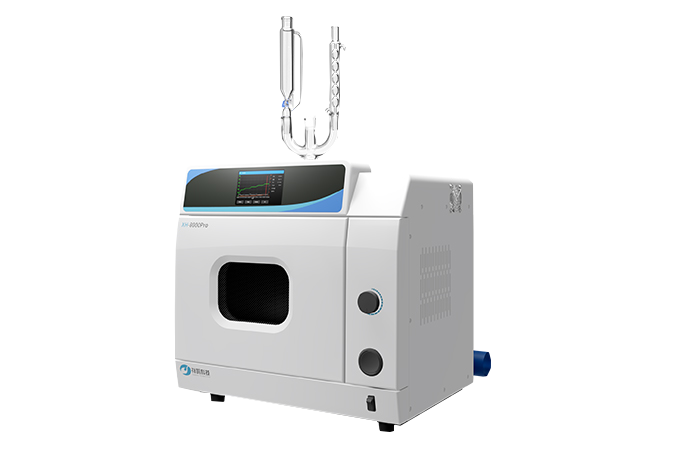
- Equipment: XH-8000 / XH-8000Plus
- Source: Nanomaterials, 2022
- Research direction: Research application
- Core conditions: Time 30 min / 24 h / 2 h
- Key results: Specific surface area 21.7 m2/g, Removal 100%, Removal 80.49%, and Adsorption capacity 118.98 mg/g
Research Abstract
Adsorption Behaviors of Cationic Methylene Blue and Anionic Reactive Blue 19 Dyes onto Nano-Carbon Adsorbent Carbonized from Small Precursors was published in Nanomaterials (2022) and is indexed as a Xianghu Q1 application case for XH-8000 / XH-8000Plus. The source record connects it with Research application. Core operating conditions include Time 30 min / 24 h / 2 h. Key reported results include Specific surface area 21.7 m2/g, Removal 100%, Removal 80.49%, and Adsorption capacity 118.98 mg/g.
Research Background and Problem
Equipment Use and Experimental Conditions
| Item | Parameter |
|---|---|
| Time | 30 min / 24 h / 2 h |
Key Result
| Metric | Result |
|---|---|
| Specific surface area | 21.7 m2/g |
| Removal | 100% |
| Removal | 80.49% |
| Adsorption capacity | 118.98 mg/g |
| Adsorption capacity | 100 mg/g |
| Adsorption capacity | 28.42 mg/g |
Evidence Details
Release-kinetics evidence: source values include 116.01 mg, R2 = 0.998, R2 = 0.995.
Microwave-method evidence: source values include 1.83 g, 1.71 g, 40 mL, 100 mL. Entities: Teflon-lined.
Microwave-method evidence: source values include 30 min, 60 °C, 24 h. Entities: XH-8000Plus, N-CM.
the solution was transferred into a 100 mL Teflon-lined stainless autoclave that was then sealed, followed by heating to 150 ℃ for 2 h at a microwave synthesizer.
Additional source evidence: source values include 80.49%, 88.66%, 72.77%, 72-89%. Entities: N-CM.
Release evidence: source values include 90 mg, 118.98 mg, 79.54 mg, 100%.
Additional source evidence: source values include 50 mL, 0.5 mg/mL, 25 ± 1 °C. Entities: N-CM.
Additional source evidence: source values include 72 h, 25 °C, 45.25 mg. Entities: N-CM.
N-CM showed superior selective capability toward MB in different mixed dye systems, with high removal efficiencies of 73–89%.
Additional source evidence: source values include 1.5 nm, 24.8 nm. Entities: N-CM.
Additional source evidence: source values include 118.98 mg, 120.77 mg.
Additional source evidence: source values include 28.42 mg, 100 mg.
Additional source evidence: source values include 45 °C, 62.76 mg.
Mechanism / Method Highlights
- Method context: Time 30 min / 24 h / 2 h.
- Release-kinetics evidence: source values include 116.01 mg, R2 = 0.998, R2 = 0.995
- Microwave-method evidence: source values include 1.83 g, 1.71 g, 40 mL, 100 mL. Entities: Teflon-lined
- Microwave-method evidence: source values include 30 min, 60 °C, 24 h. Entities: XH-8000Plus, N-CM
- Reported outcome: Specific surface area 21.7 m2/g, Removal 100%, Removal 80.49%, and Adsorption capacity 118.98 mg/g.
Application Value
- Provides a peer-reviewed SoarNova / Xianghu Q1 application case for XH-8000 / XH-8000Plus.
- Supports English discovery around Research application.
- Preserves quantitative result evidence: Specific surface area 21.7 m2/g, Removal 100%, Removal 80.49%, and Adsorption capacity 118.98 mg/g.
- Maintains source-level evidence details: Release-kinetics evidence: source values include 116.01 mg, R2 = 0.998, R2 = 0.995, Microwave-method evidence: source values include 1.83 g, 1.71 g, 40 mL, 100 mL. Entities: Teflon-lined, Microwave-method evidence: source values include 30 min, 60 °C, 24 h. Entities: XH-8000Plus, N-CM, and Source evidence: the solution was transferred into a 100 mL Teflon-lined stainless autoclave that was then sealed, followed by heating to 150 ℃ for 2 h at a microwave synthesizer.
Related Equipment
FAQ
Which Xianghu instrument is covered by this page?
What research direction does this page support?
Which publication does this case come from?
Adsorption Behaviors of Cationic Methylene Blue and Anionic Reactive Blue 19 Dyes onto Nano-Carbon Adsorbent Carbonized from Small Precursors
Nanomaterials, 2022
DOI: 10.3390/nano12111814