Fact Snapshot
- Paper: Microwave-assisted synthesis of nitrogen, phosphorus-doped Ti3C2 MXene quantum dots for colorimetric/fluorometric dual-modal nitrite assay with a portable smartphone platform
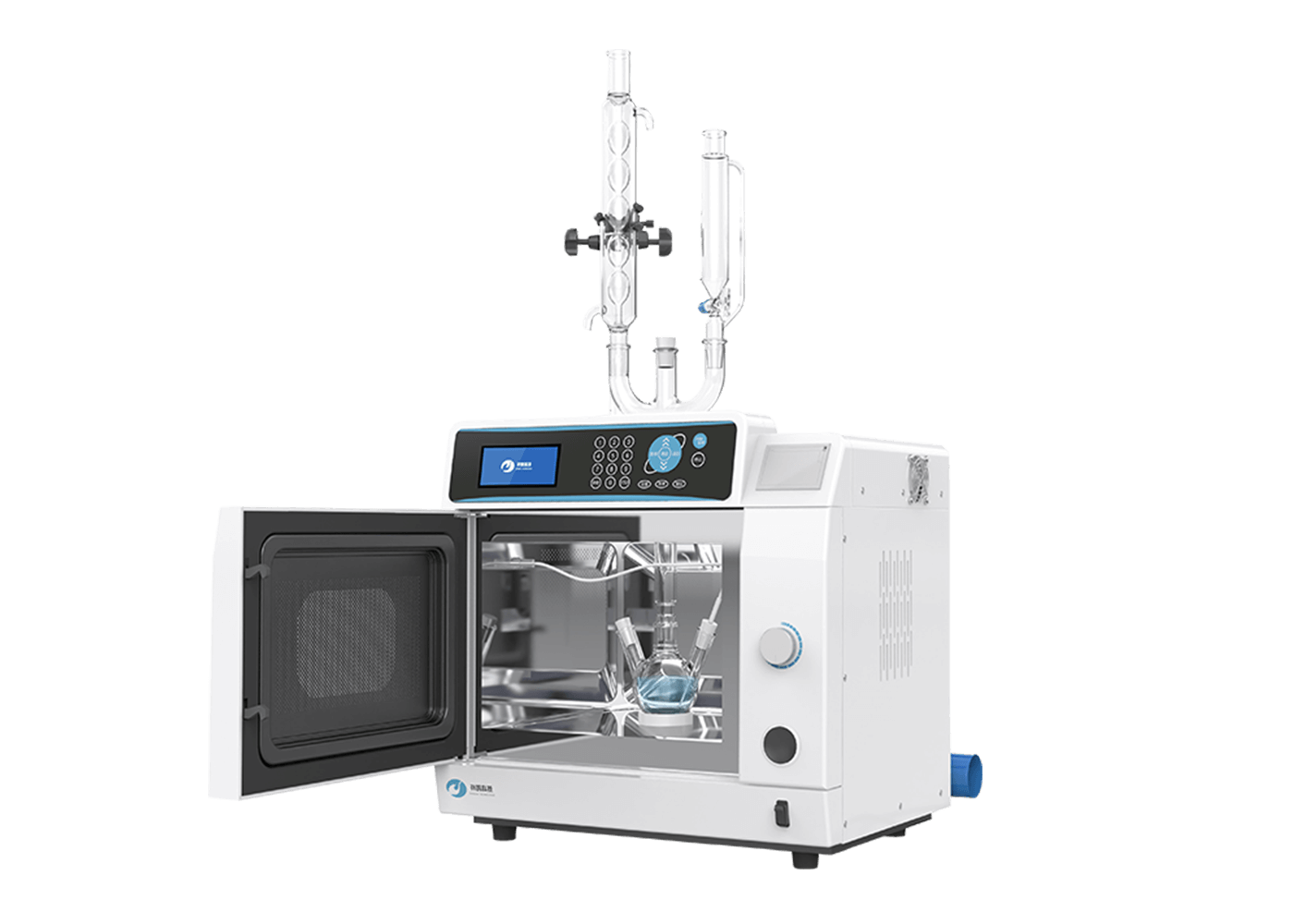
- Equipment: XH-100A
- Source: Sensors and Actuators B: Chemical, 2022
- Research direction: Food-safety testing, MXene, and Microwave-assisted nanomaterial synthesis
- Core conditions: Temperature 120 ℃, Microwave power 800 W, and Time 25 min / 10 min / 20 min
- Key results: Recovery 94.4%, Recovery -105.7%, Quantum yield 21.5%, and Average particle size 3.11 ± 0.86 nm
Research Abstract
Microwave-assisted synthesis of nitrogen, phosphorus-doped Ti3C2 MXene quantum dots for colorimetric/fluorometric dual-modal nitrite assay with a portable smartphone platform was published in Sensors and Actuators B: Chemical (2022) and is indexed as a SoarNova / Xianghu Q1 application case for XH-100A. The source record connects it with Food-safety testing, MXene, and Microwave-assisted nanomaterial synthesis. Core operating conditions include Temperature 120 ℃, Microwave power 800 W, and Time 25 min / 10 min / 20 min. Key reported results include Recovery 94.4%, Recovery -105.7%, Quantum yield 21.5%, and Average particle size 3.11 ± 0.86 nm.
Research Background and Problem
Equipment Use and Experimental Conditions
| Item | Parameter |
|---|---|
| Temperature | 120 ℃ |
| Microwave power | 800 W |
| Time | 25 min / 10 min / 20 min |
Key Result
| Metric | Result |
|---|---|
| Recovery | 94.4% |
| Recovery | -105.7% |
| Yield | 21.5% |
| Average particle size | 3.11 ± 0.86 nm |
Evidence Details
Release-kinetics evidence: source values include 1.5-80 μM, R2 = 0.996, 0.25 μM, 4-85 μM, R2 = 0.998, 0.71 μM, R2 = 0.25. Entities: F-F0, A0-A.
Release-kinetics evidence: source values include 0-80 μM, R2 = 0.992, 10 min.
Microwave-method evidence: source values include 40 mg, 1.8 mL, 25 mL, 120 °C, 800 W, 25 min, 10 min, 220 nm. Entities: XH-100A, P-Ti3C2.
Additional source evidence: source values include 37 °C, 10 min, 1 mg, 2 mL, 20 min, 0.1 mg, 225 μM. Entities: P-Ti3C2.
Yield evidence: source values include 3.11 ± 0.86 nm, 0.308 nm, 390 nm, 500 nm, 21.5%. Entities: P-Ti3C2.
the recovery range from 94.4% to 105.7% and the corresponding relative standard deviation (RSD) values are less than 3.0%.
The regression equation is expressed as (F-F0)/F0 = 0.0274 [NO2-] + 0.1556 (R2 = 0.996) in the range of NO2− from 1.5 to 80 μM.
Recovery: -105.7%
Additional source evidence: source values include 520 nm. Entities: Phen-Fe2, P-Ti3C2.
Mechanism / Method Highlights
- Method context: Temperature 120 ℃, Microwave power 800 W, and Time 25 min / 10 min / 20 min.
- Release-kinetics evidence: source values include 1.5-80 μM, R2 = 0.996, 0.25 μM, 4-85 μM, R2 = 0.998, 0.71 μM, R2 = 0.25. Entities: F-F0, A0-A
- Release-kinetics evidence: source values include 0-80 μM, R2 = 0.992, 10 min
- Microwave-method evidence: source values include 40 mg, 1.8 mL, 25 mL, 120 °C, 800 W, 25 min, 10 min, 220 nm. Entities: XH-100A, P-Ti3C2
- Reported outcome: Recovery 94.4%, Recovery -105.7%, Quantum yield 21.5%, and Average particle size 3.11 ± 0.86 nm.
Application Value
- Provides a peer-reviewed SoarNova / Xianghu Q1 application case for XH-100A.
- Supports English discovery around Food-safety testing, MXene, and Microwave-assisted nanomaterial synthesis.
- Preserves quantitative result evidence: Recovery 94.4%, Recovery -105.7%, Quantum yield 21.5%, and Average particle size 3.11 ± 0.86 nm.
- Maintains source-level evidence details: Release-kinetics evidence: source values include 1.5-80 μM, R2 = 0.996, 0.25 μM, 4-85 μM, R2 = 0.998, 0.71 μM, R2 = 0.25. Entities: F-F0, A0-A, Release-kinetics evidence: source values include 0-80 μM, R2 = 0.992, 10 min, Microwave-method evidence: source values include 40 mg, 1.8 mL, 25 mL, 120 °C, 800 W, 25 min, 10 min, 220 nm. Entities: XH-100A, P-Ti3C2, and Additional source evidence: source values include 37 °C, 10 min, 1 mg, 2 mL, 20 min, 0.1 mg, 225 μM. Entities: P-Ti3C2.
Related Equipment
FAQ
Which Xianghu instrument is covered by this page?
What is the main application direction?
Which publication does this case come from?
Microwave-assisted synthesis of nitrogen, phosphorus-doped Ti3C2 MXene quantum dots for colorimetric/fluorometric dual-modal nitrite assay with a portable smartphone platform
Sensors and Actuators B: Chemical, 2022
DOI: 10.1016/j.snb.2022.131410