Fact Snapshot
- Paper: Room temperature gas sensors based on Ce doped TiO2 nanocrystals for highly sensitive NH3 detection
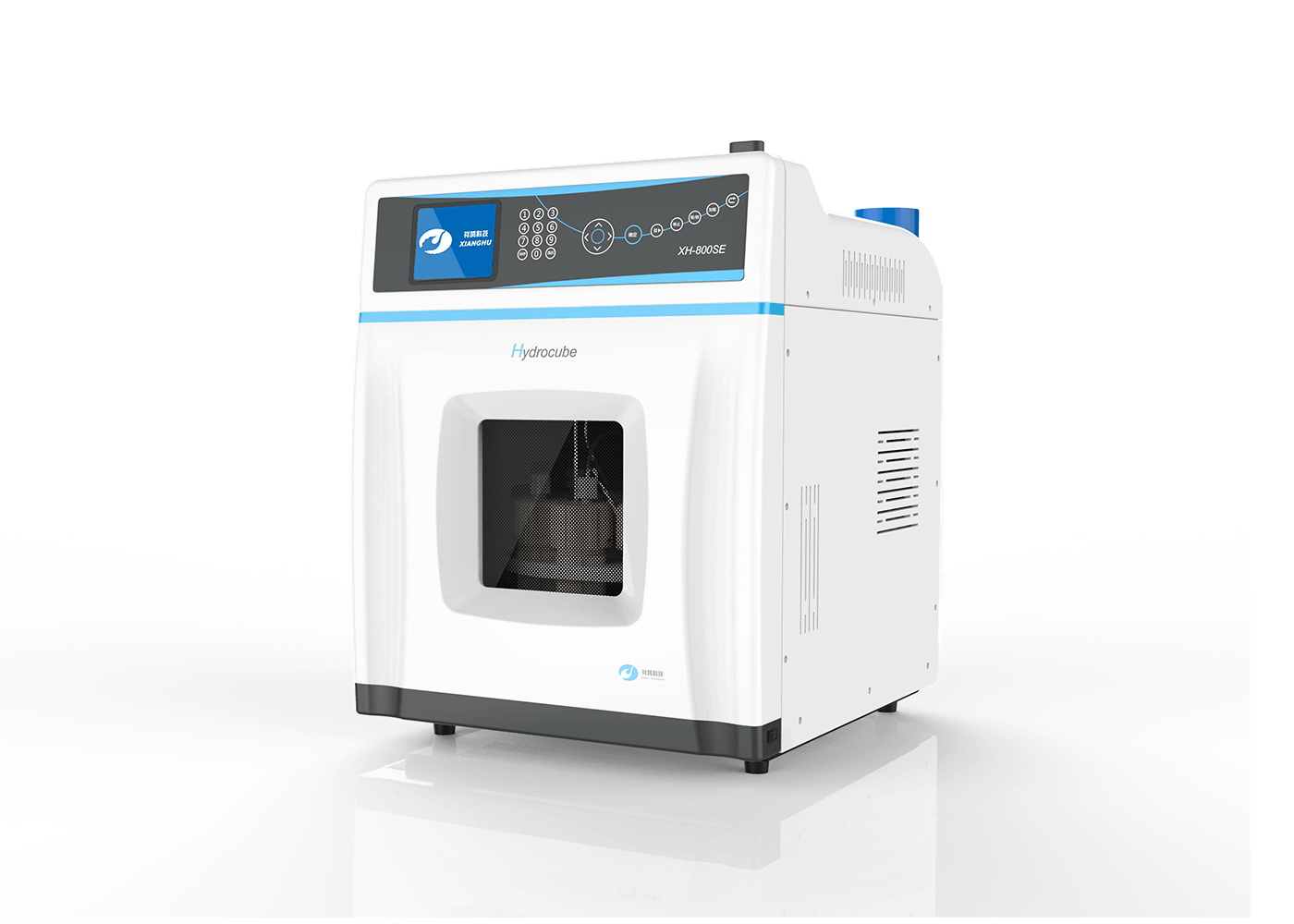
- Equipment: XH-800S
- Source: Chemical Engineering Journal, 2022
- Research direction: NH3
- Core conditions: Temperature 120 ℃ / 70 ℃, Microwave power 500 W, and Time 1 h / 12 h / 24 h
- Key results: Specific surface area 266.9 m2/g and Total pore volume 0.299 cm3/g
Research Abstract
Room temperature gas sensors based on Ce doped TiO2 nanocrystals for highly sensitive NH3 detection was published in Chemical Engineering Journal (2022) and is indexed as a Xianghu Q1 application case for XH-800S. The structured source links this paper to NH3. Core operating conditions include Temperature 120 ℃ / 70 ℃, Microwave power 500 W, and Time 1 h / 12 h / 24 h. Key reported results include Specific surface area 266.9 m2/g and Total pore volume 0.299 cm3/g. The DOI recorded for this paper is 10.1016/j.cej.2022.136449.
Research Background and Problem
Equipment Use and Experimental Conditions
| Item | Parameter |
|---|---|
| Temperature | 120 ℃ / 70 ℃ |
| Microwave power | 500 W |
| Time | 1 h / 12 h / 24 h |
Key Result
| Metric | Result |
|---|---|
| Specific surface area | 266.9 m2/g |
| Total pore volume | 0.299 cm3/g |
Evidence Details
Equipment-detail evidence: source values include 30 mL, 3 mL, 30 min, 10 mL, 1.5 h, 60 mL, 120 °C, 500 W, 1 h, 70 °C, 12 h. Entities: XH-800G, Ce-TiO2.
The 0.43 at% Ce-TiO2 gas sensor exhibited an improved response/recovery speed (55 s/192 s) towards 10 ppm NH3, while that of pure TiO2 was 83 s and 228 s, respectively.
Storage-stability evidence: source values include 25 g, 24 h, 6 h, 12-24 h.
Stability evidence: source values include 23%, 83%. Entities: Ce-TiO2.
Mechanism / Method Highlights
- Method context: Temperature 120 ℃ / 70 ℃, Microwave power 500 W, and Time 1 h / 12 h / 24 h.
- Equipment-detail evidence: source values include 30 mL, 3 mL, 30 min, 10 mL, 1.5 h, 60 mL, 120 °C, 500 W, 1 h, 70 °C, 12 h. Entities: XH-800G, Ce-TiO2
- Source evidence: The 0.43 at% Ce-TiO2 gas sensor exhibited an improved response/recovery speed (55 s/192 s) towards 10 ppm NH3, while that of pure TiO2 was 83 s and 228 s, respectively
- Storage-stability evidence: source values include 25 g, 24 h, 6 h, 12-24 h
- Reported outcome: Specific surface area 266.9 m2/g and Total pore volume 0.299 cm3/g.
Application Value
- Positions XH-800S in a peer-reviewed Q1 research application.
- Highlights quantitative evidence: Specific surface area 266.9 m2/g and Total pore volume 0.299 cm3/g.
- Records source affiliations: Yangzhou University and College of Mechanical Engineering, Yangzhou University, Yangzhou 225127, PR China.
Related Equipment
FAQ
Which Xianghu instrument is covered by this page?
What is the main application direction?
Which publication does this case come from?
Room temperature gas sensors based on Ce doped TiO2 nanocrystals for highly sensitive NH3 detection
Chemical Engineering Journal, 2022
DOI: 10.1016/j.cej.2022.136449