Fact Snapshot
- Paper: 3D-mesoporous KIT-6 supported highly dispersed Pd nanocatalyst for dodecahydro-N-ethylcarbazole dehydrogenation
- Equipment: /
- Source: Microporous and Mesoporous Materials, 2022
- Research direction: Pd, sonochemistry, and LOHC
- Core conditions: Temperature 60 ℃ / 180 ℃, Ultrasonic power 400 W, and Time 30 min / 6 h / 7.08 min
- Key results: Dehydrogenation efficiency 97.4%, Dehydrogenation efficiency 21%, Conversion 83.29%, and Conversion 36.72%
Research Abstract
3D-mesoporous KIT-6 supported highly dispersed Pd nanocatalyst for dodecahydro-N-ethylcarbazole dehydrogenation was published in Microporous and Mesoporous Materials (2022) and is indexed as a Xianghu Q1 application case for /. The source record connects it with Pd, sonochemistry, and LOHC. Core operating conditions include Temperature 60 ℃ / 180 ℃, Ultrasonic power 400 W, and Time 30 min / 6 h / 7.08 min. Key reported results include Dehydrogenation efficiency 97.4%, Dehydrogenation efficiency 21%, Conversion 83.29%, and Conversion 36.72%.
Research Background and Problem
Equipment Use and Experimental Conditions
| Item | Parameter |
|---|---|
| Temperature | 60 ℃ / 180 ℃ |
| Ultrasonic power | 400 W |
| Time | 30 min / 6 h / 7.08 min |
Key Result
| Metric | Result |
|---|---|
| Conversion | 83.29% |
| Conversion | 36.72% |
| Conversion | 46% |
| Dehydrogenation efficiency | 97.4% |
| Dehydrogenation efficiency | 21% |
Evidence Details
Activation-energy evidence: source values include 180-190 °C, 190 °C, 1 h, 36.72%, 67.85%, 83.29%, 82.47%, 170 °C, 46%, 21%, 7.5%, 0.0273 min, 73.8 kJ/mol. Entities: Pd-EU, H12-NEC.
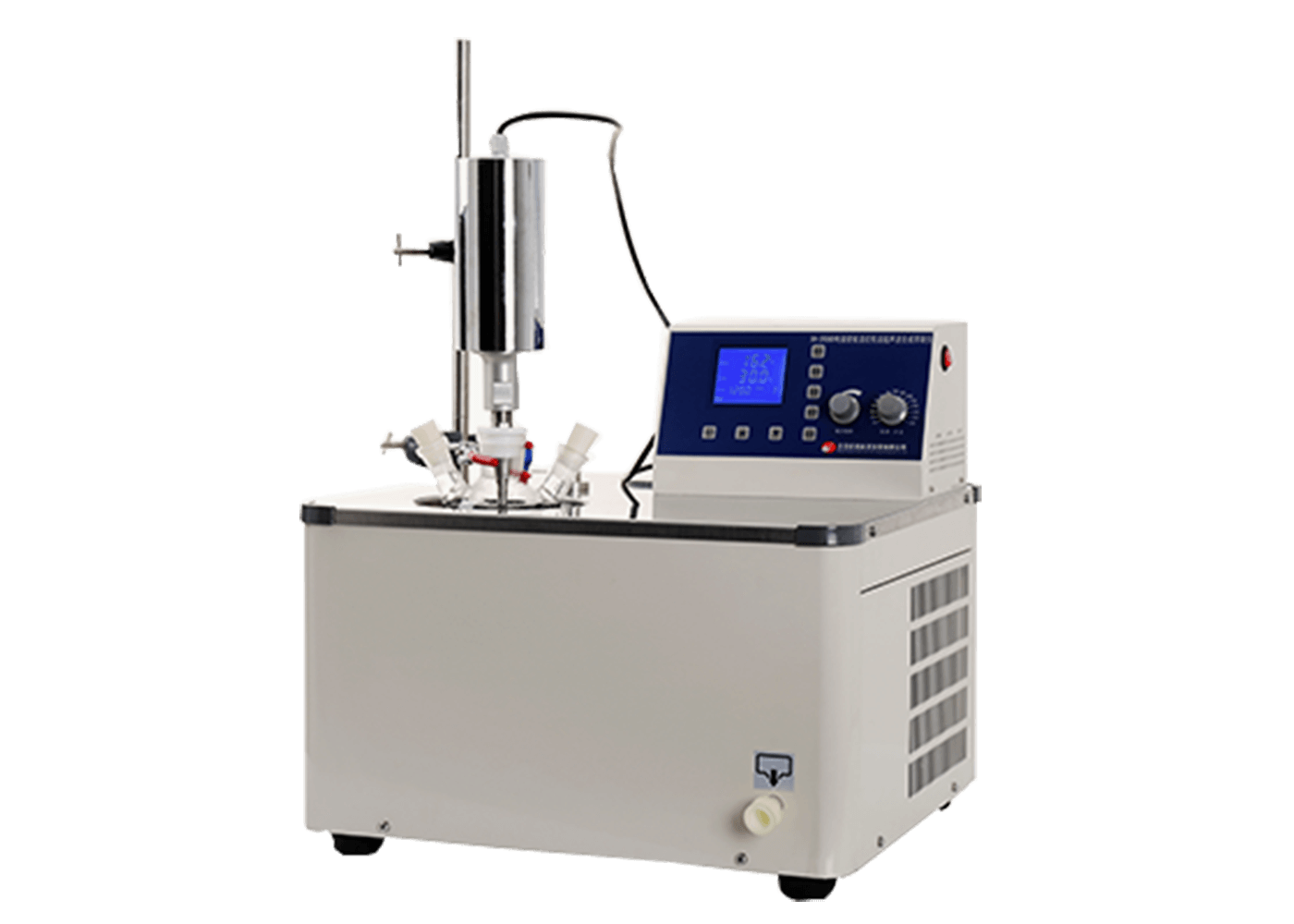
Pd2+-E/K6 (0.1 g) and isopropanol (10 ml) were treated in an ultrasonic reactor (XH-2008DE, Beijing Xianghu Science and Technology Development Co., Ltd.) for 30 min at 400 W and 25 kHz.
Equipment-detail evidence: source values include 0.1 g, 10 mL, 400 W, 25 kHz, 30 min. Entities: XH-2008DE, Pd2+-E, Pd-EU.
Equipment-detail evidence: source values include 400 W, 25 kHz, 30 min. Entities: XH-2008DE, H12-NEC.
Additional source evidence: source values include 180 °C, 1 h, 83.29%, 1 g, 6 h, 97.4%, 7.08 min, 68.34%, 95.4%, 5.09 min. Entities: Pd-EU, H12-NEC, Pd-EBH.
Ultrasonic-method evidence: source values include 1 h, 60 °C, 0.1 g, 10 mL, 400 W, 25 kHz, 30 min. Entities: XH-2008DE, Pd2+-E, Pd-EU.
Ultrasonic-method evidence: source values include 41.95%, 84.0%, 3.85 min. Entities: Pd-WU.
The metal dispersion of Pd-EU/K6 and Pd-EBH/K6 is up to 93% or more, and the highest of Pd-EU/K6 is 97%.
The dehydrogenation efficiency remains above 95% after 10 cycles and drops to 93% with further cycles.
Additional source evidence: source values include 0.5 g, 30 mL, 30 min. Entities: KIT-6, ICA-ultrasonic-assisted, Pd-EU, K6-Na.
Additional source evidence: source values include 180 °C, 300 min, 360 min. Entities: Pd-EU.
Mechanism / Method Highlights
- Method context: Temperature 60 ℃ / 180 ℃, Ultrasonic power 400 W, and Time 30 min / 6 h / 7.08 min.
- Activation-energy evidence: source values include 180-190 °C, 190 °C, 1 h, 36.72%, 67.85%, 83.29%, 82.47%, 170 °C, 46%, 21%, 7.5%, 0.0273 min, 73.8 kJ/mol. Entities: Pd-EU, H12-NEC
- Equipment-detail evidence: Pd2+-E/K6 (0.1 g) and isopropanol (10 ml) were treated in an ultrasonic reactor (XH-2008DE, Beijing Xianghu Science and Technology Development Co., Ltd.) for 30 min at 400 W and 25 kHz
- Equipment-detail evidence: source values include 0.1 g, 10 mL, 400 W, 25 kHz, 30 min. Entities: XH-2008DE, Pd2+-E, Pd-EU
- Reported outcome: Dehydrogenation efficiency 97.4%, Dehydrogenation efficiency 21%, Conversion 83.29%, and Conversion 36.72%.
Application Value
- Provides a peer-reviewed SoarNova / Xianghu Q1 application case for Ultrasonic/sonochemical equipment.
- Supports English discovery around Pd, sonochemistry, and LOHC.
- Preserves quantitative result evidence: Dehydrogenation efficiency 97.4%, Dehydrogenation efficiency 21%, Conversion 83.29%, and Conversion 36.72%.
- Maintains source-level evidence details: Activation-energy evidence: source values include 180-190 °C, 190 °C, 1 h, 36.72%, 67.85%, 83.29%, 82.47%, 170 °C, 46%, 21%, 7.5%, 0.0273 min, 73.8 kJ/mol. Entities: Pd-EU, H12-NEC, Equipment-detail evidence: Pd2+-E/K6 (0.1 g) and isopropanol (10 ml) were treated in an ultrasonic reactor (XH-2008DE, Beijing Xianghu Science and Technology Development Co., Ltd.) for 30 min at 400 W and 25 kHz, Equipment-detail evidence: source values include 0.1 g, 10 mL, 400 W, 25 kHz, 30 min. Entities: XH-2008DE, Pd2+-E, Pd-EU, and Equipment-detail evidence: source values include 400 W, 25 kHz, 30 min. Entities: XH-2008DE, H12-NEC.
Related Equipment
FAQ
Which Xianghu instrument is covered by this page?
What is the main application direction?
Which publication does this case come from?
3D-mesoporous KIT-6 supported highly dispersed Pd nanocatalyst for dodecahydro-N-ethylcarbazole dehydrogenation
Microporous and Mesoporous Materials, 2022
DOI: 10.1016/j.micromeso.2022.111789