Fact Snapshot
- Paper: Efficient conversion of sewage sludge into hydrochar by microwave-assisted hydrothermal carbonization
- Equipment: XH-8000 / XH-8000Plus
- Source: Science of The Total Environment, 2022
- Research direction: microwave hydrothermal
- Core conditions: Temperature 250 ℃ / 150 ℃ / 230 ℃, Pressure 6 MPa, and Time 12 h / 0 min / 120 min
- Key results: Specific surface area 24.0 m2/g and Specific surface area 11.4 m2/g
Research Abstract
Efficient conversion of sewage sludge into hydrochar by microwave-assisted hydrothermal carbonization was published in Science of The Total Environment (2022) and is indexed as a Xianghu Q1 application case for XH-8000 / XH-8000Plus. The structured source links this paper to microwave hydrothermal. Core operating conditions include Temperature 250 ℃ / 150 ℃ / 230 ℃, Pressure 6 MPa, and Time 12 h / 0 min / 120 min. Key reported results include Specific surface area 24.0 m2/g and Specific surface area 11.4 m2/g. The DOI recorded for this paper is 10.1016/j.scitotenv.2021.149874.
Research Background and Problem
Equipment Use and Experimental Conditions
| Item | Parameter |
|---|---|
| Temperature | 250 ℃ / 150 ℃ / 230 ℃ |
| Pressure | 6 MPa |
| Time | 12 h / 0 min / 120 min |
Key Result
| Metric | Result |
|---|---|
| Specific surface area | 24.0 m2/g |
| Specific surface area | 11.4 m2/g |
Evidence Details
Additional source evidence: source values include 1.16 mg, 0.50 mg, 2.33 mg, 0.18 mg, 2.20 mg, 0.08 mg, 0.12 mg, 0.03 mg.
Additional source evidence: source values include 13.50 g, 20.97 g, 0.79 g, 21.89 g, 6.60 g, 0.04 g. Entities: HC-CaO.
Microwave-method evidence: source values include 0.03-0.25 g, 0-0.6 mol/L, 100 mL, 150-250 °C, 0-120 min.
Additional source evidence: source values include 215.46 °C, 241.54 °C, 261.87 °C, 331.21 °C. Entities: HC-CaO, HC-H3PO4.
Yield evidence: source values include 230 °C, 30 min, 0.03 g.
Microwave-method evidence: source values include 105 °C, 12 h. Entities: XH-8000Plus.
Additional source evidence: source values include 100.01 g, 2.40 g, 6566.70 mg. Entities: HC-H3PO4.
Additional source evidence: source values include 1366.88 mg, 2526.98 mg, 1714.38 mg.
Additional source evidence: source values include 4.55 mg, 0.19 mg, 0.008 mg.
Temperature: 250 ℃ / 150 ℃ / 230 ℃
Time: 12 h / 0 min / 120 min
Yield evidence: source values include 0.03 g, 0.25 g.
In contrast, the application of CaO as a catalyst increased the yield of HC from 65.67 wt% (no catalyst) to 80.31 wt% (10% CaO).
The use of H3PO4 as a catalyst reduced the yield of HC from 65.67 wt% (no catalyst) to 59.31 wt% (0.6 mol/L H3PO4).
Mechanism / Method Highlights
- Method context: Temperature 250 ℃ / 150 ℃ / 230 ℃, Pressure 6 MPa, and Time 12 h / 0 min / 120 min.
- Additional source evidence: source values include 1.16 mg, 0.50 mg, 2.33 mg, 0.18 mg, 2.20 mg, 0.08 mg, 0.12 mg, 0.03 mg
- Additional source evidence: source values include 13.50 g, 20.97 g, 0.79 g, 21.89 g, 6.60 g, 0.04 g. Entities: HC-CaO
- Microwave-method evidence: source values include 0.03-0.25 g, 0-0.6 mol/L, 100 mL, 150-250 °C, 0-120 min
- Reported outcome: Specific surface area 24.0 m2/g and Specific surface area 11.4 m2/g.
Application Value
- Positions XH-8000 / XH-8000Plus in a peer-reviewed Q1 research application.
- Highlights quantitative evidence: Specific surface area 24.0 m2/g and Specific surface area 11.4 m2/g.
- Records source affiliations: Jiangxi Agricultural University and School of Land Resources and Environment, Key Laboratory of Agricultural Resource and Ecology in the Poyang Lake Basin of Jiangxi Province, Jiangxi Agricultural University, Nanchang 330045, PR China.
Related Equipment
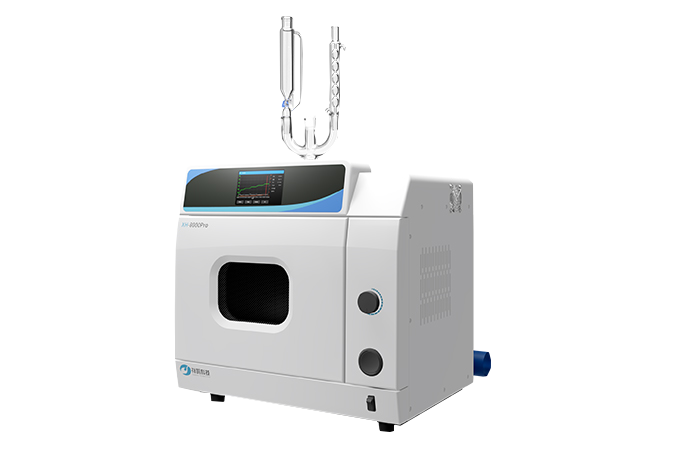
FAQ
Which Xianghu instrument is covered by this page?
What is the main application direction?
Which publication does this case come from?
Efficient conversion of sewage sludge into hydrochar by microwave-assisted hydrothermal carbonization
Science of The Total Environment, 2022
DOI: 10.1016/j.scitotenv.2021.149874