Fact Snapshot
- Paper: Smartphone-assisted ratiometric fluorescence sensing platform for the detection of doxycycline based on BCNO QDs and calcium ion
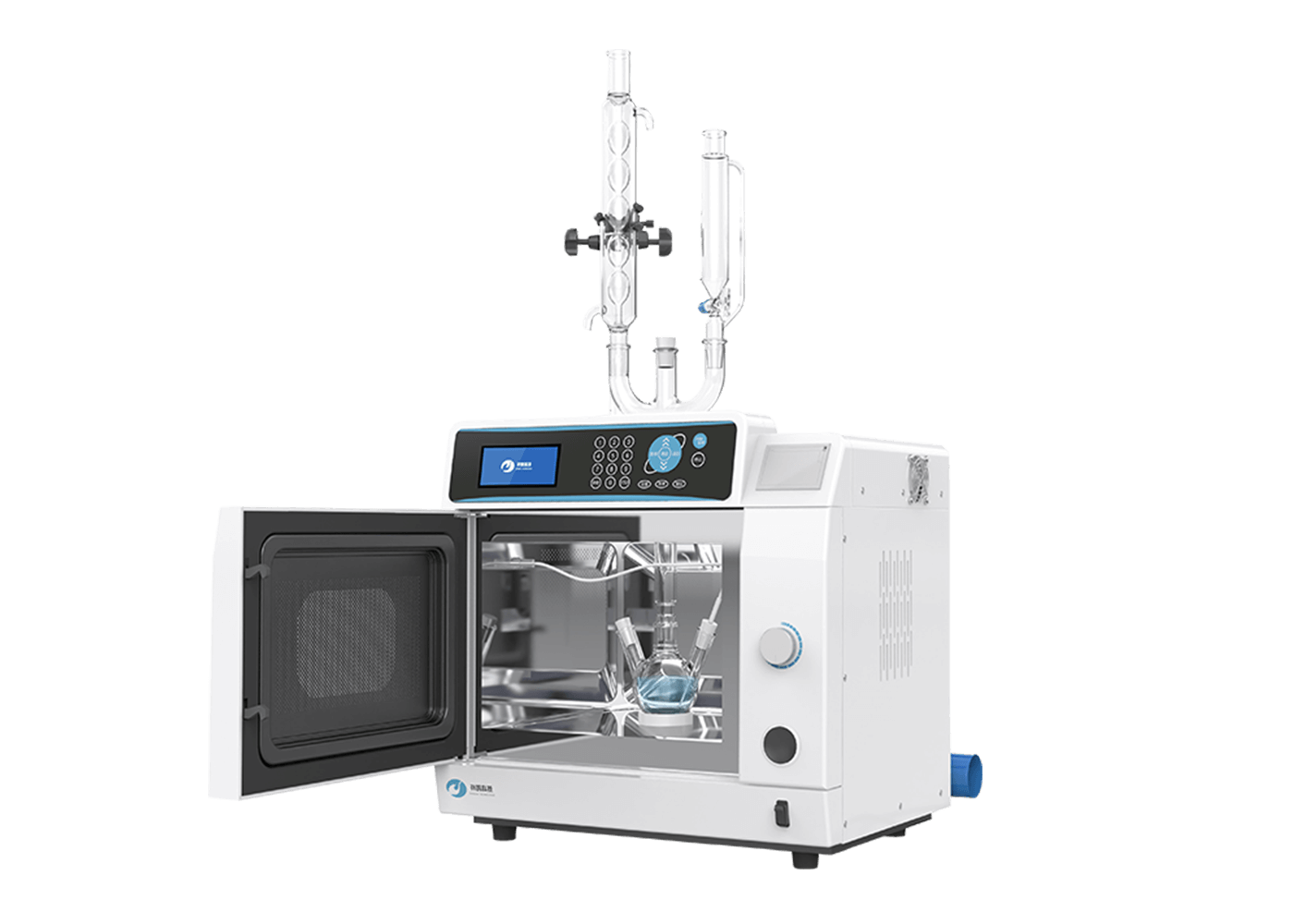
- Equipment: XH-100A
- Source: Microchimica Acta, 2022
- Research direction: food-safety testing
- Core conditions: Temperature 90 ℃ / 60 ℃, Microwave power 900 W, and Time 1 h / 24 h
- Key results: Average particle size 2.65 ± 0.39 nm, Recovery 94%, and Recovery 110%
Research Abstract
Smartphone-assisted ratiometric fluorescence sensing platform for the detection of doxycycline based on BCNO QDs and calcium ion was published in Microchimica Acta (2022) and is indexed as a Xianghu Q1 application case for XH-100A. The structured source links this paper to food-safety testing. Core operating conditions include Temperature 90 ℃ / 60 ℃, Microwave power 900 W, and Time 1 h / 24 h. Key reported results include Average particle size 2.65 ± 0.39 nm, Recovery 94%, and Recovery 110%. The DOI recorded for this paper is 10.1007/s00604-022-05224-6.
Research Background and Problem
Equipment Use and Experimental Conditions
| Item | Parameter |
|---|---|
| Temperature | 90 ℃ / 60 ℃ |
| Microwave power | 900 W |
| Time | 1 h / 24 h |
Key Result
| Metric | Result |
|---|---|
| Average particle size | 2.65 ± 0.39 nm |
| Recovery | 94% |
| Recovery | 110% |
Evidence Details
Release-kinetics evidence: source values include R² = 0.992, R2 = 0.992.
Release-kinetics evidence: source values include R² = 0.988, R2 = 0.988.
Release-kinetics evidence: source values include R² = 0.981, R2 = 0.981.
Release-kinetics evidence: source values include R² = 0.984, R2 = 0.984.
Release-kinetics evidence: source values include R² = 0.991, R2 = 0.991.
Microwave-method evidence: source values include 0.618 g, 30 mL, 100 mL, 900 W, 90 °C, 1 h, 60 °C, 24 h. Entities: XH-100A.
As shown in Table 2, the recoveries of real samples ranged from 94 to 110%, with RSD (n = 3) ranging from 1.24% to 3.60%.
Additional source evidence: source values include 94%, 110%, n=3, 1.24%, 3.60%.
The linear equation in the range of 0.25 ~ 60 μM is F520/F425 = 0.0175 C_Dox + 0.340, R2 = 0.992, and the limit of detection (LOD) is 25 nM.
Additional source evidence: source values include 1:1, 330 nm, 425 nm, 520 nm. Entities: QDs-Ca2.
Particle-size evidence: source values include 1–5 nm, 2.65 ± 0.39 nm.
Additional source evidence: source values include 0.025 μM, 0.36 μM.
Additional source evidence: source values include 1.0 μM, 10–60 μM.
Additional source evidence: source values include 100 μM, 4 min.
Mechanism / Method Highlights
- Method context: Temperature 90 ℃ / 60 ℃, Microwave power 900 W, and Time 1 h / 24 h.
- Release-kinetics evidence: source values include R² = 0.992, R2 = 0.992
- Release-kinetics evidence: source values include R² = 0.988, R2 = 0.988
- Release-kinetics evidence: source values include R² = 0.981, R2 = 0.981
- Reported outcome: Average particle size 2.65 ± 0.39 nm, Recovery 94%, and Recovery 110%.
Application Value
- Positions XH-100A in a peer-reviewed Q1 research application.
- Highlights quantitative evidence: Average particle size 2.65 ± 0.39 nm, Recovery 94%, and Recovery 110%.
- Records source affiliations: Hubei University and Hubei Collaborative Innovation Center for Advanced Organic Chemical Materials, Ministry-of-Education Key Laboratory for the Synthesis and Application of Organic Functional Molecules, College of Chemistry and Chemical Engineering, Hubei University, Wuhan 430062, China.
Related Equipment
FAQ
Which Xianghu instrument is covered by this page?
What is the main application direction?
Which publication does this case come from?
Smartphone-assisted ratiometric fluorescence sensing platform for the detection of doxycycline based on BCNO QDs and calcium ion
Microchimica Acta, 2022
DOI: 10.1007/s00604-022-05224-6