Fact Snapshot
- Paper: Physicochemical and digestive properties of A- and B-type granules isolated from wheat starch as affected by microwave-ultrasound and toughening treatment
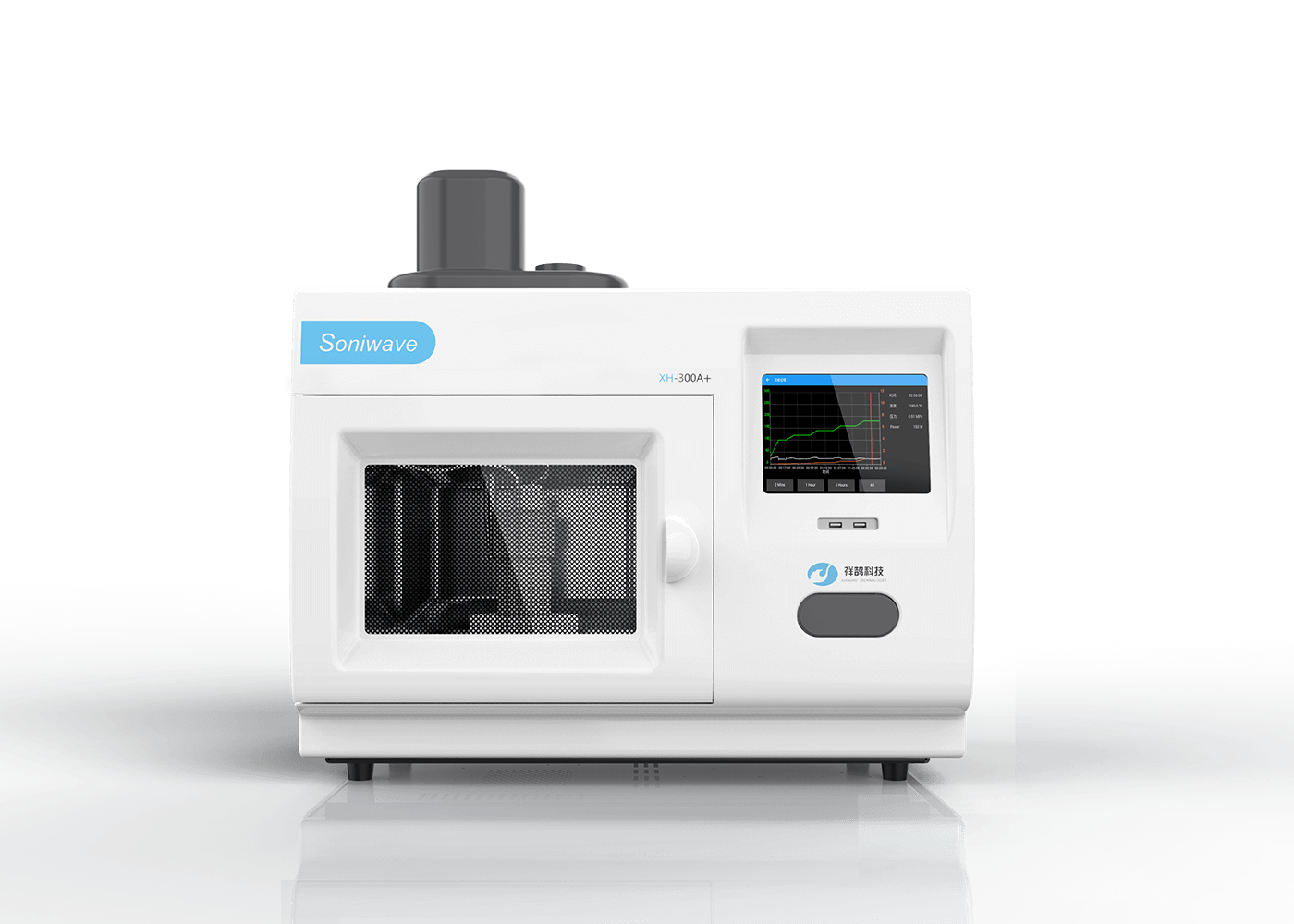
- Equipment: XH-300 series
- Source: International Journal of Biological Macromolecules, 2021
- Research direction: Research application
- Core conditions: Temperature 50 °C, Microwave power 500 W, Ultrasonic power 500 W, and Time 24 h
Research Abstract
Physicochemical and digestive properties of A- and B-type granules isolated from wheat starch as affected by microwave-ultrasound and toughening treatment was published in International Journal of Biological Macromolecules (2021) and is indexed as a Xianghu Q1 application case for XH-300 series. The source record connects it with Research application. Core operating conditions include Temperature 50 °C, Microwave power 500 W, Ultrasonic power 500 W, and Time 24 h.
Research Background and Problem
Equipment Use and Experimental Conditions
| Item | Parameter |
|---|---|
| Temperature | 50 °C |
| Microwave power | 500 W |
| Ultrasonic power | 500 W |
| Time | 24 h |
Evidence Details
AS-MUT:(Tc-To) = 15.55 °C,ΔH = 9.63 J/g
BS-MUT:(Tc-To) = 16.98 °C,ΔH = 9.68 J/g
After microwave-ultrasound and toughening synergistic treatment, RC increased from 28.54% to 36.24% for A-starch granules and from 29.68% to 37.07% for B-starch granules compared with their native counterparts.
Starch samples were placed in a microwave ultrasonic ultraviolet synthesis and extraction instrument (XH-300UL, Beijing XiangHu Technology Development Co., Ltd., Beijing, China) and treated by microwaving at 500 W and ultrasonic at 500w, simultaneously.
In brief, the samples were treated by microwaving for 10 s at intervals of 110 s, the process above was repeated until microwaved for 50 s, and ultrasound treatment was performed throughout the period.
Compared with the starch samples with MU treatment, the percentage of RS in wheat A- and B-starch granules after MU-T treatment increased significantly, reaching 41.70% and 53.67%, respectively.
Additional source evidence: source values include 13.40%, 53.67%.
Additional source evidence: source values include 69.05%, 82.93%.
Additional source evidence: source values include 74.97%, 88.17%.
Additional source evidence: source values include 30.95%, 17.07%.
Additional source evidence: source values include 25.03%, 11.83%.
Additional source evidence: source values include 50 °C, 24 h.
Mechanism / Method Highlights
- Ultrasound enhances solid-liquid contact and mass transfer through cavitation and mechanical shear, helping release oligosaccharides from lotus-seed tissue.
Application Value
- Provides a peer-reviewed SoarNova / Xianghu Q1 application case for XH-300 series.
- Supports English discovery around Research application.
- Maintains source-level evidence details: Thermodynamic evidence: AS-MUT: (Tc-To) = 15.55 °C, ΔH = 9.63 J/g, Thermodynamic evidence: BS-MUT: (Tc-To) = 16.98 °C, ΔH = 9.68 J/g, Source evidence: After microwave-ultrasound and toughening synergistic treatment, RC increased from 28.54% to 36.24% for A-starch granules and from 29.68% to 37.07% for B-starch granules compared with their native counterparts, and Equipment evidence: Starch samples were placed in a microwave ultrasonic ultraviolet synthesis and extraction instrument (XH-300UL, Beijing XiangHu Technology Development Co., Ltd., Beijing, China) and treated by microwaving at 500 W and ultrasonic at 500w, simultaneously.
Related Equipment
FAQ
Which Xianghu instrument is covered by this page?
What research direction does this page support?
Which publication does this case come from?
Physicochemical and digestive properties of A- and B-type granules isolated from wheat starch as affected by microwave-ultrasound and toughening treatment
International Journal of Biological Macromolecules, 2021
DOI: 10.1016/j.ijbiomac.2021.04.180