Fact Snapshot
- Paper: Construction of hydrangea-like nickel cobalt sulfide through efficient microwave-assisted approach for remarkable supercapacitors
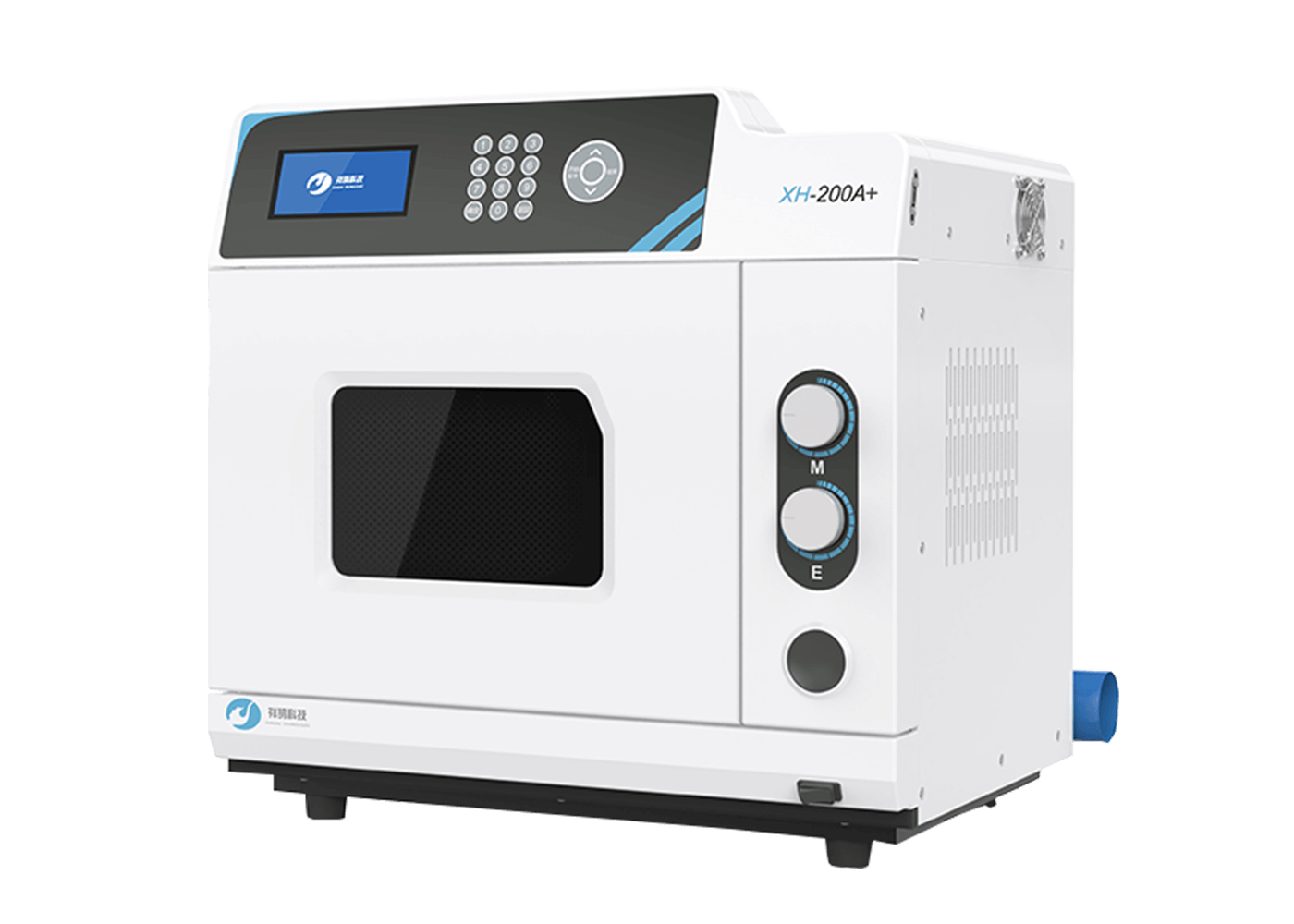
- Equipment: XH-200A / XH-200C
- Source: Applied Surface Science, 2020
- Research direction: supercapacitor electrode materials, rapid microwave synthesis, hierarchical nickel-cobalt sulfide structures, and growth-mechanism analysis
- Core conditions: Temperature 90 °C and Time 240 min / 20 min
- Key results: High energy density 48.8 Wh kg-1, Retention 71.9%, Retention 98.7%, and Specific capacity 226.5 mAh g-1
Research Abstract
Construction of hydrangea-like nickel cobalt sulfide through efficient microwave-assisted approach for remarkable supercapacitors was published in Applied Surface Science (2020) and is indexed as a Xianghu Q1 application case for XH-200A / XH-200C. The source record connects it with supercapacitor electrode materials, rapid microwave synthesis, hierarchical nickel-cobalt sulfide structures, and growth-mechanism analysis. Core operating conditions include Temperature 90 °C and Time 240 min / 20 min. Key reported results include High energy density 48.8 Wh kg-1, Retention 71.9%, Retention 98.7%, and Specific capacity 226.5 mAh g-1.
Research Background and Problem
Equipment Use and Experimental Conditions
| Item | Parameter |
|---|---|
| Temperature | 90 °C |
| Time | 240 min / 20 min |
Key Result
| Metric | Result |
|---|---|
| Specific capacity | 226.5 mAh g-1 |
| High energy density | 48.8 Wh kg-1 |
| Retention | 71.9% |
| Retention | 98.7% |
Evidence Details
Then, as the heating rate of 15 °C min−1, the solution was heated to the temperature of 90 °C for various time (i.e., 1, 5, 20, 60, 240 min).
The optimal NCS displays the supreme capacity of 226.5 mAh g−1 at a current density of 1 A g−1, and retains 86.1%, 71.9% capacitance retention as the current density increases to 20, 40 A g−1, respectively.
After 50 k cycles, the concluding capacitance retention of NCS20//AC is 98.7%, evidencing the excellent cycling stability.
After fully stirring, they were transferred to microwave reactor (Xianghu, XH-200A) which equipped with reflux coil.
Stability evidence: source values include 98.7%, 100%.
At a power density of 400 W kg−1, the highest energy density of NCS20//AC is harvested (i.e., 48.8 Wh kg−1).
Additional source evidence: source values include 20 mL, 50 mL.
Time: 240 min / 20 min
Mechanism / Method Highlights
- The microwave-assisted method delivers rapid and uniform heating, promoting fast precursor nucleation and structural evolution.
- The NCS20 sample formed at 20 min retains defective nanosheets while assembling into a hierarchical hydrangea-like structure, improving electrolyte penetration and active-site exposure.
- High porosity and ultrathin nanosheets reduce ion-diffusion resistance and improve rate performance.
- The hierarchical structure and stable interface help buffer volume changes during long-term charge-discharge cycling.
Application Value
- NCS20 reaches 226.5 mAh g^-1 at 1 A g^-1 and retains 71.9% at 40 A g^-1.
- The NCS20//AC device maintains 98.7% retention after 50,000 cycles.
- Preserves quantitative result evidence: High energy density 48.8 Wh kg-1, Retention 71.9%, Retention 98.7%, and Specific capacity 226.5 mAh g-1.
- Maintains source-level evidence details: Source evidence: Then, as the heating rate of 15 °C min−1, the solution was heated to the temperature of 90 °C for various time (i.e., 1, 5, 20, 60, 240 min), Abstract evidence: The optimal NCS displays the supreme capacity of 226.5 mAh g−1 at a current density of 1 A g−1, and retains 86.1%, 71.9% capacitance retention as the current density increases to 20, 40 A g−1, respectively, Source evidence: After 50 k cycles, the concluding capacitance retention of NCS20//AC is 98.7%, evidencing the excellent cycling stability, and Equipment evidence: After fully stirring, they were transferred to microwave reactor (Xianghu, XH-200A) which equipped with reflux coil.
Related Equipment
FAQ
Which Xianghu instrument is covered by this page?
What research direction does this page support?
Which publication does this case come from?
Construction of hydrangea-like nickel cobalt sulfide through efficient microwave-assisted approach for remarkable supercapacitors
Applied Surface Science, 2020
DOI: 10.1016/j.apsusc.2020.148260