Fact Snapshot
- Paper: Defect engineering in graphene-based nanospheres enhanced hydrogen evolution reaction performance of ruthenium nanoparticles
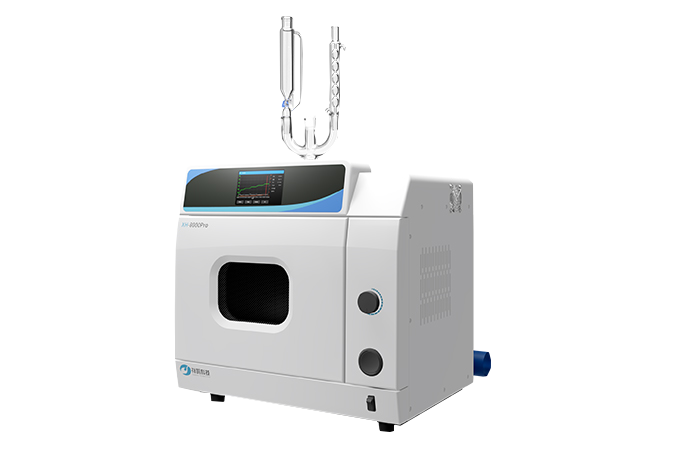
- Equipment: XH-8000 / XH-8000Plus
- Source: Carbon, 2020
- Research direction: Research application
- Core conditions: Time 30 min
- Key results: Overpotential 0 mV and Overpotential 40 mV
Research Abstract
Defect engineering in graphene-based nanospheres enhanced hydrogen evolution reaction performance of ruthenium nanoparticles was published in Carbon (2020) and is indexed as a Xianghu Q1 application case for XH-8000 / XH-8000Plus. The source record connects it with Research application. Core operating conditions include Time 30 min. Key reported results include Overpotential 0 mV and Overpotential 40 mV.
Research Background and Problem
Equipment Use and Experimental Conditions
| Item | Parameter |
|---|---|
| Time | 30 min |
Key Result
| Metric | Result |
|---|---|
| Overpotential | 0 mV |
| Overpotential | 40 mV |
Evidence Details
The mixture was transferred into a Teflon-lined microwave autoclave (100 mL) and treated with microwave irradiation in a microwave reactor (XH-8000, XiangHu Science and Technology Development Co., Ltd.) at 150 °C for 30 min.
The optimal electrocatalyst (Ru@GNs300) was achieved by annealing at 300 °C, giving an overpotential of 40 mV at a current density of 10 mA cm−2 together with superior durability in the HER performance test in 1 M KOH.
At a constant overpotential of 40 mV, Ru@GNs300 showed an excellent HER stability with the current density decreased in magnitude only slightly over 24 h of continuous operation.
Additional source evidence: source values include 20 °C, 1000 °C.
Particle-size evidence: source values include 2 nm.
Mechanism / Method Highlights
- Method context: Time 30 min.
- Equipment evidence: The mixture was transferred into a Teflon-lined microwave autoclave (100 mL) and treated with microwave irradiation in a microwave reactor (XH-8000, XiangHu Science and Technology Development Co., Ltd.) at 150 °C for 30 min
- Abstract evidence: The optimal electrocatalyst (Ru@GNs300) was achieved by annealing at 300 °C, giving an overpotential of 40 mV at a current density of 10 mA cm−2 together with superior durability in the HER performance test in 1 M KOH
- Source evidence: At a constant overpotential of 40 mV, Ru@GNs300 showed an excellent HER stability with the current density decreased in magnitude only slightly over 24 h of continuous operation
- Reported outcome: Overpotential 0 mV and Overpotential 40 mV.
Application Value
- Provides a peer-reviewed SoarNova / Xianghu Q1 application case for XH-8000 / XH-8000Plus.
- Supports English discovery around Research application.
- Preserves quantitative result evidence: Overpotential 0 mV and Overpotential 40 mV.
- Maintains source-level evidence details: Equipment evidence: The mixture was transferred into a Teflon-lined microwave autoclave (100 mL) and treated with microwave irradiation in a microwave reactor (XH-8000, XiangHu Science and Technology Development Co., Ltd.) at 150 °C for 30 min, Abstract evidence: The optimal electrocatalyst (Ru@GNs300) was achieved by annealing at 300 °C, giving an overpotential of 40 mV at a current density of 10 mA cm−2 together with superior durability in the HER performance test in 1 M KOH, Source evidence: At a constant overpotential of 40 mV, Ru@GNs300 showed an excellent HER stability with the current density decreased in magnitude only slightly over 24 h of continuous operation, and Additional source evidence: source values include 20 °C, 1000 °C.
Related Equipment
FAQ
Which Xianghu instrument is covered by this page?
What research direction does this page support?
Which publication does this case come from?
Defect engineering in graphene-based nanospheres enhanced hydrogen evolution reaction performance of ruthenium nanoparticles
Carbon, 2020
DOI: 10.1016/j.carbon.2020.05.033