Fact Snapshot
- Paper: Synthesis and characterization of Pt-N-doped activated biocarbon composites for hydrogen storage
- Equipment: XH-800S
- Source: Composites Part B, 2019
- Research direction: Pt
- Core conditions: Temperature 180 °C, Pressure 1.9 MPa, and Time 15 min / 10 min / 1 h
- Key results: Specific surface area 3155 m²/g, Specific surface area 3155 m²/g, and Average particle size 2.27 nm
Research Abstract
Synthesis and characterization of Pt-N-doped activated biocarbon composites for hydrogen storage was published in Composites Part B (2019) and is indexed as a Xianghu Q1 application case for XH-800S. The structured source links this paper to Pt. Core operating conditions include Temperature 180 °C, Pressure 1.9 MPa, and Time 15 min / 10 min / 1 h. Key reported results include Specific surface area 3155 m²/g, Specific surface area 3155 m²/g, and Average particle size 2.27 nm. The DOI recorded for this paper is 10.1016/j.compositesb.2018.12.122.
Research Background and Problem
Equipment Use and Experimental Conditions
| Item | Parameter |
|---|---|
| Temperature | 180 °C |
| Pressure | 1.9 MPa |
| Time | 15 min / 10 min / 1 h |
Key Result
| Metric | Result |
|---|---|
| Specific surface area | 3155 m²/g |
| Average particle size | 2.27 nm |
| Average particle size | 4.54 nm |
Evidence Details
Activation-energy evidence: source values include 20 ~ 30 kJ/mol, 20.3 K.
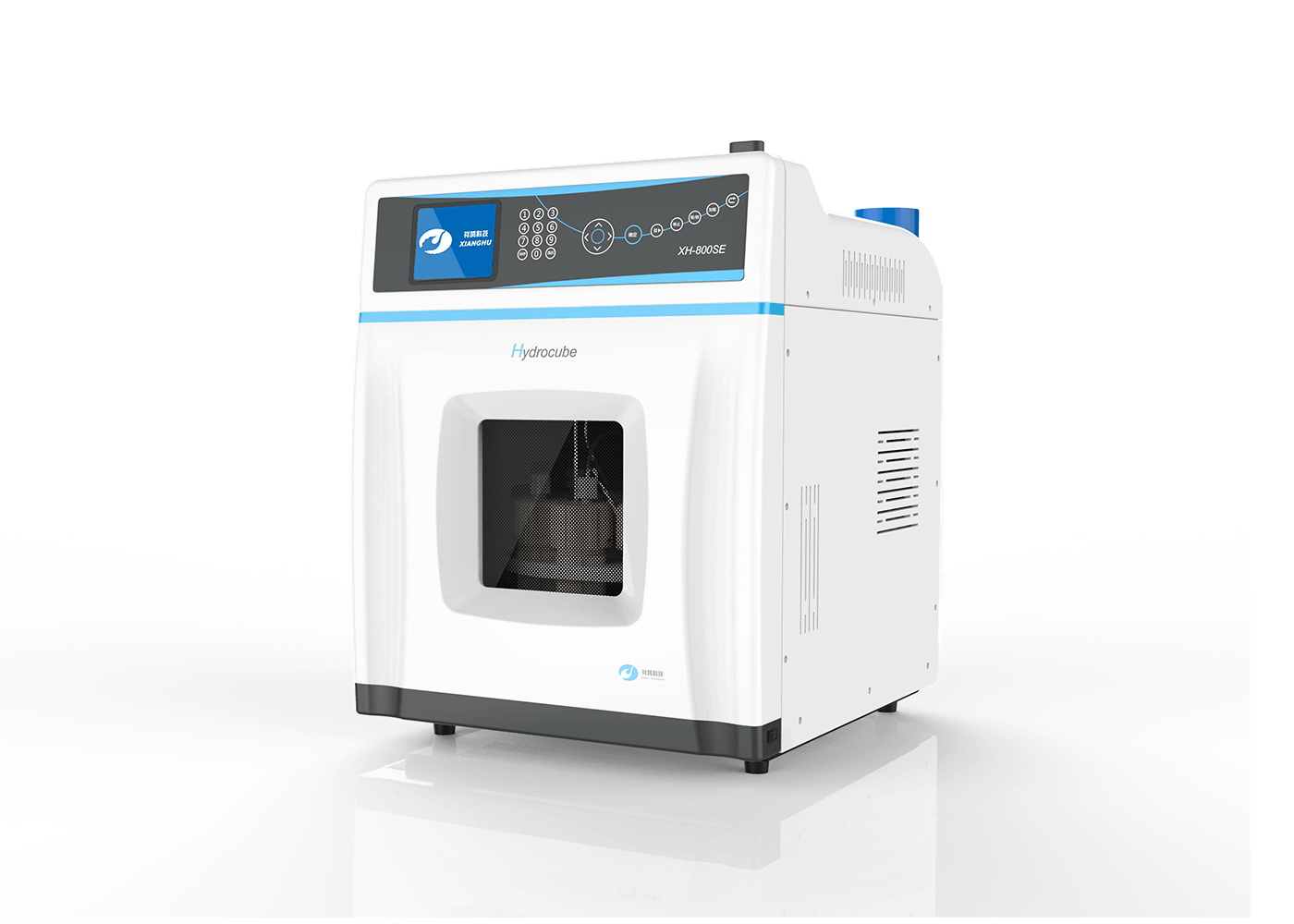
The reaction vessel was sealed and placed in the microwave labstation (XH-800S, Xianghu Beijing, China). The sample was finally heated to 453 K within 15min and held at this temperature for 10min, corresponding pressure at this final temperature was 1.8–1.9 MPa.
The metal particles' size of samples ACPt6, NACPt6, NACPt12 and NACPt20 were approximately 4.6 nm, 2.1 nm, 5.5 nm and 7.3 nm respectively by using Scherrer's equation.
Microwave-method evidence: source values include 453 K, 180 °C, 15 min, 10 min.
Additional source evidence: source values include 0.5 L, 623 K, 3 h, 1 K.
It must be noted that the mean particle sizes for NACPt6 and ACPt6 were 2.27 nm and 4.54 nm respectively, indicating that the N doping process may give rise to much smaller Pt particle size, and hence improve the Pt dispersion.
Particle-size evidence: source values include 2.27 nm, 5.73 nm, 7.25 nm.
Additional source evidence: source values include 3 K, 1096 K, 2 h.
Additional source evidence: source values include 36 g, 28%, 12 g.
Time: 15 min / 10 min / 1 h
the hydrogen storage on Pt doped NAC at 298 K presented much higher enhancement factor of 1.82 compared with the Pt doped AC due to the spillover effect, depending on Pt content.
Additional source evidence: source values include 30 min, 336 K.
Additional source evidence: source values include 593 K, 12 h.
Additional source evidence: source values include 923 K, 1 h.
Mechanism / Method Highlights
- Method context: Temperature 180 °C, Pressure 1.9 MPa, and Time 15 min / 10 min / 1 h.
- Activation-energy evidence: source values include 20 ~ 30 kJ/mol, 20.3 K
- Equipment evidence: The reaction vessel was sealed and placed in the microwave labstation (XH-800S, Xianghu Beijing, China). The sample was finally heated to 453 K within 15min and held at this temperature for 10min, corresponding pressure at this final temperature was 1.8–1.9 MPa
- Source evidence: The metal particles' size of samples ACPt6, NACPt6, NACPt12 and NACPt20 were approximately 4.6 nm, 2.1 nm, 5.5 nm and 7.3 nm respectively by using Scherrer's equation
- Reported outcome: Specific surface area 3155 m²/g, Specific surface area 3155 m²/g, Average particle size 2.27 nm, and Average particle size 4.54 nm.
Application Value
- Positions XH-800S in a peer-reviewed Q1 research application.
- Highlights quantitative evidence: Specific surface area 3155 m²/g, Specific surface area 3155 m²/g, and Average particle size 2.27 nm.
- Records source affiliations: Fujian University of Agriculture and Forestry and College of Material Engineering, Fujian Agriculture and Forestry University, Fuzhou, PR China.
Related Equipment
FAQ
Which Xianghu instrument is covered by this page?
What is the main application direction?
Which publication does this case come from?
Synthesis and characterization of Pt-N-doped activated biocarbon composites for hydrogen storage
Composites Part B, 2019
DOI: 10.1016/j.compositesb.2018.12.122