Fact Snapshot
- Paper: Self-assembled 3D flower-like hierarchical Ti-doped Cu3SbSe4 microspheres with ultralow thermal conductivity and high zT
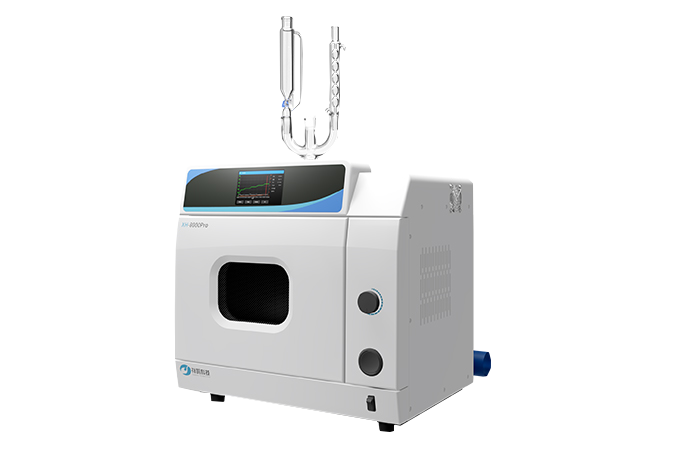
- Equipment: XH-8000 / XH-8000Plus
- Source: Nano Energy, 2018
- Research direction: thermoelectric materials and microwave-assisted solvothermal synthesis
- Core conditions: Time 12 min / 30 min
- Key results: Lattice thermal conductivity 0.258 W m-1 K-1, Lattice thermal conductivity 0.67 W m-1 K-1, and Total thermal conductivity 0.38 W m-1 K-1
Research Abstract
Self-assembled 3D flower-like hierarchical Ti-doped Cu3SbSe4 microspheres with ultralow thermal conductivity and high zT was published in Nano Energy (2018) and is indexed as a Xianghu Q1 application case for XH-8000 / XH-8000Plus. The structured source links this paper to thermoelectric materials and microwave-assisted solvothermal synthesis. Core operating conditions include Time 12 min / 30 min. Key reported results include Lattice thermal conductivity 0.258 W m-1 K-1, Lattice thermal conductivity 0.67 W m-1 K-1, and Total thermal conductivity 0.38 W m-1 K-1. The DOI recorded for this paper is 10.1016/j.nanoen.2018.04.035.
Research Background and Problem
Equipment Use and Experimental Conditions
| Item | Parameter |
|---|---|
| Time | 12 min / 30 min |
Key Result
| Metric | Result |
|---|---|
| Lattice thermal conductivity | 0.258 W m-1 K-1 |
| Lattice thermal conductivity | 0.67 W m-1 K-1 |
| Total thermal conductivity | 0.38 W m-1 K-1 |
| Total thermal conductivity | 0.81 W m-1 K-1 |
Evidence Details
Such unique structures can strengthen phonon scatterings, leading to an ultralow thermal conductivity of 0.38 W m−1 K−1 at 623 K in the Ti-doped Cu3Sb0.93Ti0.07Se4 sample.
The mixture was heated to 423 K in 12 min and held for 30 min with continuous magnetic stirring in a microwave oven.
the ultralow value of ∼0.258 W m−1 K−1 is achieved in Cu3Sb0.93Ti0.07Se4 at 623 K
power factors, with the maximum value of 617 μW m−1 K−2 at 573 K achieved in Cu3Sb0.97Ti0.03Se4
Additional source evidence: source values include 0.81 W, 1 K.
Additional source evidence: source values include 0.67 W, 1 K.
Additional source evidence: source values include 120 S.
Additional source evidence: source mentions XH-8000.
Mechanism / Method Highlights
- Method context: Time 12 min / 30 min.
- Abstract evidence: Such unique structures can strengthen phonon scatterings, leading to an ultralow thermal conductivity of 0.38 W m−1 K−1 at 623 K in the Ti-doped Cu3Sb0.93Ti0.07Se4 sample
- Source evidence: The mixture was heated to 423 K in 12 min and held for 30 min with continuous magnetic stirring in a microwave oven
- Source evidence: the ultralow value of ∼0.258 W m−1 K−1 is achieved in Cu3Sb0.93Ti0.07Se4 at 623 K
- Reported outcome: Lattice thermal conductivity 0.258 W m-1 K-1, Lattice thermal conductivity 0.67 W m-1 K-1, Total thermal conductivity 0.38 W m-1 K-1, and Total thermal conductivity 0.81 W m-1 K-1.
Application Value
- Positions XH-8000 / XH-8000Plus in a peer-reviewed Q1 research application.
- Highlights quantitative evidence: Lattice thermal conductivity 0.258 W m-1 K-1, Lattice thermal conductivity 0.67 W m-1 K-1, and Total thermal conductivity 0.38 W m-1 K-1.
- Records source affiliations: China University of Petroleum.
Related Equipment
FAQ
Which Xianghu instrument is covered by this page?
What is the main application direction?
Which publication does this case come from?
Self-assembled 3D flower-like hierarchical Ti-doped Cu3SbSe4 microspheres with ultralow thermal conductivity and high zT
Nano Energy, 2018
DOI: 10.1016/j.nanoen.2018.04.035