Fact Snapshot
- Paper: Optimization of ultrasonic-microwave assisted extraction of oligosaccharides from lotus (Nelumbo nucifera Gaertn.) seeds
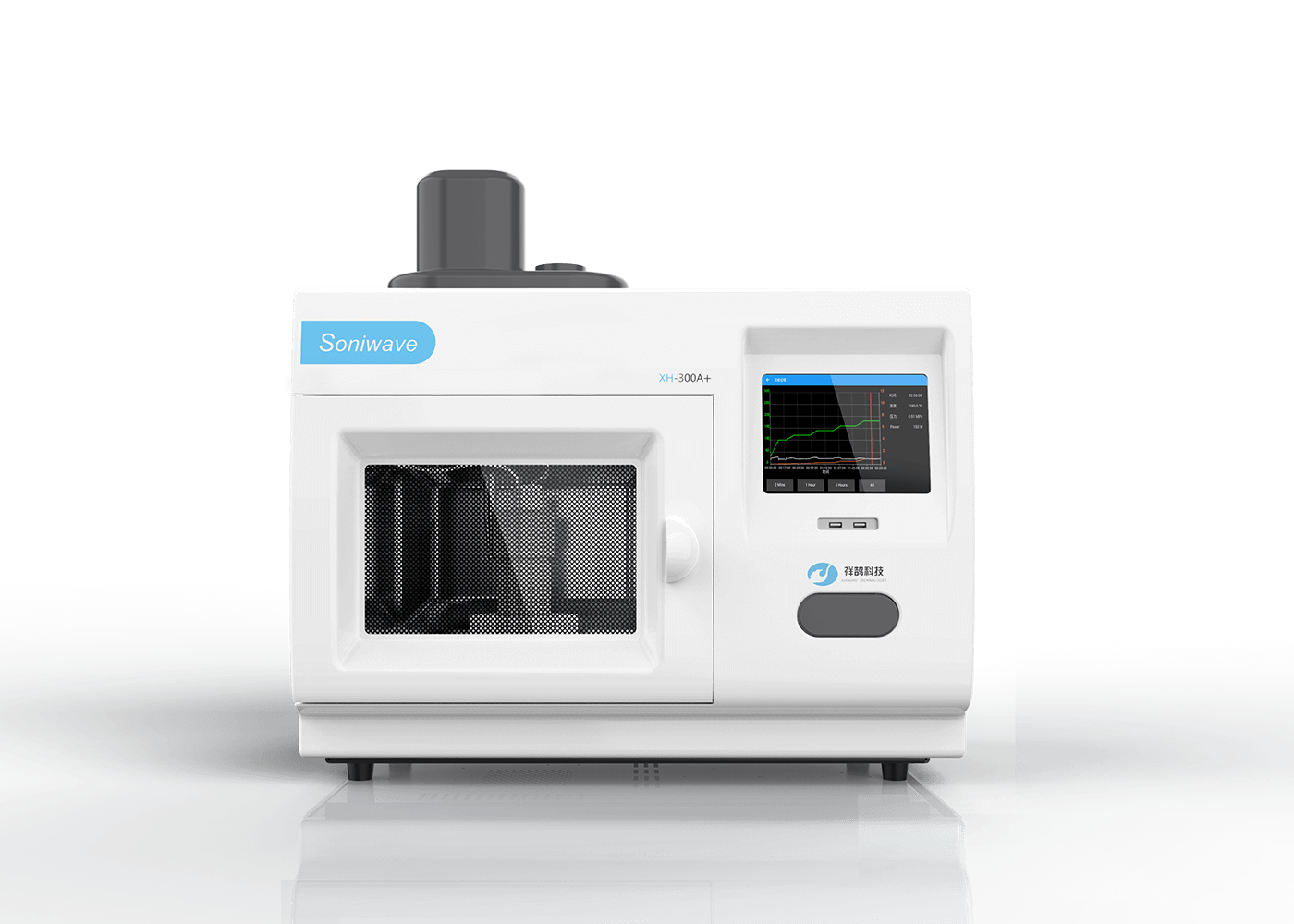
- Equipment: XH-300 series
- Source: Industrial Crops and Products, 2017
- Research direction: food functional-component extraction, ultrasonic-microwave synergistic intensification, lotus-seed oligosaccharide development, and prebiotic ingredient preparation
- Core conditions: Ultrasonic power 300.46 W / 1500 W and Microwave power 250.00 W
- Key results: Total oligosaccharide yield 3.016%, Actual extraction yield 11.009 ± 0.019%, Tetrasaccharide yield 76.59%, and Trisaccharide yield 3.947%
Research Abstract
Optimization of ultrasonic-microwave assisted extraction of oligosaccharides from lotus (Nelumbo nucifera Gaertn.) seeds was published in Industrial Crops and Products (2017) and is indexed as a Xianghu Q1 application case for XH-300 series. The source record connects it with food functional-component extraction, ultrasonic-microwave synergistic intensification, lotus-seed oligosaccharide development, and prebiotic ingredient preparation. Core operating conditions include Ultrasonic power 300.46 W / 1500 W and Microwave power 250.00 W. Key reported results include Total oligosaccharide yield 3.016%, Actual extraction yield 11.009 ± 0.019%, Tetrasaccharide yield 76.59%, and Trisaccharide yield 3.947%.
Research Background and Problem
Equipment Use and Experimental Conditions
| Item | Parameter |
|---|---|
| Ultrasonic power | 300.46 W / 1500 W |
| Microwave power | 250.00 W |
Key Result
| Metric | Result |
|---|---|
| Yield | 3.016% |
| Yield | 11.009 ± 0.019% |
| Yield | 76.59% |
| Yield | 3.947% |
| Yield | 4.894% |
Evidence Details
Equipment-detail evidence: source values include 25 kHz.
The results indicated that the optimal conditions for UMAE of lotus seed oligosaccharides were: extraction time 325.00 s, liquid-solid ratio 10.00 mL/g (L/S ratio), ultrasonic power 300.46 W, microwave power 250.00 W
the yield of total oligosaccharides, trisaccharides, and tetrasaccharides was increased by 76.59%, 17.47%, and 27.21%, respectively
the starch-depleted test sample solution was added to 150 mL constant volume at the liquid-solid ratio (L/S ratio) applied in the response surface design before it was transferred to a heterotype three-port glass vase in the device and subjected to ultrasonic-microwave assisted extraction (XH-300B, Beijing Xianghu, Beijing, China).
heterotype three-port glass flask for 250 mL was equipped for the tests with the ultrasonic generator probe directly dipped into the suspension ... and the condensation pipe connected for backflow reaction
Ultrasonic power: 300.46 W / 1500 W
Actual extraction yield: 11.009 ± 0.019%
Total oligosaccharide yield: 3.016%
Tetrasaccharide yield: 4.894%
Trisaccharide yield: 3.947%
Additional source evidence: source values include 325 s.
Mechanism / Method Highlights
- Ultrasound enhances solid-liquid contact and mass transfer through cavitation and mechanical shear, helping release oligosaccharides from lotus-seed tissue.
- Microwave heating improves volumetric heating efficiency and accelerates migration of target components from raw material into solvent.
- The synergistic mode combines ultrasonic disruption with microwave heating, enabling higher yields in a shorter time than ultrasound-only or microwave-only routes.
- The open reflux structure reduces solvent loss and process fluctuation, improving reproducibility of the optimized condition.
Application Value
- The optimized extraction condition needs only 325 s, much shorter than traditional hot-water or single-intensification routes.
- Total oligosaccharide, trisaccharide, and tetrasaccharide yields increase by 76.59%, 17.47%, and 27.21%, respectively.
- Preserves quantitative result evidence: Total oligosaccharide yield 3.016%, Actual extraction yield 11.009 ± 0.019%, Tetrasaccharide yield 76.59%, and Trisaccharide yield 3.947%.
- Maintains source-level evidence details: Equipment-detail evidence: source values include 25 kHz, Abstract evidence: The results indicated that the optimal conditions for UMAE of lotus seed oligosaccharides were: extraction time 325.00 s, liquid-solid ratio 10.00 mL/g (L/S ratio), ultrasonic power 300.46 W, microwave power 250.00 W, Source evidence: the yield of total oligosaccharides, trisaccharides, and tetrasaccharides was increased by 76.59%, 17.47%, and 27.21%, respectively, and Equipment evidence: the starch-depleted test sample solution was added to 150 mL constant volume at the liquid-solid ratio (L/S ratio) applied in the response surface design before it was transferred to a heterotype three-port glass vase in the device and subjected to ultrasonic-microwave assisted extraction (XH-300B, Beijing Xianghu, Beijing, China).
Related Equipment
FAQ
Which Xianghu instrument is covered by this page?
What research direction does this page support?
Which publication does this case come from?
Optimization of ultrasonic-microwave assisted extraction of oligosaccharides from lotus (Nelumbo nucifera Gaertn.) seeds
Industrial Crops and Products, 2017
DOI: 10.1016/j.indcrop.2017.05.060