Fact Snapshot
- Paper: Microfluidic Encapsulation of Prickly Zinc‐Doped Copper Oxide Nanoparticles with VD1142 Modified Spermine Acetalated Dextran for Efficient Cancer Therapy
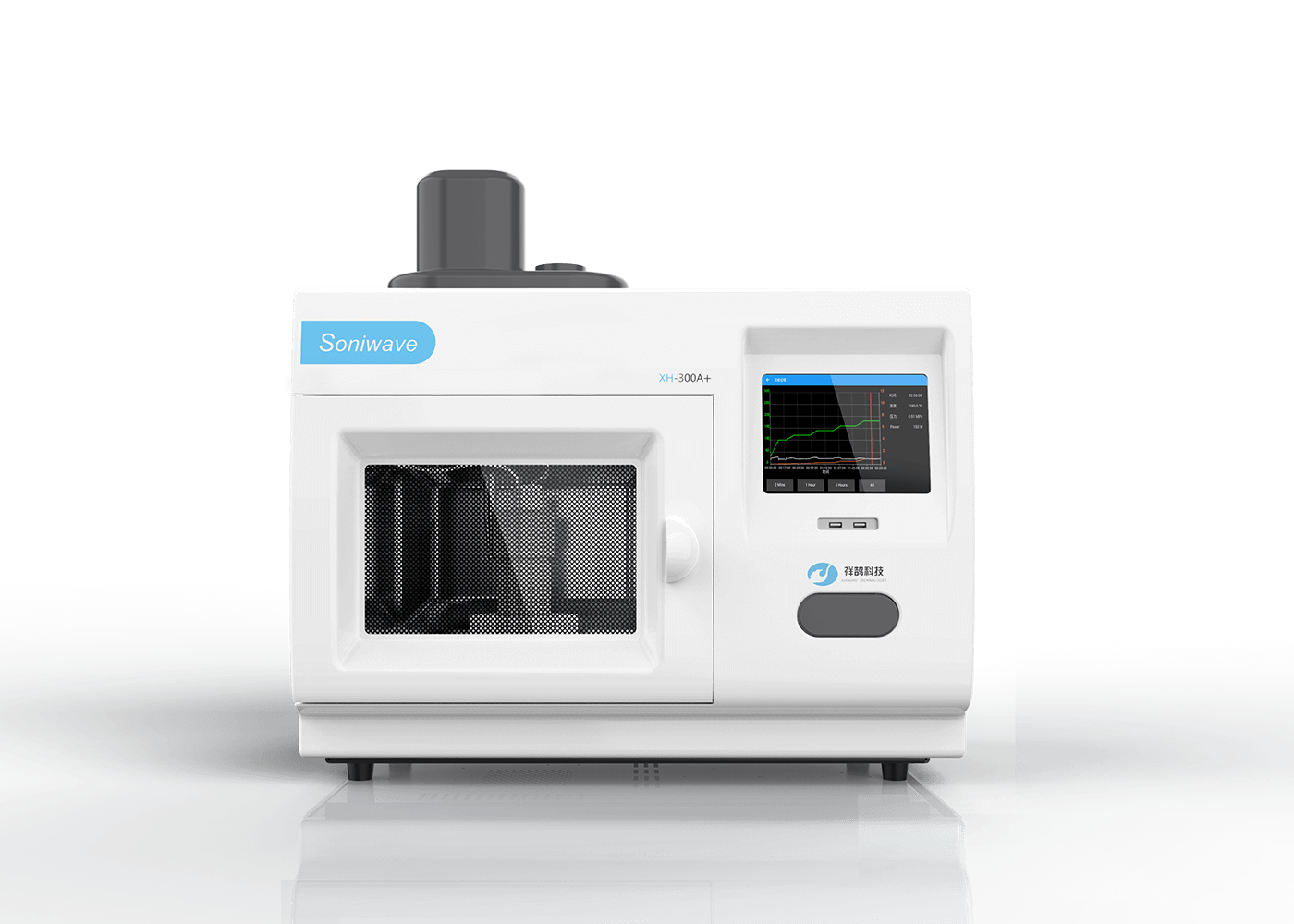
- Equipment: XH-300 series
- Source: Advanced Healthcare Meterials, 2017
- Research direction: CA IX
- Core conditions: Power 750 W, Ultrasonic power 750 W, and Time 1 h
- Key results: Mass fraction in particles 1.2%, Particle size 226 nm, and Particle size 274 nm
Research Abstract
Microfluidic Encapsulation of Prickly Zinc‐Doped Copper Oxide Nanoparticles with VD1142 Modified Spermine Acetalated Dextran for Efficient Cancer Therapy was published in Advanced Healthcare Meterials (2017) and is indexed as a Xianghu Q1 application case for XH-300 series. The source record connects it with CA IX. Core operating conditions include Power 750 W, Ultrasonic power 750 W, and Time 1 h. Key reported results include Mass fraction in particles 1.2%, Particle size 226 nm, and Particle size 274 nm.
Research Background and Problem
Equipment Use and Experimental Conditions
| Item | Parameter |
|---|---|
| Power | 750 W |
| Ultrasonic power | 750 W |
| Time | 1 h |
Key Result
| Metric | Result |
|---|---|
| Particle size | 226 nm |
| Particle size | 274 nm |
| Mass fraction in particles | 1.2% |
Evidence Details
Prickly NPs were prepared through a home-made high intensity ultrasonic device (XH-300UL, Beijing Xianghu Science and Technology development Co., Ltd.) ... the sonochemical deposition process continued for 1 h (750 W, 100% efficiency).
the Tm value had an increase of up to ≈15 °C ... whereas in the case of Prickly NPs and Prickly@SpAcDX–PEG, almost no Tm shift (up to only 1 °C) was observed
the Prickly NP to SpAcDX ratio of 1:5 and the flow rates of 2:40 mL h−1 were the optimal conditions for efficient encapsulation
the polymer layer became thicker after conjugation of PEG–VD1142 ... particle size increased to 274 nm and ζ-potential decreased to +7 mV
The Prickly@SpAcDX was 226 nm (PDI = 0.17) with ζ-potential of +41 mV.
Mass fraction in particles: 1.2%
Mechanism / Method Highlights
- Method context: Power 750 W, Ultrasonic power 750 W, and Time 1 h.
- Equipment evidence: Prickly NPs were prepared through a home-made high intensity ultrasonic device (XH-300UL, Beijing Xianghu Science and Technology development Co., Ltd.) ... the sonochemical deposition process continued for 1 h (750 W, 100% efficiency)
- Source evidence: the Tm value had an increase of up to ≈15 °C ... whereas in the case of Prickly NPs and Prickly@SpAcDX–PEG, almost no Tm shift (up to only 1 °C) was observed
- Source evidence: the Prickly NP to SpAcDX ratio of 1:5 and the flow rates of 2:40 mL h−1 were the optimal conditions for efficient encapsulation
- Reported outcome: Mass fraction in particles 1.2%, Particle size 226 nm, and Particle size 274 nm.
Application Value
- Provides a peer-reviewed SoarNova / Xianghu Q1 application case for XH-300 series.
- Supports English discovery around CA IX.
- Preserves quantitative result evidence: Mass fraction in particles 1.2%, Particle size 226 nm, and Particle size 274 nm.
- Maintains source-level evidence details: Equipment evidence: Prickly NPs were prepared through a home-made high intensity ultrasonic device (XH-300UL, Beijing Xianghu Science and Technology development Co., Ltd.) ... the sonochemical deposition process continued for 1 h (750 W, 100% efficiency), Source evidence: the Tm value had an increase of up to ≈15 °C ... whereas in the case of Prickly NPs and Prickly@SpAcDX–PEG, almost no Tm shift (up to only 1 °C) was observed, Source evidence: the Prickly NP to SpAcDX ratio of 1:5 and the flow rates of 2:40 mL h−1 were the optimal conditions for efficient encapsulation, and Source evidence: the polymer layer became thicker after conjugation of PEG–VD1142 ... particle size increased to 274 nm and ζ-potential decreased to +7 mV.
Related Equipment
FAQ
Which Xianghu instrument is covered by this page?
What is the main application direction?
Which publication does this case come from?
Microfluidic Encapsulation of Prickly Zinc‐Doped Copper Oxide Nanoparticles with VD1142 Modified Spermine Acetalated Dextran for Efficient Cancer Therapy
Advanced Healthcare Meterials, 2017
DOI: 10.1002/adhm.201601406