Fact Snapshot
- Paper: Thermal conductivity enhancement of PEG/SiO2 composite PCM by in situ Cu doping
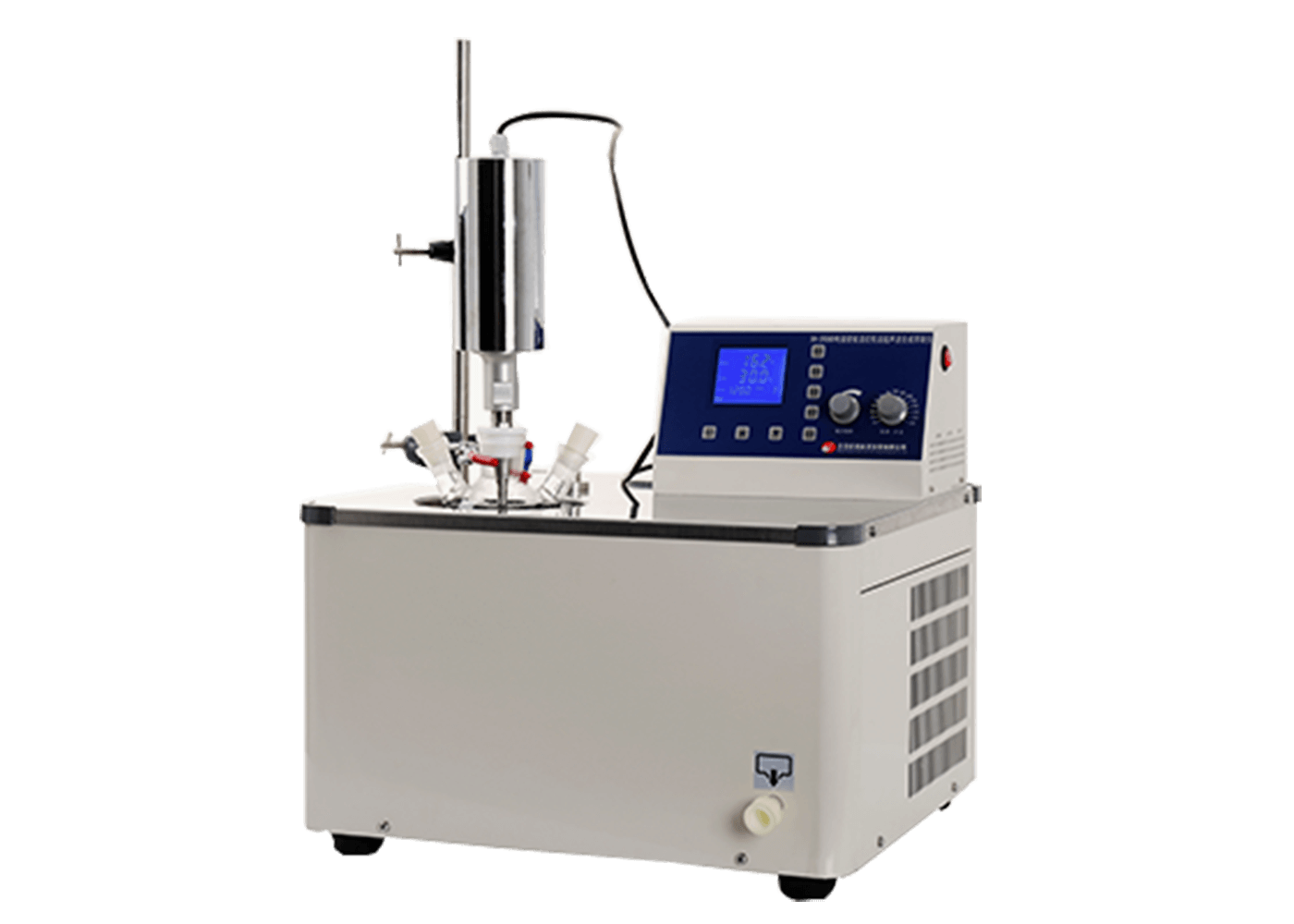
- Equipment: XH-2008D
- Source: Solar Energy Materials and Solar Cells, 2012
- Research direction: sol-gel
- Core conditions: Temperature 60 °C, Ultrasonic power 300 W, and Time 20 min
- Key results: Thermal conductivity 38.1%
Research Abstract
Thermal conductivity enhancement of PEG/SiO2 composite PCM by in situ Cu doping was published in Solar Energy Materials and Solar Cells (2012) and is indexed as a Xianghu Q1 application case for XH-2008D. The structured source links this paper to sol-gel. Core operating conditions include Temperature 60 °C, Ultrasonic power 300 W, and Time 20 min. Key reported results include Thermal conductivity 38.1%. The DOI recorded for this paper is 10.1016/j.solmat.2012.06.012.
Research Background and Problem
Equipment Use and Experimental Conditions
| Item | Parameter |
|---|---|
| Temperature | 60 °C |
| Ultrasonic power | 300 W |
| Time | 20 min |
Key Result
| Metric | Result |
|---|---|
| Thermal conductivity | 38.1% |
Evidence Details
Compared with that of pure PEG, the heating and freezing times of the form-stable Cu/PEG/SiO2 (2.1 wt %) composite PCM was reduced by 25% and 69.9%, respectively.
The ultrasound probe was then inserted into the mixture while the temperature was controlled at 60 °C ... under an ultrasound power nominal value of 300 W.
Additional source evidence: source values include 20 min, 10%, 2 h.
Cu/PEG/SiO2 hybrid form-stable PCM was prepared using an ultrasound generator (XH-2008D, Beijing XiangHu Science and Technology Development, PR China).
the phase change enthalpy and thermal conductivity reached up to 110 J/g and 0.414 W/(m K), respectively.
Additional source evidence: source values include 62.3 °C, 348 s.
Additional source evidence: source values include 48 °C, 208 s.
Additional source evidence: source values include 50 °C, 24 h.
Stability evidence: source values include 263 °C.
Thermal conductivity: 38.1%
Mechanism / Method Highlights
- Method context: Temperature 60 °C, Ultrasonic power 300 W, and Time 20 min.
- Source evidence: Compared with that of pure PEG, the heating and freezing times of the form-stable Cu/PEG/SiO2 (2.1 wt %) composite PCM was reduced by 25% and 69.9%, respectively
- Source evidence: The ultrasound probe was then inserted into the mixture while the temperature was controlled at 60 °C ... under an ultrasound power nominal value of 300 W
- Additional source evidence: source values include 20 min, 10%, 2 h
- Reported outcome: Thermal conductivity 38.1%.
Application Value
- Positions XH-2008D in a peer-reviewed Q1 research application.
- Highlights quantitative evidence: Thermal conductivity 38.1%.
- Records source affiliations: Dalian University of Technology.
Related Equipment
FAQ
Which Xianghu instrument is covered by this page?
What is the main application direction?
Which publication does this case come from?
Thermal conductivity enhancement of PEG/SiO2 composite PCM by in situ Cu doping
Solar Energy Materials and Solar Cells, 2012
DOI: 10.1016/j.solmat.2012.06.012