Fact Snapshot
- Paper: Quasi-MIL-101(Fe) with rich oxygen vacancies for boosted heterogeneous photo-Fenton reaction
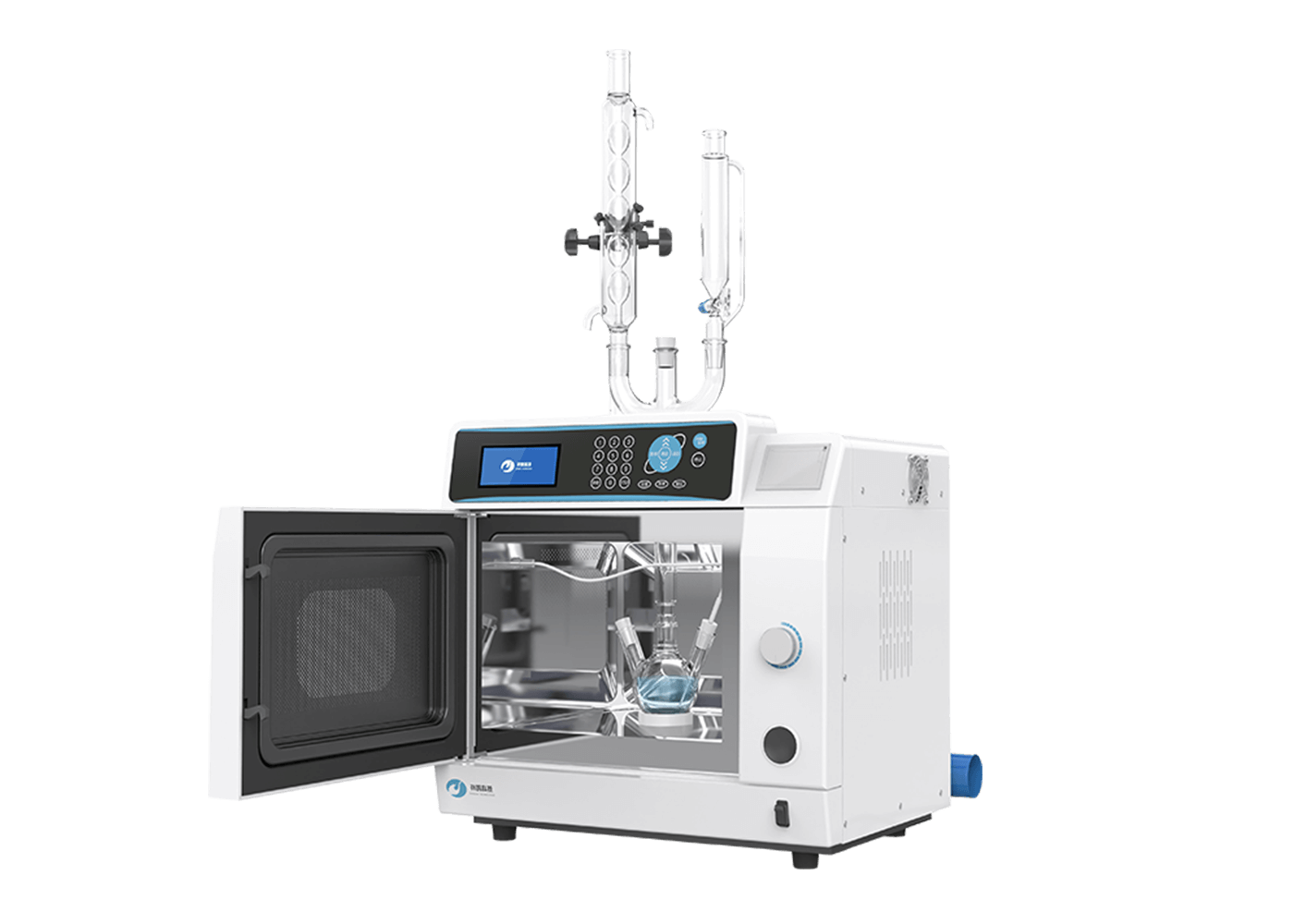
- Equipment: XH-100A
- Source: Separation and Purification Technology, 2025
- Research direction: MOF
- Core conditions: Temperature 150.0 °C / 250 °C / 300 °C, Microwave power 750.0 W, and Time 10.0 min / 84.0 h
- Key results: SMX removal 100.0 %, COD removal 54.4 %, and Photo-Fenton degradation rate 28-fold
Research Abstract
Quasi-MIL-101(Fe) with rich oxygen vacancies for boosted heterogeneous photo-Fenton reaction was published in Separation and Purification Technology (2025) and is indexed as a Xianghu Q1 application case for XH-100A. The source record connects it with MOF. Core operating conditions include Temperature 150.0 °C / 250 °C / 300 °C, Microwave power 750.0 W, and Time 10.0 min / 84.0 h. Key reported results include SMX removal 100.0 %, COD removal 54.4 %, and Photo-Fenton degradation rate 28-fold.
Research Background and Problem
Equipment Use and Experimental Conditions
| Item | Parameter |
|---|---|
| Temperature | 150.0 °C / 250 °C / 300 °C |
| Microwave power | 750.0 W |
| Time | 10.0 min / 84.0 h |
Key Result
| Metric | Result |
|---|---|
| Removal | 100.0 % |
| Removal | 54.4 % |
| Photo-Fenton degradation rate | 28-fold |
Evidence Details
Typically, a mixture of terephthalic acid (H2BDC) (1.380 g) and FeCl3⋅6H2O (2.244 g) was dissolved into a three-necked flask with 120.0 mL of DMF, which was reacted in XH-100B (Xianghu Co., Beijing) microwave oven fitted with a reflux condenser. The mixed solution was heated by microwave to 150.0 ◦C (750.0 W) for 10.0 min.
Microwave-method evidence: source values include 1.380 g, 2.244 g, 120.0 mL, 150.0 °C, 750.0 W, 10.0 min. Entities: XH-100B, MIL-101.
Additional source evidence: source values include 250 °C, 300 °C, 350 °C, 400 °C, 2.0 h. Entities: Qx-MIL-101, Q350-MIL-101.
Release-kinetics evidence: source values include 20.0 min, 10.0 mg, 84.0 h, 100.0 %. Entities: Q350-MIL-101.
Release-kinetics evidence: source values include 1.14 min, 0.04 min, 28 fold. Entities: Q350-MIL-101, MIL-101.
Q350-MIL-101(Fe) exhibited the best catalytic performance among all as-synthesized catalysts, which accomplished 100.0 % SMX removal efficiency within 3.0 min.
Additional source evidence: source values include 100.0 %, 27.6 %, 16.0 %.
Additional source evidence: source values include 10.0 mg, 50.0 mL, 30 %.
Additional source evidence: source values include 2.21 nm, 5.24 nm. Entities: Q350-MIL-101, MIL-101.
COD removal: 54.4 %
Mechanism / Method Highlights
- Method context: Temperature 150.0 °C / 250 °C / 300 °C, Microwave power 750.0 W, and Time 10.0 min / 84.0 h.
- Equipment and method evidence: Typically, a mixture of terephthalic acid (H2BDC) (1.380 g) and FeCl3⋅6H2O (2.244 g) was dissolved into a three-necked flask with 120.0 mL of DMF, which was reacted in XH-100B (Xianghu Co., Beijing) microwave oven fitted with a reflux condenser. The mixed solution was heated by microwave to 150.0 ◦C (750.0 W) for 10.0 min
- Microwave-method evidence: source values include 1.380 g, 2.244 g, 120.0 mL, 150.0 °C, 750.0 W, 10.0 min. Entities: XH-100B, MIL-101
- Additional source evidence: source values include 250 °C, 300 °C, 350 °C, 400 °C, 2.0 h. Entities: Qx-MIL-101, Q350-MIL-101
- Reported outcome: SMX removal 100.0 %, COD removal 54.4 %, and Photo-Fenton degradation rate 28-fold.
Application Value
- Provides a peer-reviewed SoarNova / Xianghu Q1 application case for XH-100A.
- Supports English discovery around MOF.
- Preserves quantitative result evidence: SMX removal 100.0 %, COD removal 54.4 %, and Photo-Fenton degradation rate 28-fold.
- Maintains source-level evidence details: Equipment and method evidence: Typically, a mixture of terephthalic acid (H2BDC) (1.380 g) and FeCl3⋅6H2O (2.244 g) was dissolved into a three-necked flask with 120.0 mL of DMF, which was reacted in XH-100B (Xianghu Co., Beijing) microwave oven fitted with a reflux condenser. The mixed solution was heated by microwave to 150.0 ◦C (750.0 W) for 10.0 min, Microwave-method evidence: source values include 1.380 g, 2.244 g, 120.0 mL, 150.0 °C, 750.0 W, 10.0 min. Entities: XH-100B, MIL-101, Additional source evidence: source values include 250 °C, 300 °C, 350 °C, 400 °C, 2.0 h. Entities: Qx-MIL-101, Q350-MIL-101, and Release-kinetics evidence: source values include 20.0 min, 10.0 mg, 84.0 h, 100.0 %. Entities: Q350-MIL-101.
Related Equipment
FAQ
Which Xianghu instrument is covered by this page?
What is the main application direction?
Which publication does this case come from?
Quasi-MIL-101(Fe) with rich oxygen vacancies for boosted heterogeneous photo-Fenton reaction
Separation and Purification Technology, 2025
DOI: 10.1016/j.seppur.2025.132510