Fact Snapshot
- Paper: Gold nanoparticles decorated graphene oxide/nanocellulose paper for NIR laser-induced photothermal ablation of pathogenic bacteria
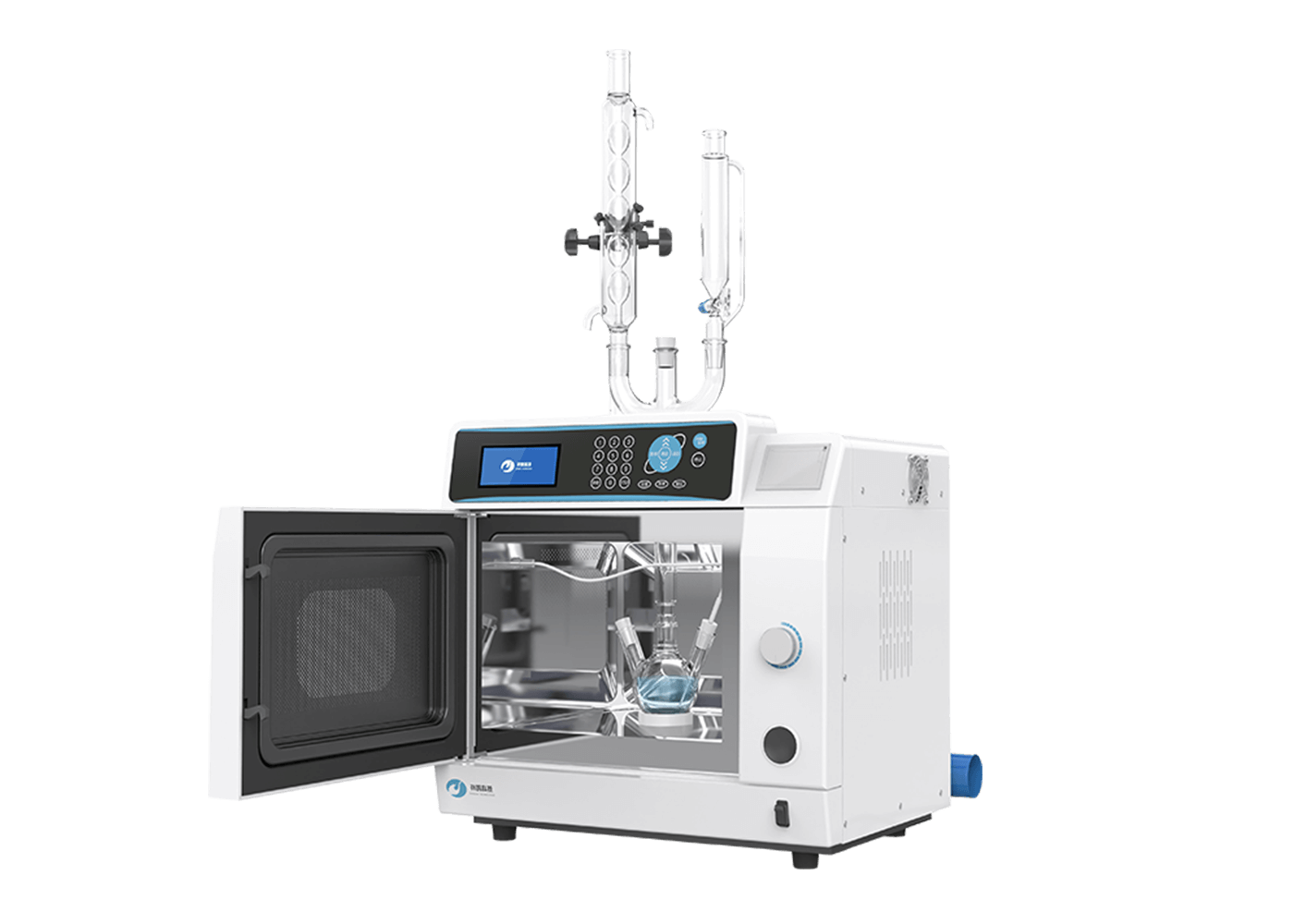
- Equipment: XH-100A
- Source: Carbohydrate Polymers, 2018
- Research direction: GO
- Core conditions: Temperature 90 °C, Microwave power 800 W, and Time 30 min
- Key results: Tensile strength 58.3 MPa
Research Abstract
Gold nanoparticles decorated graphene oxide/nanocellulose paper for NIR laser-induced photothermal ablation of pathogenic bacteria was published in Carbohydrate Polymers (2018) and is indexed as a Xianghu Q1 application case for XH-100A. The source record connects it with GO. Core operating conditions include Temperature 90 °C, Microwave power 800 W, and Time 30 min. Key reported results include Tensile strength 58.3 MPa.
Research Background and Problem
Equipment Use and Experimental Conditions
| Item | Parameter |
|---|---|
| Temperature | 90 °C |
| Microwave power | 800 W |
| Time | 30 min |
Key Result
| Metric | Result |
|---|---|
| Tensile strength | 58.3 MPa |
Evidence Details
QCMC: HAuCl4 = 40 mg: 6 mg is considered as the optimal mass ratio ... 90 °C is selected as the feasible temperature condition for synthesizing Au NPs ... 30 min would be the appropriate reaction time for preparation of Au NPs.
Under identical irradiation, Au-QCMC-GO(+)/nanocellulose paper showed a drastic change in temperature from 27 to 88.2 °C ... Au-QCMC-GO(-)/nanocellulose paper from 27 to 70.5 °C and Au-QCMC/nanocellulose paper from 27 to 66.8 °C.
Additional source evidence: source values include 2 min, 27 °C, 88.2 °C. Entities: Au-QCMC-GO.
Additional source evidence: source values include 808 nm, 4 W, 2 min.
Additional source evidence: source values include 808 nm, 4 W, 5 min.
The preparation of Au NPs was performed using QCMC as reducing and stabilizing reagent with a XH-100B microwave instrument provided by Beijing XiangHu Science and Technology Development Co., Ltd., China.
Microwave-method evidence: source values include 800 W. Entities: XH-100B.
Excited by NIR laser irradiation, Au-QCMC-GO(+)/nanocellulose paper generated a temperature rise over 80 °C, sufficient for photothermal ablation upon both Gram-positive bacteria ... and Gram-negative bacteria ...
Composition evidence: source values include 400-600 um, 10-50 nm. Entities: Au-QCMC-GO.
Mechanism / Method Highlights
- Method context: Temperature 90 °C, Microwave power 800 W, and Time 30 min.
- Source evidence: QCMC: HAuCl4 = 40 mg: 6 mg is considered as the optimal mass ratio ... 90 °C is selected as the feasible temperature condition for synthesizing Au NPs ... 30 min would be the appropriate reaction time for preparation of Au NPs
- Source evidence: Under identical irradiation, Au-QCMC-GO(+)/nanocellulose paper showed a drastic change in temperature from 27 to 88.2 °C ... Au-QCMC-GO(-)/nanocellulose paper from 27 to 70.5 °C and Au-QCMC/nanocellulose paper from 27 to 66.8 °C
- Additional source evidence: source values include 2 min, 27 °C, 88.2 °C. Entities: Au-QCMC-GO
- Reported outcome: Tensile strength 58.3 MPa.
Application Value
- Provides a peer-reviewed SoarNova / Xianghu Q1 application case for XH-100A.
- Supports English discovery around GO.
- Preserves quantitative result evidence: Tensile strength 58.3 MPa.
- Maintains source-level evidence details: Source evidence: QCMC: HAuCl4 = 40 mg: 6 mg is considered as the optimal mass ratio ... 90 °C is selected as the feasible temperature condition for synthesizing Au NPs ... 30 min would be the appropriate reaction time for preparation of Au NPs, Source evidence: Under identical irradiation, Au-QCMC-GO(+)/nanocellulose paper showed a drastic change in temperature from 27 to 88.2 °C ... Au-QCMC-GO(-)/nanocellulose paper from 27 to 70.5 °C and Au-QCMC/nanocellulose paper from 27 to 66.8 °C, Additional source evidence: source values include 2 min, 27 °C, 88.2 °C. Entities: Au-QCMC-GO, and Additional source evidence: source values include 808 nm, 4 W, 2 min.
Related Equipment
FAQ
Which Xianghu instrument is covered by this page?
What is the main application direction?
Which publication does this case come from?
Gold nanoparticles decorated graphene oxide/nanocellulose paper for NIR laser-induced photothermal ablation of pathogenic bacteria
Carbohydrate Polymers, 2018
DOI: 10.1016/j.carbpol.2018.06.074