Fact Snapshot
- Paper: Rapid exfoliation of rectorite in quaternized carboxymethyl chitosan
- Equipment: XH-100A
- Source: Carbohydrate polymers, 2012
- Research direction: Research application
- Core conditions: Temperature 70 °C / 75 °C / 80 °C, Microwave power 600 W / 500 W, Power 400 W, and Time 70 min / 25 min / 48 h
- Key results: Residual mass 67.8%
Research Abstract
Rapid exfoliation of rectorite in quaternized carboxymethyl chitosan was published in Carbohydrate polymers (2012) and is indexed as a Xianghu Q1 application case for XH-100A. The source record connects it with Research application. Core operating conditions include Temperature 70 °C / 75 °C / 80 °C, Microwave power 600 W / 500 W, Power 400 W, and Time 70 min / 25 min / 48 h. Key reported results include Residual mass 67.8%.
Research Background and Problem
Equipment Use and Experimental Conditions
| Item | Parameter |
|---|---|
| Temperature | 70 °C / 75 °C / 80 °C |
| Microwave power | 600 W / 500 W |
| Power | 400 W |
| Time | 70 min / 25 min / 48 h |
Key Result
| Metric | Result |
|---|---|
| Residual mass | 67.8% |
Evidence Details
Additional source evidence: source values include 269.6 °C, 257.4 °C, 246.1 °C, 240.9 °C, 239.8 °C. Entities: QR-1, QR-5.
Additional source evidence: source values include 67.8%, 55.3%, 39.9%, 31.8%, 25.9%. Entities: QR-1, QR-5.
QCMC solution was dropped slowly into clay suspension and reacted under microwave irradiation for 600 W and 80 °C for 70 min.
Exfoliated quaternized carboxymethyl chitosan/rectorite (QCMC/REC) nanocomposite was prepared via microwave irradiation method for 70 min ... when the mass ratio of QCMC to REC was no less than 4:1, the silicate layers of REC were completely exfoliated in QCMC matrix.
In our previous study, the preparation of intercalated QCMC/REC nanobiocomposite consumed 48 h by conventional heating method ... In this study ... were obtained via microwave irradiation heating method in 70 min.
Additional source evidence: source values include 500 W, 70 °C, 25 min.
Additional source evidence: source values include 400 W, 75 °C, 70 min.
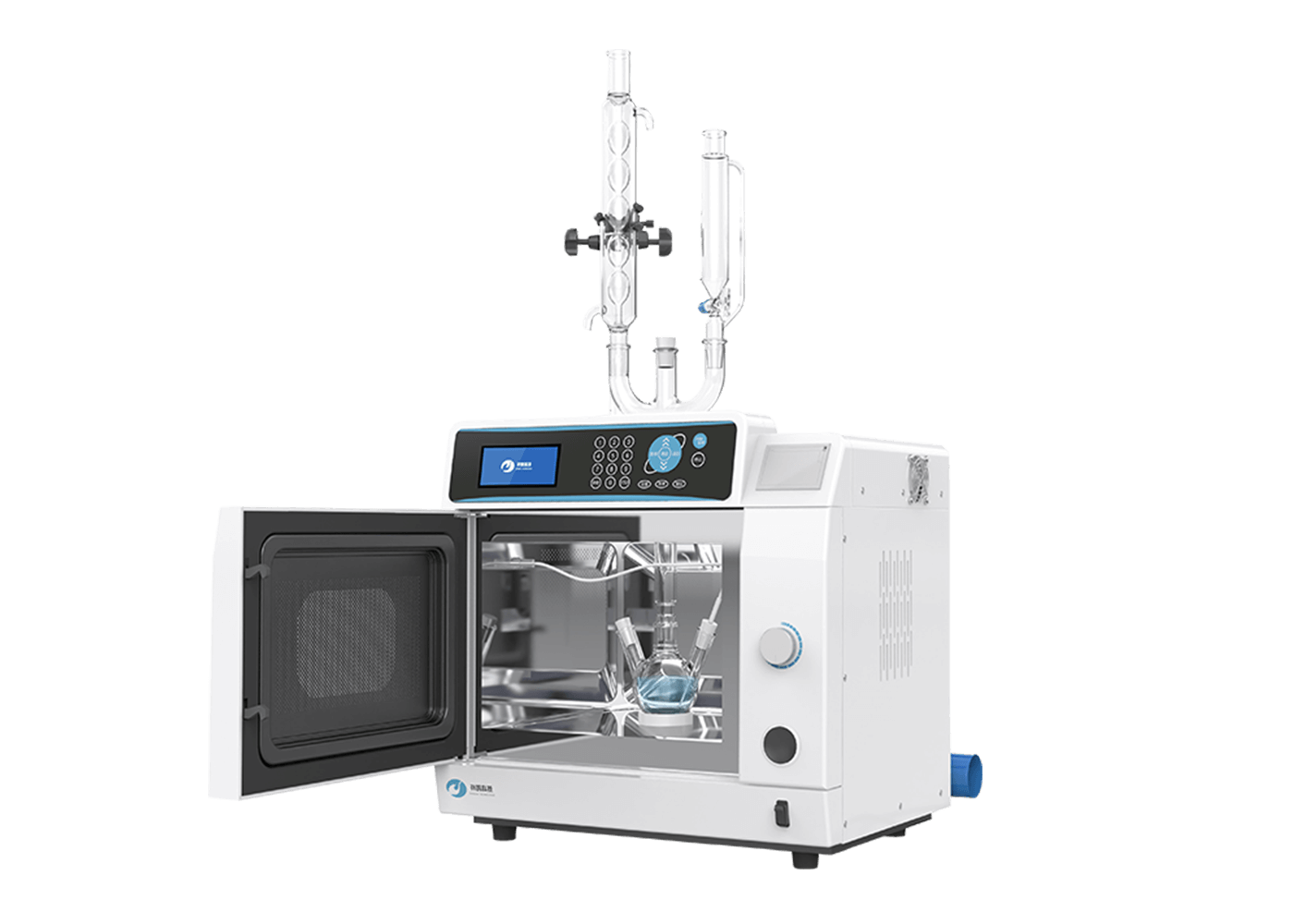
A XH-100B microwave synthesis system was obtained from Beijing XiangHu Sci.-Tech. Dept. Co. Ltd (Beijing, China).
Microwave-method evidence: source values include 70 min, 7.54 nm.
Additional source evidence: source values include 700 °C, 17.5%.
Mechanism / Method Highlights
- Method context: Temperature 70 °C / 75 °C / 80 °C, Microwave power 600 W / 500 W, Power 400 W, and Time 70 min / 25 min / 48 h.
- Additional source evidence: source values include 269.6 °C, 257.4 °C, 246.1 °C, 240.9 °C, 239.8 °C. Entities: QR-1, QR-5
- Additional source evidence: source values include 67.8%, 55.3%, 39.9%, 31.8%, 25.9%. Entities: QR-1, QR-5
- Source evidence: QCMC solution was dropped slowly into clay suspension and reacted under microwave irradiation for 600 W and 80 °C for 70 min
- Reported outcome: Residual mass 67.8%.
Application Value
- Provides a peer-reviewed SoarNova / Xianghu Q1 application case for XH-100A.
- Supports English discovery around Research application.
- Preserves quantitative result evidence: Residual mass 67.8%.
- Maintains source-level evidence details: Additional source evidence: source values include 269.6 °C, 257.4 °C, 246.1 °C, 240.9 °C, 239.8 °C. Entities: QR-1, QR-5, Additional source evidence: source values include 67.8%, 55.3%, 39.9%, 31.8%, 25.9%. Entities: QR-1, QR-5, Source evidence: QCMC solution was dropped slowly into clay suspension and reacted under microwave irradiation for 600 W and 80 °C for 70 min, and Abstract evidence: Exfoliated quaternized carboxymethyl chitosan/rectorite (QCMC/REC) nanocomposite was prepared via microwave irradiation method for 70 min ... when the mass ratio of QCMC to REC was no less than 4:1, the silicate layers of REC were completely exfoliated in QCMC matrix.
Related Equipment
FAQ
Which Xianghu instrument is covered by this page?
What research direction does this page support?
Which publication does this case come from?
Rapid exfoliation of rectorite in quaternized carboxymethyl chitosan
Carbohydrate polymers, 2012
DOI: 10.1016/j.carbpol.2012.07.014