Fact Snapshot
- Paper: Activation of peroxymonosulfate by microwave irradiation for degradation of organic contaminants
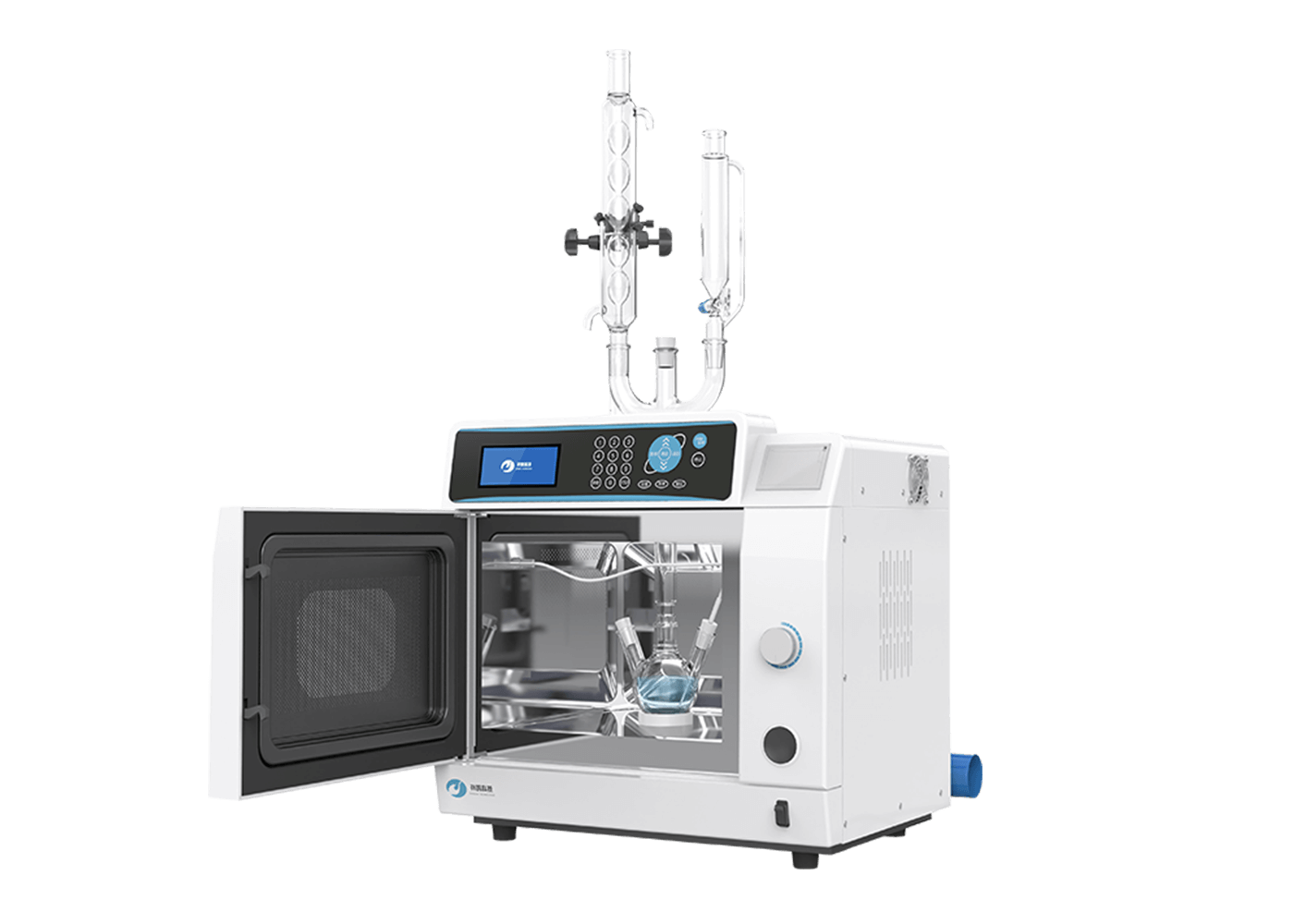
- Equipment: XH-100A
- Source: Chemical Engineering Journal, 2017
- Research direction: PMS and from
- Core conditions: Temperature 80 °C / 60 °C, Power 1000 W, and Microwave power 500 W
- Key results: Removal 45.2%, Removal 0.8%, and Removal 12.1%
Research Abstract
Activation of peroxymonosulfate by microwave irradiation for degradation of organic contaminants was published in Chemical Engineering Journal (2017) and is indexed as a Xianghu Q1 application case for XH-100A. The structured source links this paper to PMS and from. Core operating conditions include Temperature 80 °C / 60 °C, Power 1000 W, and Microwave power 500 W. Key reported results include Removal 45.2%, Removal 0.8%, and Removal 12.1%. The DOI recorded for this paper is 10.1016/j.cej.2017.01.012.
Research Background and Problem
Equipment Use and Experimental Conditions
| Item | Parameter |
|---|---|
| Temperature | 80 °C / 60 °C |
| Power | 1000 W |
| Microwave power | 500 W |
Key Result
| Metric | Result |
|---|---|
| Removal | 45.2% |
| Removal | 0.8% |
| Removal | 12.1% |
| Removal | 97.2% |
| Removal | 99.8% |
| Removal | 9.4% |
Evidence Details
Activation-energy evidence: source values include 196.08 kJ/mol.
Activation-energy evidence: source values include 169.42 kJ/mol.
Microwave-method evidence: source values include 200 W, 600 W, 15 min, 0.8%, 42.0%, 58.0%, -2 min.
Two hundred and fifty milliliters of the BPA solution (typically 87.6 μM, 20 mg L−1) was heated in the XH-100A MW reactor with an appropriate MW power level (typically 500 W) to reach and maintain the preset temperature (typically 80 °C). The reaction was initiated once 5 mL of the PMS stock solution (typically 0.5 M) was added.
Additional source evidence: source values include 70 °C, 60 min, 45.2%, 63.9%, 1.36-3.36 fold.
The complete degradation of BPA could be achieved in both the MW and conventional heating (CH) activated PMS processes at 80 °C within 45 and 60 min, respectively. The kobs values of the MW/PMS and CH/PMS processes were evaluated to be 8.37 × 10⁻² and 6.17 × 10⁻² min−1, respectively.
complete removal was achieved for MB, ATZ, SMX, and IBP within 5, 15, 15, and 30 min, respectively. For AO7, a 97.2% degradation efficiency was achieved under 60 min of MW irradiation.
Additional source evidence: source values include 60 min, 12.1%, 99.9%, -2 min.
The flask was placed on a commercial MW reactor (XH-100A, 100–1000 W, Beijing Xianghu Science and Technology Development Co., Ltd) that controlled all of the experimental conditions, including the reaction temperature, MW power, stirring speed, and reaction time.
Additional source evidence: source values include 82.4%, 16.6%, -3 min.
Additional source evidence: source values include 82.4%, 47.3%, -2 min.
Microwave-method evidence: source values include 250 mL. Entities: XH-100A.
In this study, peroxymonosulfate (PMS) activation was successfully achieved by microwave (MW) irradiation directly and subsequently applied for the degradation of bisphenol A (BPA... ), especially at temperatures above 60 °C.
The kobs values of the BPA degradation were 8.37 × 10⁻², 1.06 × 10⁻¹, and 2.04 × 10⁻¹ min−1 in UPW, BW, and TW, respectively.
Mechanism / Method Highlights
- Method context: Temperature 80 °C / 60 °C, Power 1000 W, and Microwave power 500 W.
- Activation-energy evidence: source values include 196.08 kJ/mol
- Activation-energy evidence: source values include 169.42 kJ/mol
- Microwave-method evidence: source values include 200 W, 600 W, 15 min, 0.8%, 42.0%, 58.0%, -2 min
- Reported outcome: Removal 45.2%, Removal 0.8%, Removal 12.1%, and Removal 97.2%.
Application Value
- Positions XH-100A in a peer-reviewed Q1 research application.
- Highlights quantitative evidence: Removal 45.2%, Removal 0.8%, and Removal 12.1%.
- Records source affiliations: Beijing Normal University and State Key Laboratory of Water Environment Simulation, School of Environment, Beijing Normal University.
Related Equipment
FAQ
Which Xianghu instrument is covered by this page?
What is the main application direction?
Which publication does this case come from?
Activation of peroxymonosulfate by microwave irradiation for degradation of organic contaminants
Chemical Engineering Journal, 2017
DOI: 10.1016/j.cej.2017.01.012