Fact Snapshot
- Paper: Optimization of biodiesel production process from soybean oil using the sodium potassium tartrate doped zirconia catalyst under Microwave Chemical Reactor
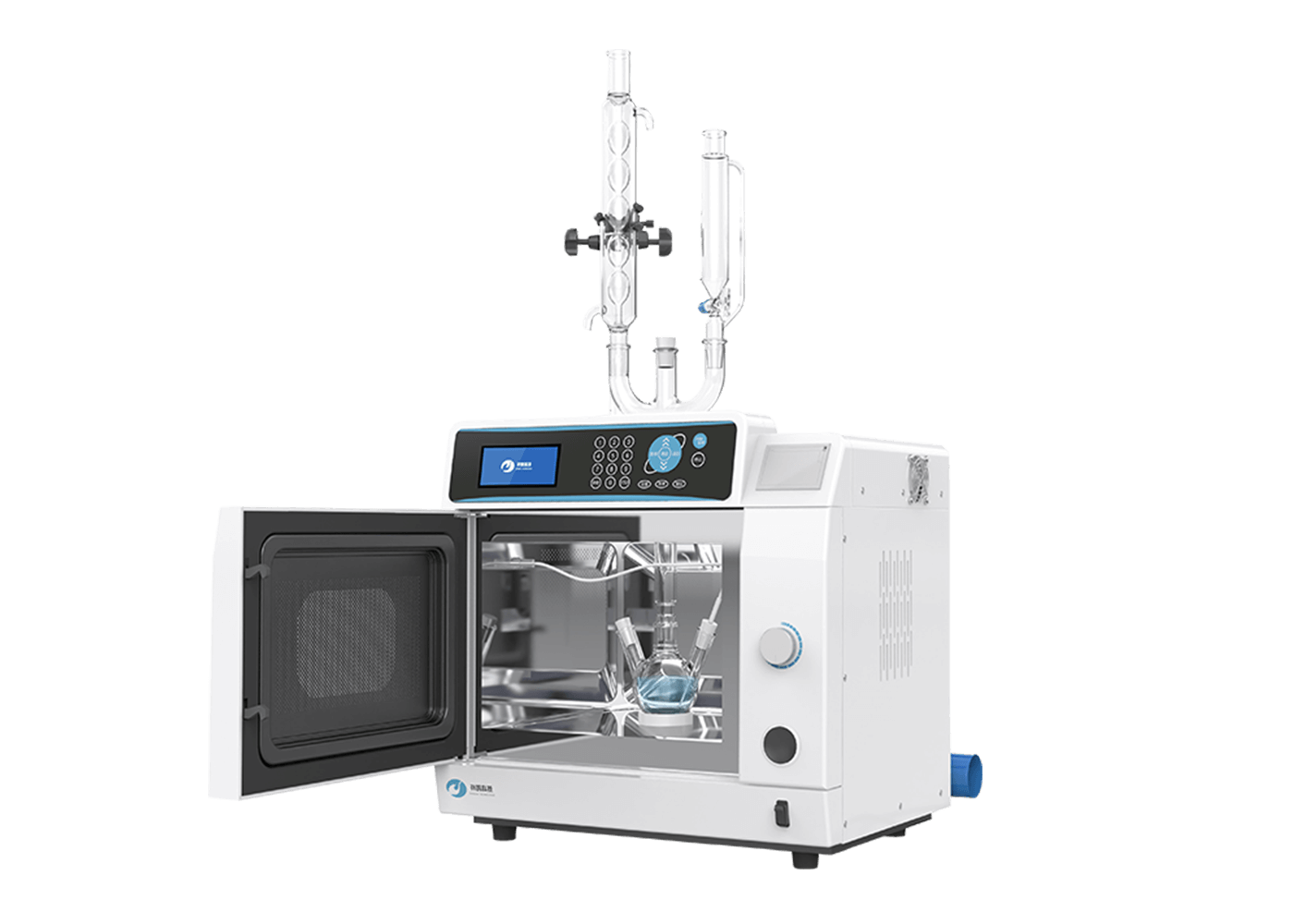
- Equipment: XH-100A
- Source: Bioresource Technology, 2013
- Research direction: green biodiesel production, microwave-enhanced transesterification, heterogeneous solid-base catalysis, and biomass energy conversion
- Core conditions: Temperature 65°C / 600°C
- Key results: Biodiesel yield 53.86%, Yield 94.75%, and Yield 85.25%
Research Abstract
Optimization of biodiesel production process from soybean oil using the sodium potassium tartrate doped zirconia catalyst under Microwave Chemical Reactor was published in Bioresource Technology (2013) and is indexed as a Xianghu Q1 application case for XH-100A. The source record connects it with green biodiesel production, microwave-enhanced transesterification, heterogeneous solid-base catalysis, and biomass energy conversion. Core operating conditions include Temperature 65°C / 600°C. Key reported results include Biodiesel yield 53.86%, Yield 94.75%, and Yield 85.25%.
Research Background and Problem
Equipment Use and Experimental Conditions
| Item | Parameter |
|---|---|
| Temperature | 65°C / 600°C |
Key Result
| Metric | Result |
|---|---|
| Biodiesel yield | 53.86% |
| Yield | 94.75% |
| Yield | 85.25% |
Evidence Details
When the catalyst was used for one, two, three, and four cycles, the yield of FAME was 90.05%, 89.95%, and 87.75% to 85.25%.
The experimental results showed that a 2.0:1 volume ratio of methanol to oil, 65 °C reaction temperature, 30 min reaction time and 10 wt.% catalyst amount gave the highest the yield of biodiesel.
Additional source evidence: source values include 2.0:1, 65°C, 30 min, 94.75%.
The yield of biodiesel achieved by the conventional water-bath was only 42.33%. On the contrary, the yield of biodiesel obtained by microwave irradiation was significantly higher, being 94.75%.
The flask was rested on the Xianghu microwave reactor XH-100A (Beijing Xianghu Science and Technology Development Co., Ltd) which controlled the whole reaction conditions including reaction temperature, stirring speed and reaction time.
The catalyst has the highest total basicity amount (B = 3.980) when the mole ratio of Na/Zr of the catalyst is 2.0 at the same calcination temperature and the best yield of biodiesel (92.06%) was obtained.
Additional source evidence: source values include 2.0:1, 600°C.
Composition evidence: source values include 1%, 5%.
27.45% → 92.06%
300°C:60.44%
400°C:69.11%
500°C:92.06%
600°C:93.51%
700°C:77.89%
Mechanism / Method Highlights
- Effective solid-base sites formed on the doped zirconia surface are the core catalytic basis for efficient methanol-oil transesterification.
- Microwave irradiation directly provides faster and more uniform heating, improving transesterification efficiency while the doped zirconia catalyst supplies the active basic sites.
Application Value
- After four catalyst reuse cycles, the biodiesel yield remains 85.25%, indicating practical reuse potential.
- Preserves quantitative result evidence: Biodiesel yield 53.86%, Yield 94.75%, and Yield 85.25%.
- Maintains source-level evidence details: Source evidence: When the catalyst was used for one, two, three, and four cycles, the yield of FAME was 90.05%, 89.95%, and 87.75% to 85.25%, Abstract evidence: The experimental results showed that a 2.0:1 volume ratio of methanol to oil, 65 °C reaction temperature, 30 min reaction time and 10 wt.% catalyst amount gave the highest the yield of biodiesel, Additional source evidence: source values include 2.0:1, 65°C, 30 min, 94.75%, and Source evidence: The yield of biodiesel achieved by the conventional water-bath was only 42.33%. On the contrary, the yield of biodiesel obtained by microwave irradiation was significantly higher, being 94.75%.
Related Equipment
FAQ
Which Xianghu instrument is covered by this page?
What research direction does this page support?
Which publication does this case come from?
Optimization of biodiesel production process from soybean oil using the sodium potassium tartrate doped zirconia catalyst under Microwave Chemical Reactor
Bioresource Technology, 2013
DOI: 10.1016/j.biortech.2013.03.126