Fact Snapshot
- Paper: High-activity Fe3O4 nanozyme as signal amplifier: A simple, low-cost but efficient strategy for ultrasensitive photoelectrochemical immunoassay
- Equipment: XH-800S
- Source: Biosensors and Bioelectronics, 2018
- Research direction: Fe3O4 and PSA
- Core conditions: Time 30 min
- Key results: Recovery 95.8%, Recovery 106.1%, and Particle size 30 nm
Research Abstract
High-activity Fe3O4 nanozyme as signal amplifier: A simple, low-cost but efficient strategy for ultrasensitive photoelectrochemical immunoassay was published in Biosensors and Bioelectronics (2018) and is indexed as a Xianghu Q1 application case for XH-800S. The structured source links this paper to Fe3O4 and PSA. Core operating conditions include Time 30 min. Key reported results include Recovery 95.8%, Recovery 106.1%, and Particle size 30 nm. The DOI recorded for this paper is 10.1016/j.bios.2018.11.043.
Research Background and Problem
Equipment Use and Experimental Conditions
| Item | Parameter |
|---|---|
| Time | 30 min |
Key Result
| Metric | Result |
|---|---|
| Recovery | 95.8% |
| Recovery | 106.1% |
| Particle size | 30 nm |
Evidence Details
FeCl3 (2.6 mM), NaAc (17.6 mM), and histidine (3 mM) were dispersed evenly in 40 mL of EG in order under continuous stirring at room temperature for 30 min. The solution above was then transferred into a microwave reaction kettle and reacted at 240 °C for 30 min.
From the results listed in Table S2, it could be acquired that the recoveries of three samples for the added PSA with 1, 20, and 100 pg/mL were 95.8%, 106.1%, and 98.2%, respectively.
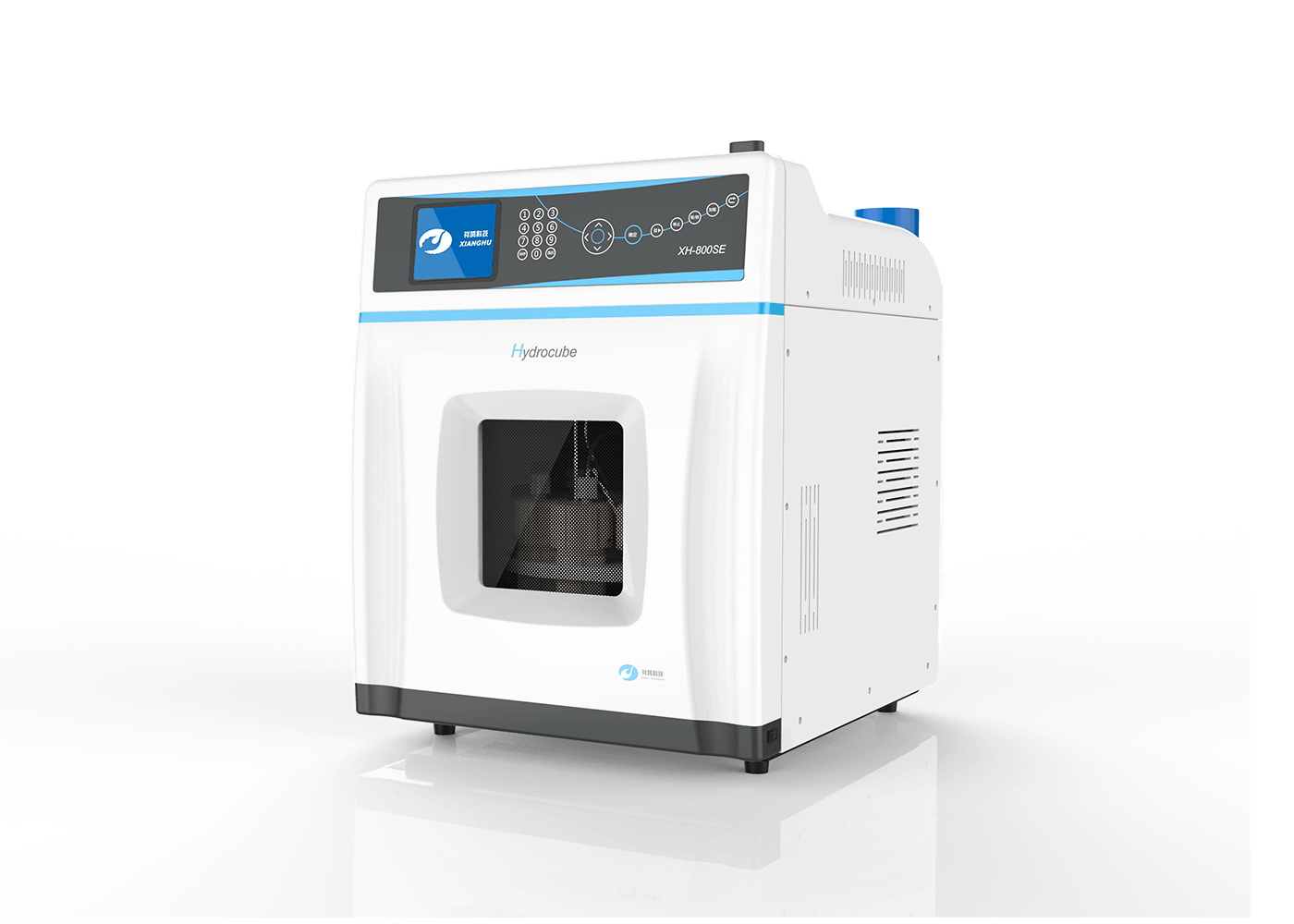
The microwave synthesis was performed with a XH-800S Microwave parallel synthesis system (Beijing Xianghu Science and Technology Development Co. Ltd., China).
The regression equation was I = 15.93 − 3.18 log CPSA (pg/mL), with a correlation coefficient of 0.9988. The limit of detection (LOD, S/N = 3) for target Ag concentration was calculated to be 18 fg/mL.
Average particle size: 30 nm
Mechanism / Method Highlights
- Histidine modification enhances the affinity of Fe3O4 toward H2O2; imidazole groups can strengthen substrate interaction through hydrogen bonding and improve nanozyme reaction efficiency.
- The his-Fe3O4@Ab2 label catalyzes H2O2 oxidation of 4-CN to form insulating deposits, blocking electron transfer and amplifying photocurrent attenuation.
- The stepped band structure between ZnIn2S4 and ZnO promotes photogenerated electron separation, improving photocurrent output and suppressing recombination.
- One-dimensional ZnO nanorods increase surface area, provide more sites for ZnIn2S4 deposition and antibody immobilization, and create a more direct electron-transfer path.
Application Value
- Introduces high-activity Fe3O4 nanozyme into photoelectrochemical immunoassay as a low-cost signal amplifier replacing natural enzyme amplification.
- Uses XH-800S to rapidly prepare high-activity his-Fe3O4 nanozyme at 240 °C within 30 min.
- The platform achieves an ultra-low detection limit of 18 fg/mL with a broad linear range.
- Human-serum spike recoveries fall between 95.8% and 106.1%, supporting early real-sample applicability.
- Preserves quantitative result evidence: Human-serum spike recovery 95.8%, Human-serum spike recovery 106.1%, and Average particle size 30 nm.
Related Equipment
FAQ
Which Xianghu instrument is covered by this page?
What is the main application direction?
Which publication does this case come from?
High-activity Fe3O4 nanozyme as signal amplifier: A simple, low-cost but efficient strategy for ultrasensitive photoelectrochemical immunoassay
Biosensors and Bioelectronics, 2018
DOI: 10.1016/j.bios.2018.11.043