Fact Snapshot
- Paper: The electrochemical Na intercalation/extraction mechanism of ultrathin cobalt(II) terephthalate-based MOF nanosheets revealed by synchrotron X-ray absorption spectroscopy
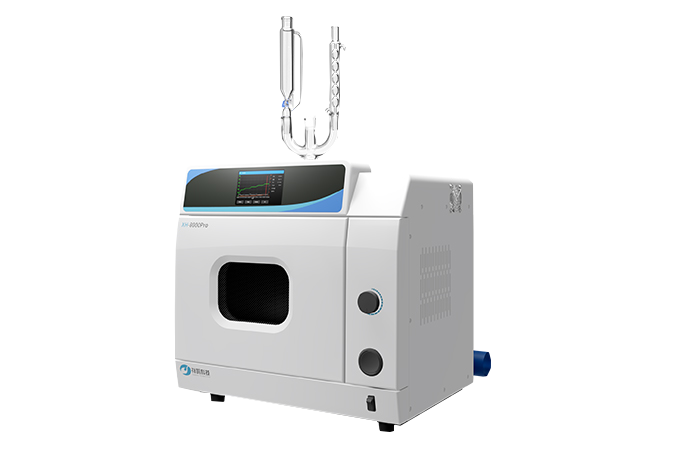
- Equipment: XH-8000 / XH-8000Plus
- Source: Energy Storage Materials, 2018
- Research direction: MOF and sodium-ion battery anode
- Core conditions: Time 8 h
- Key results: Coulombic efficiency 100%, Capacitance 774 mA h g^-1, and Reversible capacity 555 mA h g^-1
Research Abstract
The electrochemical Na intercalation/extraction mechanism of ultrathin cobalt(II) terephthalate-based MOF nanosheets revealed by synchrotron X-ray absorption spectroscopy was published in Energy Storage Materials (2018) and is indexed as a Xianghu Q1 application case for XH-8000 / XH-8000Plus. The structured source links this paper to MOF and sodium-ion battery anode. Core operating conditions include Time 8 h. Key reported results include Coulombic efficiency 100%, Capacitance 774 mA h g^-1, and Reversible capacity 555 mA h g^-1. The DOI recorded for this paper is 10.1016/j.ensm.2018.02.021.
Research Background and Problem
Equipment Use and Experimental Conditions
| Item | Parameter |
|---|---|
| Time | 8 h |
Key Result
| Metric | Result |
|---|---|
| Coulombic efficiency | 100% |
| Capacitance | 774 mA h g^-1 |
| Reversible capacity | 555 mA h g^-1 |
| Reversible capacity | 371 mA h g^-1 |
Evidence Details
Release-kinetics evidence: source values include R2032.
Ultrasonic-method evidence: source values include 1.6 mL, 40 kHz, 8 h. Entities: u-CoOHtp.
Microwave-method evidence: source values include 20 min, 8 h. Entities: XH-8000Plus, b-CoOHtp.
The u-CoOHtp electrode exhibits superior cyclability and a reversible capacity of 371 mA h g−1 is retained after 50 cycles, with Coulombic efficiency approaching 100%.
Additional source evidence: source values include 1.4–3.5 nm. Entities: u-CoOHtp.
Mechanism / Method Highlights
- Method context: Time 8 h.
- Release-kinetics evidence: source values include R2032
- Ultrasonic-method evidence: source values include 1.6 mL, 40 kHz, 8 h. Entities: u-CoOHtp
- Microwave-method evidence: source values include 20 min, 8 h. Entities: XH-8000Plus, b-CoOHtp
- Reported outcome: Coulombic efficiency 100%, Capacitance 774 mA h g^-1, Reversible capacity 555 mA h g^-1, and Reversible capacity 371 mA h g^-1.
Application Value
- Positions XH-8000 / XH-8000Plus in a peer-reviewed Q1 research application.
- Highlights quantitative evidence: Coulombic efficiency 100%, Capacitance 774 mA h g^-1, and Reversible capacity 555 mA h g^-1.
- Records source affiliations: East China Normal University and School of Chemistry and Molecular Engineering, East China Normal University, Shanghai, China.
Related Equipment
FAQ
Which Xianghu instrument is covered by this page?
What is the main application direction?
Which publication does this case come from?
The electrochemical Na intercalation/extraction mechanism of ultrathin cobalt(II) terephthalate-based MOF nanosheets revealed by synchrotron X-ray absorption spectroscopy
Energy Storage Materials, 2018
DOI: 10.1016/j.ensm.2018.02.021