Fact Snapshot
- Paper: Systhesizing SnTe nanocrystals leading to thermoelectric performance enhancement via an ultra-fast microwave hydrothermal method
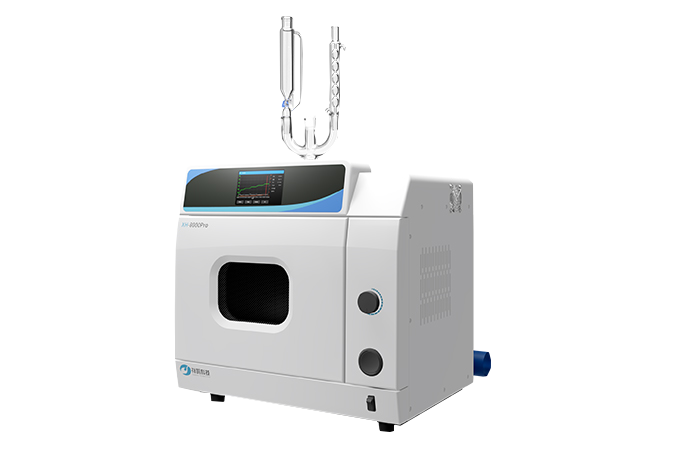
- Equipment: XH-8000 / XH-8000Plus
- Source: Nano Energy, 2016
- Research direction: microwave hydrothermal synthesis, thermoelectric materials, SnTe nanocrystals, and particle-size-effect control
- Core conditions: Temperature 220 °C, Microwave power 550 W, Pressure 0.17 MPa / 4.0 MPa, and Time 20 min
- Key results: Average particle size 165 nm, Average particle size 8.2 μm, Ultra-low thermal conductivity 0.60 W m^-1 K^-1, and Total thermal conductivity 0.60 W m^-1 K^-1
Research Abstract
Systhesizing SnTe nanocrystals leading to thermoelectric performance enhancement via an ultra-fast microwave hydrothermal method was published in Nano Energy (2016) and is indexed as a Xianghu Q1 application case for XH-8000 / XH-8000Plus. The source record connects it with microwave hydrothermal synthesis, thermoelectric materials, SnTe nanocrystals, and particle-size-effect control. Core operating conditions include Temperature 220 °C, Microwave power 550 W, Pressure 0.17 MPa / 4.0 MPa, and Time 20 min. Key reported results include Average particle size 165 nm, Average particle size 8.2 μm, Ultra-low thermal conductivity 0.60 W m^-1 K^-1, and Total thermal conductivity 0.60 W m^-1 K^-1.
Research Background and Problem
Equipment Use and Experimental Conditions
| Item | Parameter |
|---|---|
| Temperature | 220 °C |
| Microwave power | 550 W |
| Pressure | 0.17 MPa / 4.0 MPa |
| Time | 20 min |
Key Result
| Metric | Result |
|---|---|
| Particle size | 165 nm |
| Particle size | 8.2 μm |
| Ultra-low thermal conductivity | 0.60 W m^-1 K^-1 |
| Thermal conductivity | 0.95 W m^-1 K^-1 |
Evidence Details
Equipment-detail evidence: source values include 8 min, 120 °C.
Equipment-detail evidence: source values include 20 min.
Equipment-detail evidence: source mentions XH-8000.
Equipment-detail evidence: “”, ., , microwave hydrothermalfrommagnetic stirring, “”.
Particle-size evidence: source values include 550 nm, 803 K, 0.95 W, -1 K, 8.2 μm, 3.5 W.
Subsequently, the temperature was increased to 220 °C at a heating rate of 15 °C/min, and last for 20 min with a power of 550 W.
Additional source evidence: source values include 165 nm, 803 K, 0.60 W, -1 K, 11.8%.
The ZT value of the sample A sintered from the 165 nm NPs finally increased to 0.49 at 803 K, which is about 230% of the reference sample.
Additional source evidence: source values include 2.3 fold.
Mechanism / Method Highlights
- Microwave hydrothermal heating plus stirring supports ultrafast and more uniform reaction; continuous magnetic stirring in the microwave hydrothermal system helps complete the reaction within 20 min.
- The nanometer-size effect strengthens phonon scattering. When the particle size is reduced to about 165 nm, refined grains, more grain boundaries, and point defects strongly lower thermal conductivity, which is a decisive contributor to ZT improvement.
- The nanoscale energy-filtering effect also contributes to the Seebeck coefficient; even without a large power-factor jump, the sharply reduced thermal conductivity improves the final ZT. Builds a clear particle-size, thermal-conductivity, and ZT performance chain from micrometer-scale to nanometer-scale SnTe particles.
Application Value
- Uses the XH-8000 microwave hydrothermal system to compress the key SnTe synthesis step to 20 min.
- Builds a clear particle-size, thermal-conductivity, and ZT performance chain from micrometer-scale to nanometer-scale SnTe particles.
- The 165 nm sample reaches an ultra-low thermal conductivity of 0.60 W m^-1 K^-1 at 803 K.
- The maximum ZT rises to 0.49, about 2.3 times that of the mechanically alloyed reference sample.
- Preserves quantitative result evidence: Average particle size 165 nm, Average particle size 8.2 μm, Ultra-low thermal conductivity 0.60 W m^-1 K^-1, and Total thermal conductivity 0.60 W m^-1 K^-1.
Related Equipment
FAQ
Which Xianghu instrument is covered by this page?
What is the main application direction?
Which publication does this case come from?
Systhesizing SnTe nanocrystals leading to thermoelectric performance enhancement via an ultra-fast microwave hydrothermal method
Nano Energy, 2016
DOI: 10.1016/j.nanoen.2016.08.008