Fact Snapshot
- Paper: Microwave assisted esterification of acidified oil from waste cooking oil by CERP/PES catalytic membrane for biodiesel production
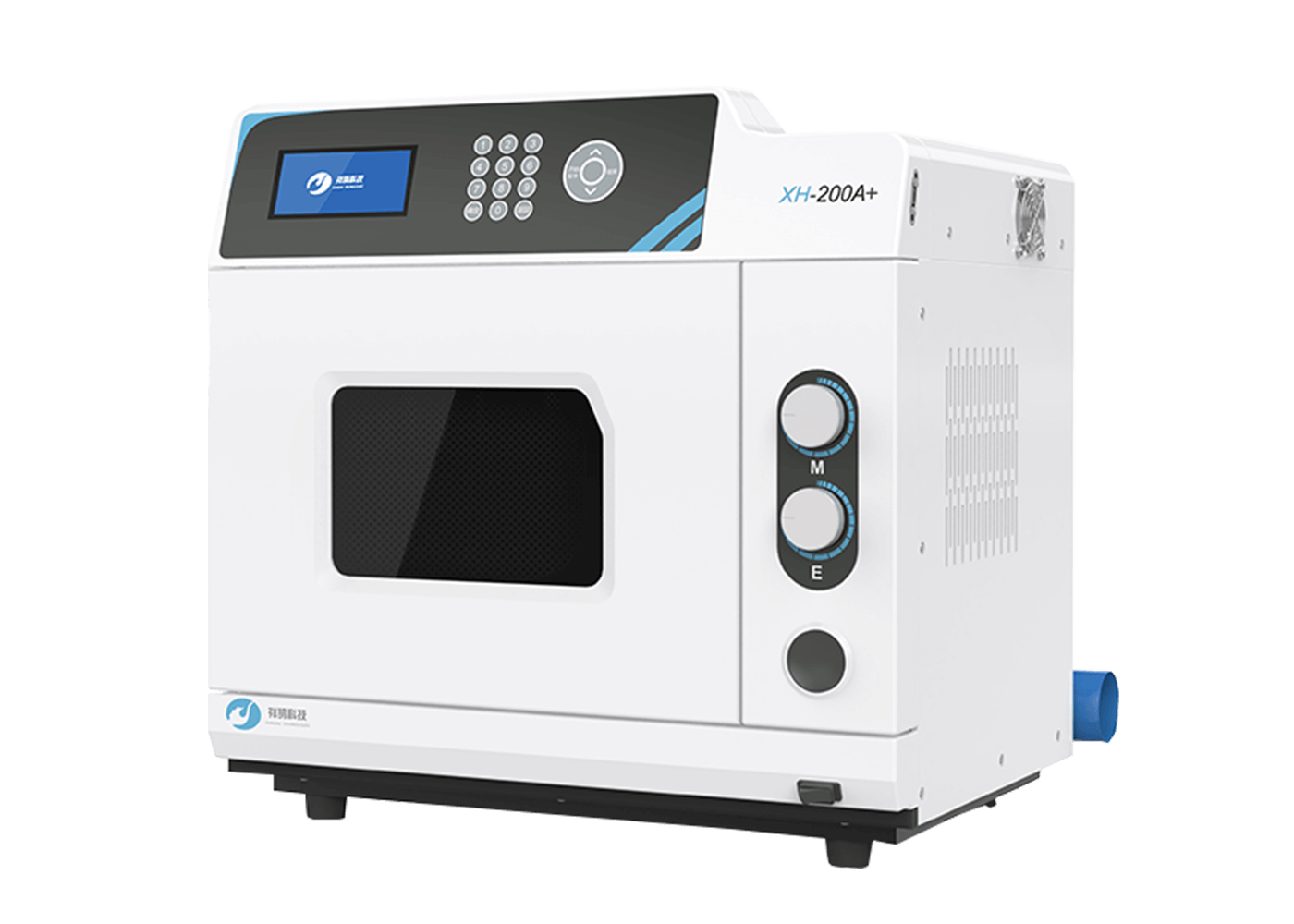
- Equipment: XH-200A microwave accelerated reaction system
- Journal and year: Bioresource Technology, 2012
- Core conditions: 60 °C; methanol/acidified oil mass ratio 2.0:1; catalytic membrane loading 3 g; microwave power 360 W; reaction time 90 min
- Key result: FFAs conversion reached 97.4%
- Use case: biodiesel production from acidified waste cooking oil
Research Abstract
This study compared conventional heating and microwave-assisted esterification of acidified waste cooking oil using a CERP/PES catalytic membrane. Under the optimized microwave conditions of 60 °C, methanol/acidified oil mass ratio 2.0:1, 3 g catalytic membrane annealed at 120 °C, 360 W microwave power, and 90 min reaction time, FFAs conversion reached 97.4%. The results show that microwave irradiation provides a rapid, simple, and greener route for biodiesel production from high-FFA waste oil feedstocks.
Research Background and Problem
Equipment Use and Experimental Conditions
| Item | Parameter |
|---|---|
| Reaction temperature | 60 °C |
| Methanol/acidified oil mass ratio | 2.0:1 |
| Catalytic membrane loading | 3 g, annealed at 120 °C |
| Microwave power | 360 W |
| Reaction time | 90 min |
| Temperature | 120°C / 50°C / 65°C |
| Time | 1 h / 8 h / 120 min |
Key Result
| Metric | Result |
|---|---|
| FFAs conversion under MAE | 97.4% |
| Conventional heating benchmark | 98.4% after 8 h |
| Reaction-time reduction | 5.3-fold shorter than conventional heating |
| Sixth reuse conversion for 120 °C-annealed membrane | about 85.21% |
| Conversion | 85.21% |
| Conversion | 77.86% |
| Conversion | 90.87% |
| Conversion | 74.12% |
Evidence Details
Equipment-detail evidence: source values include 500 mL, 250 mL, 20 g, 120 min, 65°C, 2.0:1, 3 g, 360 W. Entities: XH-200A.
Activation-energy evidence: source values include 60°C, 65°C, 90 min, 8 h.
Energy-comparison evidence: source values include 8 h.
Additional source evidence: source values include 200°C, 1 h, 77.86%, 50°C, 90.87%, 80°C, 94.98%, 120°C, 74.12%.
Microwave-method evidence: source values include 120 W, 360 W, 83.93%, 94.76%, 480 W, 94.7%, 600 W, 90.34%.
The FFAs conversion of microwave assisted esterification reached 97.4% under the optimal conditions of reaction temperature 60 °C, methanol/acidified oil mass ratio 2.0:1, catalytic membrane (annealed at 120 °C) loading 3 g, microwave power 360 W and reaction time 90 min.
Additional source evidence: source values include 56.54%, 95.92%, 2.5:1, 93.84%, 80.33%, 78.42%, 2.0:1.
Additional source evidence: source values include 100 mL, 20 g, 2.5:1, 29:1, 5 g, 65°C, 8 h.
Additional source evidence: source values include 1 g, 2 g, 64.3%, 81.65%, 5 g, 92.5%, 3 g.
Additional source evidence: source values include 250°C, 40 mL, 70°C, 240°C, 10°C, 10 min.
Additional source evidence: source values include 35°C, 60°C, 65°C, 70°C, 87.5%, 72.6%.
Composition evidence: source values include 12:0, 14:0, 16:0, 18:2, 18:0. Entities: FAME.
Additional source evidence: source values include 8 h, 71.15%, 80.24%, 85.96%, 94%.
Microwave-method evidence: source values include 90 min, 97.4%, 8 h, 5.3fold.
Mechanism / Method Highlights
- Microwave irradiation selectively heats polar reactants and speeds esterification kinetics.
- The CERP/PES membrane supplies reusable heterogeneous acid sites.
- Annealing at 120 °C improves membrane activity by removing absorbed water.
- Excess methanol shifts the reversible esterification equilibrium toward FAME formation, but too much methanol dilutes the system.
Application Value
- Shows a realistic microwave-assisted route for acidified waste cooking oil valorization.
- Combines fast reaction, lower methanol demand, and heterogeneous catalyst recovery.
- Provides a traceable Xianghu equipment case in biodiesel process intensification.
Related Equipment
FAQ
Which Xianghu instrument is cited in this paper?
What is the core experimental result?
Why is the study relevant for biodiesel production?
Microwave assisted esterification of acidified oil from waste cooking oil by CERP/PES catalytic membrane for biodiesel production
Bioresource Technology, 2012
DOI: 10.1016/j.biortech.2012.06.082